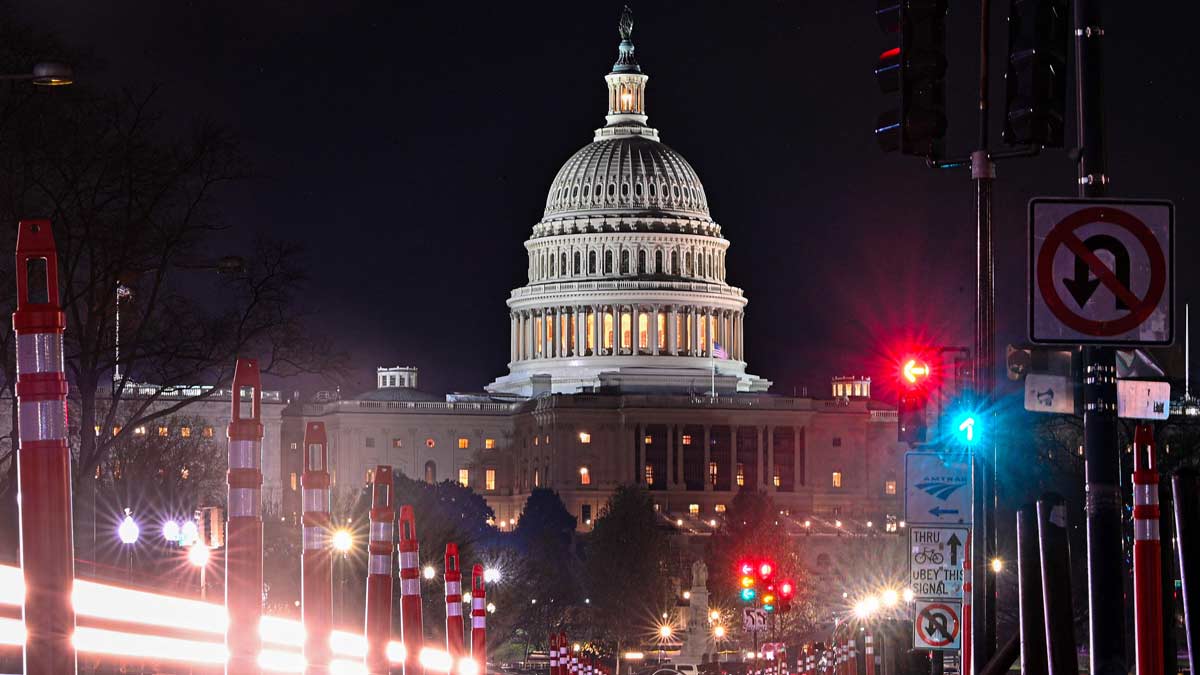
Washington loves a good ghost story. Every few months, a bill drafts in a congressional committee, cable news anchors sharpen their panic voices, and corporate boardrooms panic over hypothetical economic annihilation. The latest panic porn making the rounds involves the US House advancing a Russia sanctions bill, with pearl-clutchers warning that secondary sanctions could slam India with catastrophic one hundred percent tariffs for buying Moscow's discounted crude.
It is a neat narrative for anyone who prefers terrifying headlines over basic operational reality. It is also entirely detached from how global supply chains actually function. Recently making waves lately: Why Indonesia Sacking Its Finance Minister Exposes the Dangerous Myth of Technocratic Stability.
I have watched strategists blow millions hedging against legislative boogeymen that never materialized while missing the actual structural shifts happening right in front of them. If you are reallocating capital or freezing Indian investments because you think a blanket tariff wall is going up tomorrow, you are not exercising geopolitical caution. You are falling for political theater.
The Washington Draft Isn't Economic Policy
Let us dispense with the amateur analysis immediately. Bills advance in the US House for dozens of reasons, and ninety percent of them serve as signaling mechanisms rather than statutory execution. Legislators drop heavy-handed punitive text into committees to appease domestic constituencies, score cable hits, or gain leverage in entirely unrelated bilateral negotiations. Further insights into this topic are explored by CNBC.
When you look at the mechanics of secondary sanctions targeting a nation of 1.4 billion people that happens to sit at the absolute epicenter of American Indo-Pacific containment strategy against Beijing, the math breaks down instantly. Washington cannot detach from New Delhi without torpedoing its own long-term containment posture in Asia. To imagine the White House signing off on a blanket one hundred percent tariff on Indian goods because of Russian oil flows is to misunderstand the hierarchy of American geopolitical imperatives.
Containment of China trumps compliance enforcement regarding Russian hydrocarbons every single day of the week in the Pentagon and the State Department. Analysts predicting an impending economic blockade are looking at a single clause in a draft bill and ignoring the entire architecture of twenty-first-century statecraft.
The Refined Product Sleight of Hand
The lazy consensus driving this tariff panic claims that India is acting as a backdoor for sanctioned Russian crude, laundering dirty barrels into clean Western consumption. This argument relies on a child's understanding of global commodity markets.
Crude oil is not a fingerprinted asset. Once refined into diesel, jet fuel, or gasoline in complexes like Reliance Industries' Jamnagar refinery, it ceases to be Russian oil. It becomes an entirely new product processed on foreign soil. The legal and logistical barriers to slapping secondary tariffs on refined petroleum products originating from third-party refineries are monumental.
Western economies need those refined products to keep baseline energy inflation from spiraling out of control. If Washington penalizes Indian refiners out of existence, European and American diesel cracks widen instantly, hurting domestic consumers at the pump. Policy wonks sitting in air-conditioned think tanks love to draw clean lines on whiteboards, but real-world energy ministers know that choking off India's throughput means shooting Western economies in the foot.
India did not invent oil arbitrage; it simply capitalized on a market inefficiency created by Western sanctions design. When European buyers stopped taking direct pipeline and maritime crude from Russia, Moscow needed buyers, and New Delhi possessed the refining capacity to absorb the shock. To penalize India for stabilizing global energy supplies during a historic crunch is economic illiteracy masquerading as moral rigor.
The Real Risk Is Bureaucratic Friction Not Tariffs
Let me be entirely transparent about where my contrarian thesis has teeth and where it breaks down. I am not telling you that doing business with India is risk-free.
The real hazard is not a blunt-force one hundred percent tariff wall. The real hazard is death by a thousand paper cuts: targeted Office of Foreign Assets Control compliance probes, selective banking restrictions on specific logistics firms, and tightened export controls on dual-use technology. That is how Washington actually disciplines trading partners. It does not drop a nuclear bomb; it applies a tourniquet to specific supply chain arteries.
Companies that treat this as a binary event—either total tariffs or smooth sailing—are going to get crushed. The shift will manifest as increased compliance drag, higher transaction costs for cross-border trade, and selective enforcement against maritime shipping companies carrying Ural crude. If your risk management strategy relies on waiting for a congressional vote on a major tariff bill, you are looking in the wrong direction while the regulatory plumbing rusts underneath you.
Stop Hedging Against Ghosts
Corporate boards love to form emergency committees every time a freshman representative drafts a punitive sanctions bill. It makes executives feel proactive while they paralyze actual operational growth.
Stop asking whether Washington will sanction India out of the global market. That is the wrong question entirely. The right question is how your enterprise can build operational resilience against localized compliance friction while your competitors panic over headlines written by people who have never managed a customs form in their lives.
The next time you read an urgent market brief warning of impending trade collapse, check the motivation of the source. Panic sells subscriptions, but clarity makes money.
Markets do not reward the loudest fear-monger in the room. They reward the operator who refuses to flinch when the noise gets loud.