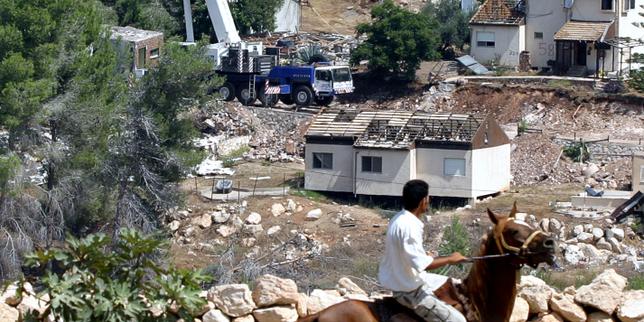
The hand-wringing over the return of settlers to Kadim is a masterclass in performative amnesia. Critics are framing the re-establishment of this site—and its predecessors like Ganim—as a shock to the system, an unexpected reversal of history.
Stop pretending. The 2005 Disengagement Plan was never a permanent border realignment. It was a strategic retreat, a tactical gamble by Ariel Sharon to consolidate control elsewhere while shedding the political and security liabilities of isolated outposts. To call the current movement to return to these areas a "collapse" of a peace process is to hallucinate that a peace process actually existed in the form the international media keeps insisting on.
The Strategy of Perpetual Motion
The "lazy consensus" here is that these settlements are merely static pins on a map. They aren't. They are political ballast.
When Bezalel Smotrich and the Samaria Regional Council push for the repopulation of Kadim, they aren't just moving trailers onto hills. They are engaged in a long-game engineering project. I have seen countless "initiatives" in the region wither because they lacked the infrastructure of permanence. What is happening now is different. It is the systematic dismantling of the administrative barriers that held the 2005 withdrawal in place. By transferring authority away from the Civil Administration and codifying the right for Israelis to reside in these northern zones, the current coalition isn't "breaking the law"—they are rewriting the operational manual for the West Bank.
Imagine a scenario where the geopolitical "status quo" is treated not as a solid foundation but as a temporary truce between tectonic plates. Every time the pressure builds, the map shifts. The mistake critics make is assuming the 2005 line was the goal. For the settler movement, it was always a starting point for a negotiation that they refused to lose.
Why Your Definitions Are Killing the Analysis
The industry standard for reporting on this is to use terms like "extremist" or "territorial threat" without ever defining what the end-state of the alternative looks like. If you oppose the return to Kadim, you have to answer the question: What happens to the space in its absence?
The argument that these settlements prevent a contiguous Palestinian state is technically accurate, but it misses the deeper reality: there was no roadmap to a contiguous state that didn't involve the exact same friction points currently being exploited. The "territorial integrity" argument assumes that if these communities didn't exist, the vacuum would be filled by a functional, sovereign peace. That is a fantasy. It would be filled by the same security vacuums that existed before 2005, which were the very reason the military interventions were necessitated in the first place.
The Professional Reality of the Ground Game
I have spent years watching the mechanics of land usage. The "return" is rarely about the 30 families moving in on a Thursday. It is about the surveillance cameras, the road infrastructure, and the reclassification of agricultural zones.
When you see the news cycles churn over "30 families," ignore the human interest angle. Look at the logistics. The movement of families is the front-end interface; the backend is the permanent deployment of security assets and the hardening of transit corridors that effectively segment the region. This is not just a return to a village; it is the physical manifestation of a policy that has decided the 2005 retreat was a strategic error to be rectified, not a legacy to be honored.
The international community calls this a "violation." The settlers call it a "correction." From an objective analytical view, it is neither. It is a re-assertion of state presence in a disputed territory that never achieved a final status.
Stop Waiting for a Reset
If you are waiting for a government to come in and "restore" the 2005 Disengagement, you are betting on a ghost. The political appetite for unilateral withdrawal in Israel has been dead for two decades. The institutional memory of the post-2005 reality—marked by regional instability—has created a hard-coded aversion to similar experiments.
The smartest move is to stop analyzing this as a "disruption" and start analyzing it as the new baseline. When the headlines scream about "reversing the disengagement," understand that the reversal isn't the anomaly. The reversal is the objective.
The board is being reset by the people who have the tractors, the permits, and the political will to stay on the hill long after the news cycle moves on to the next minor fire. You can critique the morality of it until the ink runs dry, but the map is already being redrawn in real-time.
Watch the bulldozers, not the speeches.