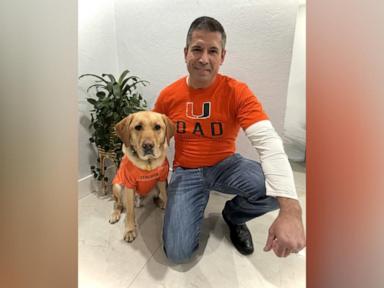
Eddie, a working guide dog, was named the 2026 American Humane Society Hero Dog, beating out finalists across categories ranging from law enforcement and military service to therapy and search-and-rescue. The annual award, decided through a combination of public voting and a panel of animal welfare judges, recognizes working canines whose daily performance crosses the line from routine training into life-altering intervention. For Eddie, the title validates years of disciplined partnership with a handler whose independence relies entirely on the dog's ability to read traffic, terrain, and human error in real time.
Most coverage of the American Humane Society Hero Dog Awards stops at the heart-tugging broadcast clip. It shows a shiny coat, a wagging tail on a red carpet, and a grateful handler wiping away tears. That framing misses the real story. Behind every dog that makes it to that stage sits a brutal, multi-year financial and behavioral pipeline that rejects roughly half of the animals bred for the job, costs tens of thousands of dollars per placement, and relies heavily on unpaid volunteer labor just to stay solvent.
The Economics of a Working Guide Dog
People hear that a guide dog is provided free of charge to a blind or visually impaired handler and assume the underlying system runs on magic and goodwill. It does not. Producing a single qualified guide dog like Eddie costs between $50,000 and $70,000 from whelping box to graduation.
That price tag covers selective breeding programs, specialized veterinary care, genetic screening for hip dysplasia and progressive retinal atrophy, puppy-raising support, and six to nine months of intensive, one-on-one instruction with certified guide dog mobility instructors. None of that money comes from standard health insurance. Medicare and private insurers in the United States classify guide dogs as companion animals rather than durable medical equipment, leaving accredited nonprofits to fundraise every dime through private donations, bequests, and corporate sponsorships.
Then there is the attrition rate. Even with decades of selective breeding—mostly Labrador Retrievers, Golden Retrievers, and German Shepherds—roughly 40 to 50 percent of dogs bred for guide work never make the cut. A dog might have impeccable obedience and genuine affection for humans, yet wash out because it gets distracted by squirrels, startles at the hiss of a city bus air brake, or lacks the specific psychological drive required to willfully disobey a human command when that command leads into danger.
Intelligent Disobedience Is Not a Trick
To understand why Eddie's recognition matters, you have to understand the single hardest behavior a service animal is ever asked to master. Trainers call it intelligent disobedience.
Standard dog training is built on compliance. Sit, stay, come, heel. A guide dog has to invert that hierarchy when life is on the line. If a handler gives the forward command at a crosswalk, and a silent electric vehicle is rolling through a red light, the dog must refuse the order. It has to plant its feet, physically block the handler's path, and absorb whatever confusion or frustration comes down the leather harness until the threat clears.
Teaching an animal to override a direct command from the person it is bonded to goes against every evolutionary instinct of a domesticated canine. Dogs want to appease their handlers. Getting a dog to reliably say "no" to a human requires months of carefully calibrated scenario training, where instructors stage near-misses with quiet cars, low-hanging tree branches, unmarked construction trenches, and sudden drop-offs.
When a dog like Eddie executes that judgment day after day in crowded intersections, transit hubs, and unfamiliar buildings, it is not running on instinct. It is performing continuous risk assessment. Every curb, every revolving door, every distracted pedestrian staring at a smartphone represents a variable the dog has to solve before the handler takes another stride.
How the Hero Dog Awards Actually Work
The American Humane Society Hero Dog Awards have grown into a major televised media event since launching over a decade ago, and the mechanics of the competition reveal a great deal about how modern animal welfare organizations generate revenue and public attention.
Dogs compete in distinct service categories—typically covering law enforcement and first responders, military working dogs, therapy dogs, service dogs, and guide or hearing dogs. Nominees are submitted by handlers, agencies, and supporters, narrowed down through rounds of online public voting, and evaluated by a judging panel that weighs both the dog's documented impact and its broader representation of working animals.
Critics inside the working-dog community occasionally grumble that the format turns serious operational animals into contestants in a popularity contest. A handler with a savvy social media network or strong local press backing can mobilize thousands of daily clicks, while an equally capable working dog operating quietly in a rural community never makes it past the first round. That critique has merit. Public voting rewards visibility, not necessarily the toughest working conditions.
Yet the counterweight is undeniable. Major guide dog schools and service organizations face chronic shortages of two critical resources: money and volunteer puppy raisers. When a guide dog wins the national title, applications to raise puppies spike. Donations tick upward. For non-profits operating on razor-thin margins, a prime-time spotlight on a working guide dog does more for recruitment than a year of direct-mail appeals.
The Unpaid Backbone Nobody Sees
Before Eddie ever held a rigid leather harness, someone else taught him not to chew furniture, how to ride calmly on a subway, and how to ignore food dropped on a restaurant floor.
Almost every accredited guide dog organization relies on volunteer puppy raisers—ordinary families, retirees, and college students who take an eight-week-old pup into their homes for 12 to 18 months. These volunteers pay out of pocket for crates, leashes, and often daily kibble, attend mandatory weekly obedience classes, and deliberately expose the puppy to elevators, escalators, sirens, farm animals, and screaming toddlers.
Then, right when the dog has become an integrated member of the household, the volunteer hands the leash back to the training facility and walks away.
Ask any veteran puppy raiser what that drop-off feels like, and they will tell you it hurts every single time. There is no financial compensation for those 18 months of midnight potty breaks and structured socialization. The only return on investment is the off-chance that, years later, that puppy graduates, pairs with a person who needs it, and maybe—just maybe—ends up standing under stage lights receiving an award like the 2026 American Humane Society Hero Dog title.
The Access Crisis Waiting Outside the Venue
There is a sharp irony in celebrating a guide dog on a national stage while handlers in the real world face escalating pushback at the doors of everyday businesses.
Under the Americans with Disabilities Act, guide dogs and other task-trained service animals are legally permitted to accompany their handlers into virtually all public spaces, from grocery stores and hotels to rideshares and airplanes. Businesses are only allowed to ask two specific questions when the disability is not obvious: whether the dog is a service animal required because of a disability, and what work or task the dog has been trained to perform. They cannot demand certification papers, medical records, or a demonstration.
In practice, handlers get denied entry constantly. Rideshare drivers spot a dog at the curb, lock their doors, and cancel the trip rather than deal with fur on the upholstery. Restaurant managers demand fake "registration IDs" sold on sketchy websites for fifty bucks. And the explosion of untrained pets wearing counterfeit service vests purchased online has poisoned the well for legitimate teams.
When an untrained pet lunges at a child in a hardware store or relieves itself in an airport terminal while wearing a nylon vest bought off an e-commerce site, store managers become hostile toward the next person who walks through the door with a dog. Blind handlers—who rely on a dog like Eddie as their primary mobility tool—bear the brunt of that fallout. They are forced to argue federal civil rights law on the sidewalk just to buy milk or get a ride home from the doctor.
What Makes a Partnership Last
A guide dog's working career is remarkably short compared to the investment required to build it. Most guide dogs enter active service around age two and retire between ages eight and ten, depending on joint health, eyesight, and stamina.
During those six to eight working years, the bond between handler and dog operates less like pet ownership and more like a high-stakes aviation crew. The handler holds the mental map of the route—knowing how many blocks to walk, which street to cross, and where the destination lies—while the dog manages immediate tactical execution, spotting obstacles, locating steps, and finding empty seats.
If either half of that equation falters, the system breaks down. A handler who fails to maintain obedience standards or lets a guide dog scavenge food on duty can ruin months of professional conditioning in a matter of weeks. Conversely, a dog whose confidence gets shaken by an off-leash aggressive pet in a neighborhood park may develop anxiety that ends its working career prematurely.
Every guide dog organization tracks these disruptions closely. A single attack by an unrestrained neighborhood pet doesn't just injure an animal; it can wipe out a $60,000 mobility aid and leave a blind person stranded at home for months waiting for a replacement match.
Beyond the Trophy
Awards like the 2026 American Humane Society Hero Dog serve a clear purpose when stripped of the sentimental packaging. They put a face and a name on a form of assistive technology that cannot be manufactured in a factory, updated with a software patch, or replaced overnight.
Eddie's win puts guide dogs back in front of an audience that largely takes sidewalk accessibility, auditory crosswalk signals, and federal disability protections for granted. If that visibility translates into fewer rideshare cancellations, stricter enforcement against fake service vests, or a few dozen more families signing up to raise the next generation of puppies, the ceremony will have earned its airtime.