The sea air in San Diego carries a very specific kind of hope. It smells of salt, caramelized peanuts, and the faint, electric hum of an entire city holding its breath. For generations, baseball here was defined by an ache—a persistent longing for a championship banner to flutter over a town that treats its team not just as an afternoon distraction, but as an extension of its coastal identity.
Then came Peter Seidler.
Seidler did not merely own a baseball club; he fell in love in public. He spent money not out of cold calculation, but out of a fierce, burning desire to give a starved fan base something magnificent. When Seidler passed away, a quiet dread settled over Petco Park. The stands remained packed, the brown and gold jerseys still flooded the Gaslamp Quarter, but the invisible architecture of the franchise felt fragile. Who could possibly step into the shoes of a man who treated a Major League Baseball team like an open-hearted family heirloom?
Consider what happens next: Major League Baseball owners recently cast a unanimous vote, officially clearing the path for a new era. The San Diego Padres are changing hands, sold to an investor group led by private equity billionaire José E. Feliciano and his wife and business partner, Kwanza Jones, at a staggering, record-breaking valuation of $3.9 billion.
Quiet. Then, a roar.
To understand the weight of this moment, you have to look past the commas in a multi-billion-dollar transaction. You have to look at the human beings standing in the batter's box, in the front office, and out on the sun-bleached plaza outside the ballpark.
Feliciano was born in Puerto Rico. With this historic purchase, he steps into the spotlight as only the second Latino principal owner in the history of Major League Baseball, joining Arte Moreno of the Angels. That detail matters in a sport where roughly thirty percent of the men lacing up their cleats hail from Latin America. It creates an invisible bridge of representation, a subtle nod to the diverse cultural tapestry running through the clubhouse veins. Beside him is Kwanza Jones, a powerhouse entrepreneur, artist, and philanthropist. Together, they did not arrive in Southern California as detached corporate overlords looking at spreadsheets; they have spent months showing up in the seats, flying to Mexico City for international series, and absorbing the unique heartbeat of a border-adjacent baseball town.
Change in sports is terrifying. Fans have long memories. They remember the fire sales, the lean years, the heartbreak of coming so close only to watch financial constraints dismantle a surging roster. Yet, the transition has been met with a surprising, grounded calm from the people whose livelihoods depend on it.
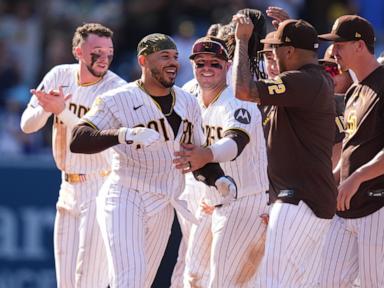
"It's good to see people that care working with us, you know?" outfielder Jackson Merrill mused, reflecting a sentiment echoed across the clubhouse. The players know the drill. They know that ownership changes often trigger corporate anxiety. But the new leadership made an immediate statement by choosing stability. Chief Executive Officer Erik Greupner and General Manager A.J. Preller remain firmly at the helm of day-to-day operations. Continuity became the bridge over troubled waters.
Behind the scenes, the mechanics of this massive deal reveal a fascinating intersection of modern wealth and old-school sports passion. Minority partners like Joey and Jesse Buss—sons of legendary Los Angeles Lakers architect Jerry Buss—are stepping into the fold, knitting together a new web of sports royalty. Meanwhile, the Padres continue to navigate the high-wire act of competitive spending, pushing past luxury tax thresholds to keep elite talent on the field.
The stakes are enormous. San Diego stands proudly as the only major league franchise in a sprawling metropolitan market of roughly 3.3 million people. Petco Park ranked second in all of Major League Baseball in attendance last season. The demand is not hypothetical; it is roaring, vocal, and relentless.
Feliciano and Jones inherit a machine built on momentum. Under Seidler's vision, the Padres cracked the postseason four times in six years, turning downtown San Diego into a heaving sea of brown and gold every October. The bar has been set terrifyingly high. The new owners know this. They acknowledged the debt they owe to Peter Seidler in their very first public statements, framing their arrival not as a takeover, but as an adoption.
"We are a family first, and becoming owners of the San Diego Padres means joining an even larger one," they stated.
Words are cheap in professional sports. Billionaires always promise the moon, murmuring sweet nothings about community and championships into microphones while flashing winning smiles. But actions whisper louder than press releases. By supporting front office continuity and signaling a willingness to sustain competitive payrolls, the new custodians of America's Finest City are signaling that they understand the assignment.
The sun dips below the Pacific, casting long shadows across the empty infield of Petco Park. The groundskeepers rake the dirt, preparing for tomorrow's pitch. The ownership papers are signed, the league has given its blessing, and the multi-billion-dollar enterprise is moving forward.
The ache for a championship remains. But the hope—sharp, stubborn, and deeply human—has a new home.