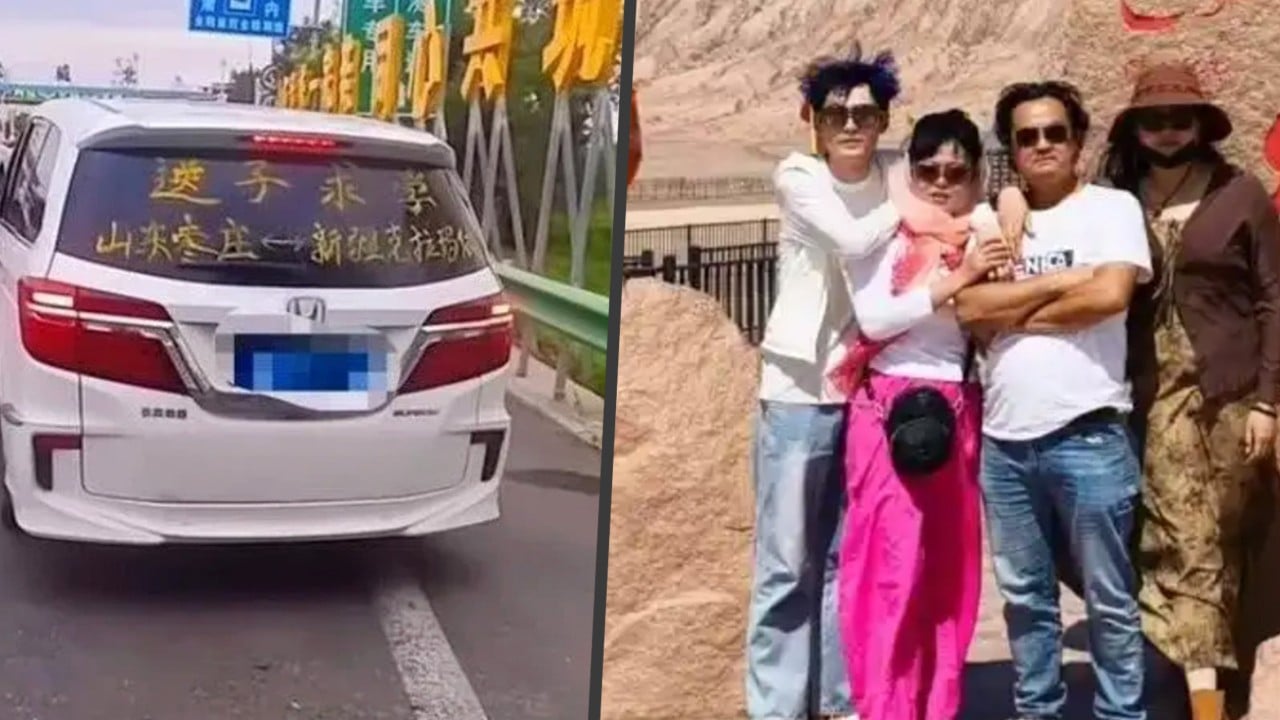
A family loads a sedan in Xinjiang, locks the doors, and points the hood south toward a campus three thousand five hundred kilometers away. They are not moving residences. They are delivering an eighteen-year-old freshman to his dormitory for the start of university. This epic transit across domestic asphalt is not an isolated anomaly of eccentric parenting. It is a symptom of a hyper-competitive academic pipeline where every single seat at an elite institution requires an immense expenditure of physical, emotional, and financial capital.
Higher education mobility in the world's second-largest economy carries a heavy cultural weight. When a household invests its entire future into a single student, the delivery of that student to the dormitory gate becomes a public rite of passage. Media outlets track these massive road trips like military campaigns. They applaud the endurance, the fuel consumption, the toll receipts, and the parental devotion. Yet beneath the sentimental exterior of family road trips lies a grinding socioeconomic machine that forces ordinary citizens to treat undergraduate enrollment like a state funeral or a coronation.
The machinery driving this behavior rests on the gaokao, the grueling national college entrance examination. Months of preparation culminate in a single weekend that dictates the social trajectory of entire family lineages. When a teenager secures admission to a prestigious urban university, the victory belongs to the collective. Grandparents, uncles, aunts, and parents all share the burden of the preparation years. Driving halfway across the continent for the drop-off day serves as the physical manifestation of that collective relief and exhaustion.
The Economics of the Cross Country Migration
Logistics dictate the narrative of these long-haul academic drop-offs. Renting a moving truck or shipping belongings across provincial lines often proves less reliable than loading the family car with bedding, desk lamps, and regional specialties to comfort a homesick teenager. Families burn thousands of yuan on fuel, highway tolls, and roadside hotels. For working-class households, these expenses pinch tightly against household savings.
Financial sacrifice remains the baseline currency of modern parenting across the region. Housing near tier-one universities commands staggering premiums, forcing families to purchase secondary apartments or shoulder exorbitant rental costs just so their child can study in a quiet environment. The automobile journey across thousands of kilometers represents the final, visible installment on a twenty-year debt of expectation.
+------------------------+------------------------------------------+
| Expense Category       | Average Impact on Working-Class Household|
+------------------------+------------------------------------------+
| Gaokao Prep Tutoring   | Up to 40% of annual disposable income    |
| Long-Distance Transit  | 1-3 months of standard food budget       |
| Campus Housing/Rent    | Exceeds regional median monthly wages    |
+------------------------+------------------------------------------+
Psychological Toll on the Single Child
Demographic policies from the late twentieth century created a generation of single children who carry the concentrated ambitions of two parents and four grandparents. This structural phenomenon generates a crushing psychological load. Every exam score, every class ranking, and every university tier reflects directly on the honor of the family name.
When a student crosses the threshold of a university courtyard after a three-thousand-kilometer drive, the celebration masks an underlying anxiety. What happens if the graduate fails to secure a high-status corporate or civil service position? The massive geographical distance traveled to reach the campus underlines the high stakes involved. Failure is not merely a personal setback; it feels like a collective betrayal of every resource mobilized to ensure safe passage.
Institutional Realities Behind the Migration
Universities in major metropolitan hubs like Beijing, Shanghai, and Guangzhou absorb the brightest minds from remote provinces. This geographic concentration of educational quality exacerbates regional inequality. Students from outlying areas must travel vast distances because local options often lack the research funding, prestige, and alumni networks necessary to secure elite employment later in life.
Higher education institutions themselves do little to ease the transition for distant arrivals. Dormitories are often cramped, built decades ago to house fewer students than current enrollment quotas demand. Freshmen pack into rooms with six or eight bunk beds, sharing communal washing facilities down the hall. The stark contrast between the epic cross-country voyage undertaken by the family and the cramped, utilitarian reality of the student dorm highlights the transactional nature of the modern academic ecosystem.
Shifting Cultural Attitudes Among the Young
A quiet rebellion is brewing beneath the surface of this intense academic devotion. Younger cohorts increasingly question the utility of the traditional life path. The saturated job market for university graduates has led to widespread disillusionment, giving rise to colloquial movements encouraging youth to lie flat or let it rot rather than participate in endless competition.
Parents driving three thousand five hundred kilometers are often chasing a dream of upward mobility that no longer guarantees financial security. Corporate employers frequently demand grueling overtime schedules known as the ninety-nine-six system, working from nine in the morning to nine at night, six days a week. The reward for the grueling educational journey is often another layer of institutional exhaustion.
The open highway stretches south, dusty and relentless, carrying another station wagon laden with plastic storage bins and tearful parents. The milestone is real, but the destination at the end of the asphalt is changing faster than the traditions can track.