Over $480 million just landed on the table at COP31 to slash methane and other non-CO2 gases. And honestly, most people scrolled right past the headline.
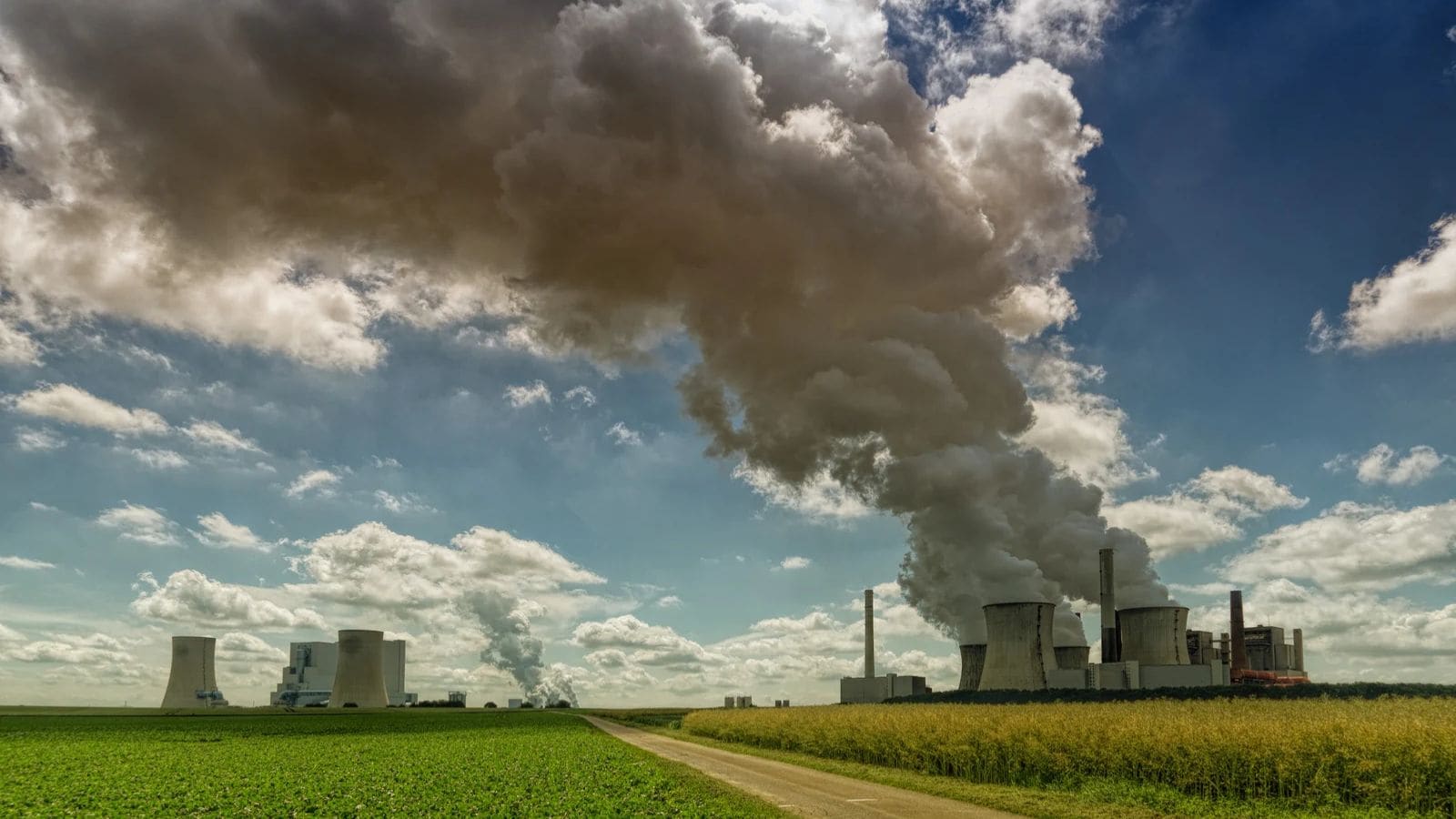
They shouldn't have. While carbon dioxide hogs the spotlight at every single climate summit, super pollutants like methane, nitrous oxide, and fluorinated gases are quietly driving nearly half of the global warming we're experiencing right now. You can't hit any serious temperature target without choking off these emissions fast. Yet for decades, they've been treated like an afterthought.
That's finally changing. The new funding announced during the COP31 climate negotiations targets the fastest lever we have to cool the planet over the next twenty years. I've followed climate finance closely for years, and I've seen plenty of flashy pledges evaporate into bureaucratic thin air. This one feels different—mostly because the math behind non-CO2 mitigation is impossible for governments and philanthropies to ignore anymore.
What the $480 Million COP31 Pledge Actually Covers
Let's get specific about what this money is meant to do. Broad climate funds often disappear into vague "capacity building" workshops that produce glossy PDFs and zero emissions cuts. The COP31 non-CO2 commitment takes a much sharper approach by aiming directly at super pollutants.
Here is what falls under that non-CO2 umbrella:
- Methane ($CH_4$): The primary component of natural gas, released from oil and gas leaks, coal mines, landfills, and livestock digestion.
- Nitrous oxide ($N_2O$): A potent gas emitted heavily from agricultural fertilizers and certain industrial processes.
- Hydrofluorocarbons (HFCs) and other F-gases: Synthetic refrigerants used in air conditioning and cooling systems that trap thousands of times more heat than carbon dioxide.
- Black carbon (soot): Tiny particulate matter from incomplete combustion in diesel engines, cookstoves, and wildfires that accelerates ice melt.
The $480 million pool combines philanthropic capital and government contributions designed to unlock even larger pools of public and private finance. Think of it as seed money for enforcement, satellite monitoring, and direct hardware upgrades in developing nations where the cheapest abatement opportunities sit waiting.
Why focus on these gases instead of pouring another half-billion into solar panels? Because solar and wind already have massive commercial momentum. Methane leak detection in abandoned coal mines or upgrading cooling equipment in emerging economies doesn't have the same built-in Wall Street hype machine. Philanthropy and targeted public grants have to bridge that gap.
The Physics Behind Super Pollutants Explained Simply
If you've ever wondered why climate scientists obsess over methane even though there's way less of it in the atmosphere than $CO_2$, it comes down to two words: potency and lifespan.
Carbon dioxide is a marathon runner. Once you pump a ton of $CO_2$ into the atmosphere, a large chunk of it hangs around trapping heat for centuries. Methane is a sprinter. It breaks down in the atmosphere in roughly a decade, which sounds harmless until you look at how much heat it traps while it's up there. Over a 20-year window, methane is more than 80 times more potent at warming the planet than carbon dioxide, according to the Intergovernmental Panel on Climate Change (IPCC).
Nitrous oxide is even nastier. It stays in the atmosphere for over a century and packs roughly 270 times the warming punch of $CO_2$. And some fluorinated gases used in industrial refrigeration have a global warming potential thousands of times higher than carbon dioxide.
This is why climate policy focused exclusively on $CO_2$ has a massive blind spot. Even if humanity stopped burning every drop of fossil fuel for electricity tomorrow, runaway methane and F-gas emissions would still push global temperatures past dangerous thresholds in the 2030s and 2040s. Cutting super pollutants is the only emergency brake we actually have to slow warming within our lifetimes.
Why Non-CO2 Funding Has Historically Lagged Behind
You'd think a climate solution that works ten times faster than carbon cuts would get half the funding. Not even close.
Historically, less than 2% of global climate finance has gone toward reducing methane and other non-CO2 pollutants. That lopsided split has baffled researchers at organizations like the Climate Policy Initiative for years. Why does money flow so reluctantly toward the highest-impact climate fix on the board?
First, visibility matters in politics. A ribbon-cutting ceremony for a massive offshore wind farm makes great television. Fixing a leaky valve on a natural gas pipeline in a remote basin or changing how rice paddies are flooded doesn't generate viral photos. Politicians love megaprojects, not plumbing.
Second, non-CO2 emissions are scattered across messy, fragmented sectors. Cleaning up the power grid means dealing with a relatively small number of utility companies. Cutting agricultural methane or landfill emissions means dealing with millions of farmers, thousands of municipal waste managers, and local regulatory agencies with zero budget.
Third, until recently, nobody could see the leaks. Oil and gas operators could claim their pipelines were tight, and regulators had no cheap way to prove them wrong. That excuse died when orbital satellites started spotting massive methane plumes from space in real time.
Where the Money Goes First
Throwing $480 million at a global problem sounds impressive until you divide it across dozens of countries and four major industrial sectors. If this money gets spread like peanut butter across too many small pilot programs, it won't move the needle.
Based on how previous non-CO2 funds—like those coordinated through the Climate and Clean Air Coalition (CCAC)—have operated, the smartest deployment focuses on three immediate bottlenecks.
Oil and Gas Leak Detection and Repair
The fossil fuel sector is the single easiest place to slash methane right now. The International Energy Agency (IEA) has repeatedly shown that roughly 40% of methane emissions from oil and gas operations could be eliminated at zero net cost because the captured gas can simply be sold.
In practice, state-owned energy companies in developing nations often lack the upfront capital for infrared cameras, vapor recovery units, and compressor replacements. Grant funding from the COP31 pledge can subsidize technical audits and early-stage hardware retrofits, turning invisible leaks into captured fuel.
Waste Management and Landfill Gas Capture
Open dumps and poorly managed landfills are massive methane factories. When organic food waste rots without oxygen, it pumps pure methane straight into the air.
In rapidly growing cities across Asia, Africa, and Latin America, municipal budgets are stretched thin just collecting trash, let alone installing gas-capture pipes or building composting infrastructure. Targeted grants help cities structure public-private partnerships that capture landfill gas and convert it into electricity or clean cooking fuel.
Cooling Efficiency and Refrigerant Transitions
As global temperatures climb, air conditioning demand is exploding. Without intervention, the refrigerants leaking from billions of new AC units will wipe out huge chunks of our clean energy progress.
Under the Kigali Amendment to the Montreal Protocol, countries agreed to phase down HFCs. The catch is that transitioning factories to climate-friendly refrigerants—while simultaneously making AC units more energy-efficient—requires upfront retooling costs. A slice of the COP31 non-CO2 money helps manufacturers in emerging markets skip dirty legacy coolants altogether.
What Critics and Skeptics Get Right About Climate Pledges
I'm optimistic about the focus on super pollutants, but let's not pretend a $480 million announcement solves the crisis. Anyone who has watched COP summits over the last decade knows there's a Grand Canyon-sized gap between pledged money and disbursed cash.
Here are the real risks that could blunt the impact of this commitment:
- Recycled accounting: Governments love re-announcing existing foreign aid budgets under a shiny new COP banner. Watchdogs will need to track whether this $480 million represents genuinely new capital or creative bookkeeping.
- The agriculture blind spot: Livestock and rice cultivation account for the largest share of human-caused methane globally, yet they remain the hardest to tackle politically. Feed additives and water-management techniques work in trials, but scaling them across smallholder farms takes far more than half a billion dollars.
- Weak enforcement: Monitoring leaks from space means nothing if local regulators don't fine polluters when plumes show up on satellite maps. Data without teeth is just expensive trivia.
You should always treat headline COP numbers with healthy skepticism until you see signed grant agreements and verified emissions drops. Still, even with those caveats, dedicating nearly half a billion dollars specifically to non-CO2 gases signals that major donors finally understand the urgency of near-term warming.
How Businesses and Local Leaders Can Act on This Shift
You don't have to be a climate negotiator at COP31 to see where the regulatory and financial winds are blowing. The spotlight on super pollutants is moving fast from international diplomacy straight into supply chain rules, corporate reporting, and local municipal budgets.
If you manage operations, sustainability, or procurement for an organization, start looking beyond your electricity bill. Scope 1 and Scope 3 emissions audits are increasingly zeroing in on refrigerant leaks from commercial HVAC systems, agricultural inputs in food supply chains, and upstream methane intensity from natural gas suppliers.
Check your facility's cooling equipment maintenance logs first. Commercial chillers and supermarket refrigeration systems routinely leak 10% to 25% of their refrigerant charge every year, creating massive hidden carbon-equivalent liabilities that simple preventative maintenance fixes immediately.
If you work in municipal planning or waste management, audit your organic waste streams now. Separating food waste from general landfills and exploring anaerobic digestion grants puts your city directly in line for the wave of non-CO2 climate finance rolling out over the next two years.
Track the Global Methane Pledge implementation reports and CCAC funding calls over the coming months to see which countries and sectors receive the first tranches of the COP31 funds, and align your compliance or grant proposals with those exact abatement priorities.