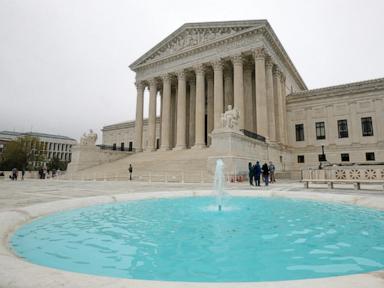
The U.S. Supreme Court just delivered a stinging unanimous rebuke to Canadian energy titan Enbridge, ruling that the company cannot drag a high-stakes environmental lawsuit out of Michigan state courts. Writing for the court on Wednesday, April 22, 2026, Justice Sonia Sotomayor laid bare a massive procedural failure: Enbridge waited a staggering 887 days to seek a federal transfer, missing a clear 30-day statutory deadline. By the time the company tried to shift the venue, the clock had long since run out. This decision effectively traps the fight over the aging Line 5 pipeline in a state judiciary that has historically been far more skeptical of the company’s safety record than the federal bench.
The ruling is a decisive victory for Michigan Attorney General Dana Nessel, who has spent seven years trying to decommission the 4.5-mile stretch of pipeline running beneath the Straits of Mackinac. While the Supreme Court didn't order the oil to stop flowing, it did something arguably more significant for the long-term survival of the project. It stripped away Enbridge’s preferred shield.
The Jurisdictional Chess Game
In the world of high-stakes corporate litigation, where a case is heard is often as important as the facts of the case itself. Enbridge knows this. Federal courts tend to view pipeline disputes through the lens of interstate commerce and international treaties—territory where Enbridge holds the high ground. State courts, conversely, are the domain of public trust doctrines and local environmental protections.
For over two years, Enbridge litigated the matter in Michigan’s 30th Circuit Court. Only after the legal winds began to shift did the company attempt to "remove" the case to federal jurisdiction, arguing that the dispute involved federal questions of trade and safety that superseded state authority. The Supreme Court wasn't buying the delay. Sotomayor’s opinion was blunt, noting that while Congress allows certain exceptions for late removals, Enbridge’s arguments were "not persuasive."
This is a self-inflicted wound. By failing to pull the federal trigger within the first month of the 2019 lawsuit, Enbridge’s legal team locked their client into a battle on home turf that is increasingly hostile to fossil fuel infrastructure.
A 70 Year Old Liability on the Lakebed
To understand the desperation behind the state’s legal crusade, you have to look at the pipe itself. Line 5 was commissioned in 1953. It carries 23 million gallons of crude oil and natural gas liquids every day across the floor of the Straits, where Lake Michigan meets Lake Huron. This is the "beating heart" of the Great Lakes, providing drinking water for millions and supporting a multibillion-dollar fishing and tourism economy.
The infrastructure is showing its age. In 2017, it was revealed that Enbridge engineers had known about gaps in the pipeline's protective coating for years without disclosing them to the state. In 2018, a ship's anchor struck and dented the line, a terrifying near-miss that underscored how vulnerable the twin pipes are to human error.
The Shadow of the Kalamazoo River
Michigan’s distrust of Enbridge isn't born of abstract environmentalism. It is rooted in the 2010 disaster near Marshall, Michigan. A different Enbridge pipeline, Line 6B, ruptured and spilled over 800,000 gallons of heavy crude into a tributary of the Kalamazoo River. It remains one of the costliest and most damaging inland oil spills in American history.
For many in the state government, Line 5 represents a "Kalamazoo-scale" disaster waiting to happen in a much more sensitive location. If the Straits of Mackinac were contaminated, the currents are so complex that cleanup would be nearly impossible.
The Tunnel Mirage
Enbridge’s primary defense against the total shutdown is the "Great Lakes Tunnel Project." The proposal involves boring a massive tunnel through the bedrock deep beneath the lakebed to house a brand-new pipeline, effectively removing the risk of anchor strikes or corrosion from open water exposure.
While the Michigan Public Service Commission approved the tunnel permits in late 2023, the project is currently mired in its own set of legal traps.
- Tribal Sovereignty: The Bay Mills Indian Community and other Tribal Nations argue the tunnel violates treaty-protected fishing rights.
- Engineering Risks: Critics warn that running a hazardous liquids pipeline through a confined tunnel has never been done on this scale and carries risks of methane explosions during construction.
- Permit Purgatory: The project still awaits critical sign-offs from the U.S. Army Corps of Engineers, a process that has slowed to a crawl under federal scrutiny.
The International Friction Point
The fight over Line 5 has become a diplomatic headache for the White House. The Canadian government has repeatedly invoked a 1977 treaty that guarantees the free flow of energy between the two nations, effectively turning a Michigan environmental dispute into a treaty violation. Ottawa views the pipeline as an essential artery for Ontario and Quebec’s energy security.
However, the Supreme Court’s ruling on jurisdiction creates a "pincer maneuver" for Enbridge. While they may have federal support from the Canadian side and certain U.S. federal agencies, they are now legally tethered to a Michigan state court system that has the power to revoke their easement based on state property law.
The Immediate Impact
What happens tomorrow? The case returns to the Ingham County court. While the litigation there has been paused during these appeals, the path is now clear for Judge James Jamo to resume deliberations on whether Enbridge has the legal right to occupy the lakebed at all.
If the state court rules the 1953 easement is void—which Governor Gretchen Whitmer already attempted to do via executive order in 2020—Enbridge will face an existential crisis. They may still seek cover under federal preemption laws in a separate, parallel federal lawsuit, but their ability to kill the state’s case entirely is gone.
This ruling proves that in the game of constitutional law, the calendar is just as dangerous as the evidence. Enbridge tried to outwait the state, but instead, they let the clock run out on their best defense. The fate of the Great Lakes now rests in the hands of the very judges Enbridge fought for nearly 900 days to avoid.
The smart money is no longer on a quiet settlement. The smart money is on a messy, protracted exit.