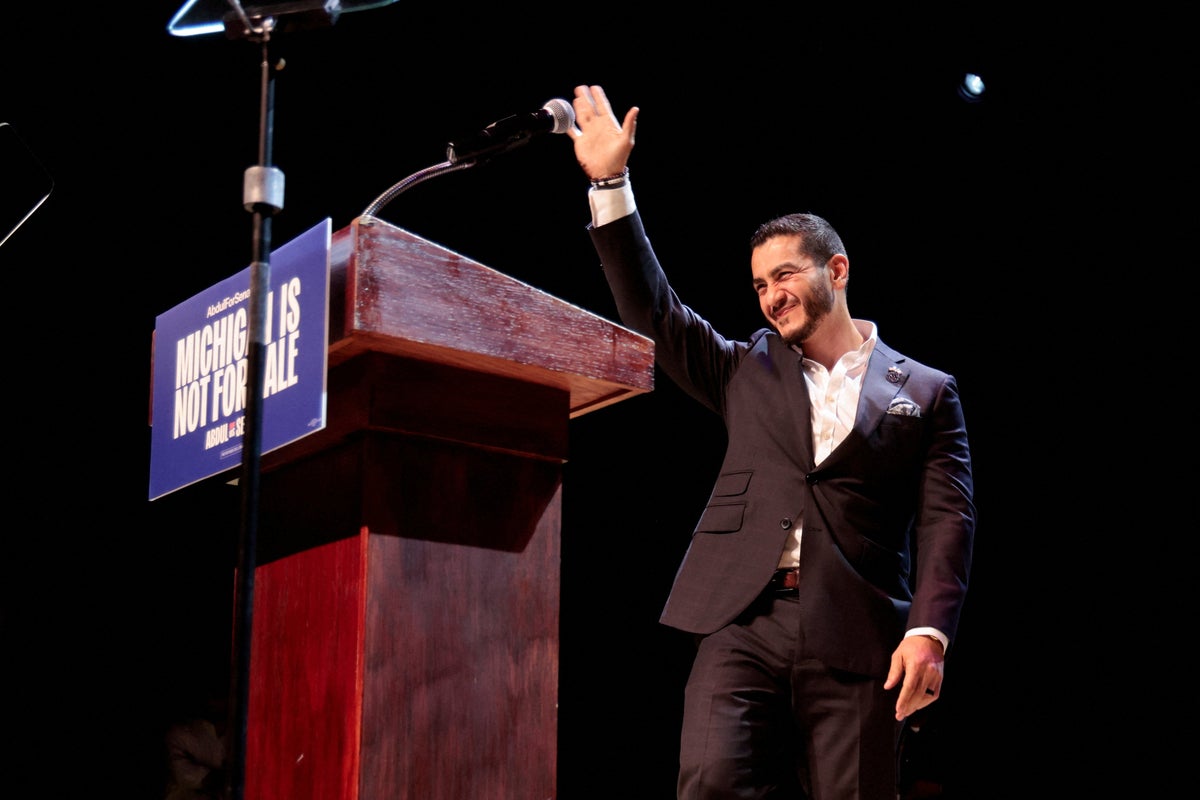
Political journalism loves a fairy tale. Whenever a candidate with a progressive label secures a victory, the narrative machine grinds into immediate gear. The establishment is dead. The grassroots have spoken. The ideological pendulum has swung.
We watched this script play out yet again following Abdul El-Sayed’s recent primary win in Michigan, breathlessly framed by commentators as a stinging rebuke of party centrists and a triumph for the Bernie Sanders wing of the Democratic Party.
It is a lazy, comforting story. It is also entirely wrong.
Strip away the cable news chyron and the wishful thinking of Twitter pundits, and you find a completely different reality. El-Sayed did not win because voters suddenly underwent a mass ideological conversion. He won because of local organizing mechanics, pre-existing municipal name recognition, and a deeply entrenched institutional footprint in Wayne County. Treating his win as an ideological referendum misses the forest, the trees, and the dirt beneath the roots.
Let us dismantle the consensus.
The Myth of the Ideological Wave
The fundamental flaw in mainstream election analysis is the assumption that voters pull levers based on sweeping philosophical alignment. Political scientists have spent decades proving the opposite. Most voters do not wake up thinking about national party factions or ideological purity tests. They think about pothole repair, local public health services, and who they trust to answer an email.
When El-Sayed ran for Governor of Michigan in 2018, he ran on an unadulterated democratic socialist platform. He finished a distant third, pulling roughly thirty percent of the vote behind Gretchen Whitmer and Shri Thanedar. Six years later, his policy positions had not moderated, but his arena and tactical approach had shifted entirely.
If ideological purity were the primary engine of victory, his 2018 statewide ceiling would have predicted his trajectory. Instead, he pivoted to a localized county-level race where retail politics, county commission dynamics, and municipal administration trumped grand national narratives.
The Mechanics of Municipal Power
To understand why El-Sayed won, you have to look past the progressive branding and examine the gritty mechanics of local infrastructure. I have watched campaigns flush millions of dollars down the drain because they believed a national endorsement and a viral speech could substitute for a ground game.
El-Sayed’s victory was built on three concrete structural advantages that had nothing to do with democratic socialism:
- Incumbency and Administrative Footprint: Serving as a Wayne County official provides a daily, taxpayer-funded megaphone. When you manage public health infrastructure during a crisis or spearhead county-level initiatives, your face is on local news for operational reasons, not campaign commercials.
- Institutional Alignment: Local labor and municipal networks in southeast Michigan operate on relationships built over decades. El-Sayed secured crucial organizational backing not because union leadership suddenly embraced revolutionary theory, but because his campaign operatives knew every precinct captain by first name.
- The Hollowed-Out Center: In many local primaries, the centrist or establishment lane fails not because voters reject moderation, but because the establishment fields weak, uninspired candidates who rely entirely on mailers instead of boots on the ground.
When you combine a candidate with high baseline name recognition and a disciplined local operation against a fragmented or weak opponent, the ideological label is nothing more than wallpaper.
Why the Establishment Narrative is a Trap
The corporate media loves framing elections as a war between two cartoonish factions: the out-of-touch, corrupt establishment versus the pure, insurgent progressive. It generates clicks. It drives outrage. It creates clean, digestible narratives for people who treat politics like a spectator sport.
The danger of this narrative is that it misleads both sides of the aisle.
Progressives look at a win like El-Sayed's and conclude they can replicate the strategy anywhere by simply running further left on national talking points. They ignore the local context, skip the grinding work of building municipal coalitions, and wonder why their candidates crash and burn in districts that require a different touch.
Conversely, party centrists panic, reading a localized county race as an existential threat to their survival, leading to defensive, risk-averse strategies that alienate actual working-class voters who simply want basic competence from their government.
Politics is local because power is local. If you ignore the plumbing while obsessing over the paint color, your house is going to flood.
The Data We Choose to Ignore
Look at the precinct-level data from Michigan. In districts where El-Sayed overperformed, his margins correlated far more closely with previous local administrative alliances than with demographic indicators typically associated with ideological progressivism.
Imagine a scenario where a candidate runs on a moderate platform with the exact same ground operation, the exact same county-level visibility, and the exact same institutional backing. They win by the same margin. Why? Because voters in municipal primaries are rewarding execution over abstraction.
We attribute outcomes to ideology because ideology is easy to talk about. Discussing precinct targeting matrices, mail-in ballot chase rates, and county commissioner endorsement leverage does not make for good television. But it is what actually wins elections.
The Uncomfortable Truth for Both Sides
If you are a progressive waiting for a national wave built on ideological purity, look at the map. Real power is built from the bottom up, through boring administrative competence, municipal service delivery, and relentless local organizing.
If you are an establishment strategist dismissing every insurgent victory as a fluke, keep your eyes closed. The ground is shifting, but not because people are reading radical manifestos. It is shifting because voters are tired of institutional stagnation and will back any candidate—regardless of label—who looks like they actually know how to fix a broken system.
Stop looking for a revolution where you should be looking for a plumber.