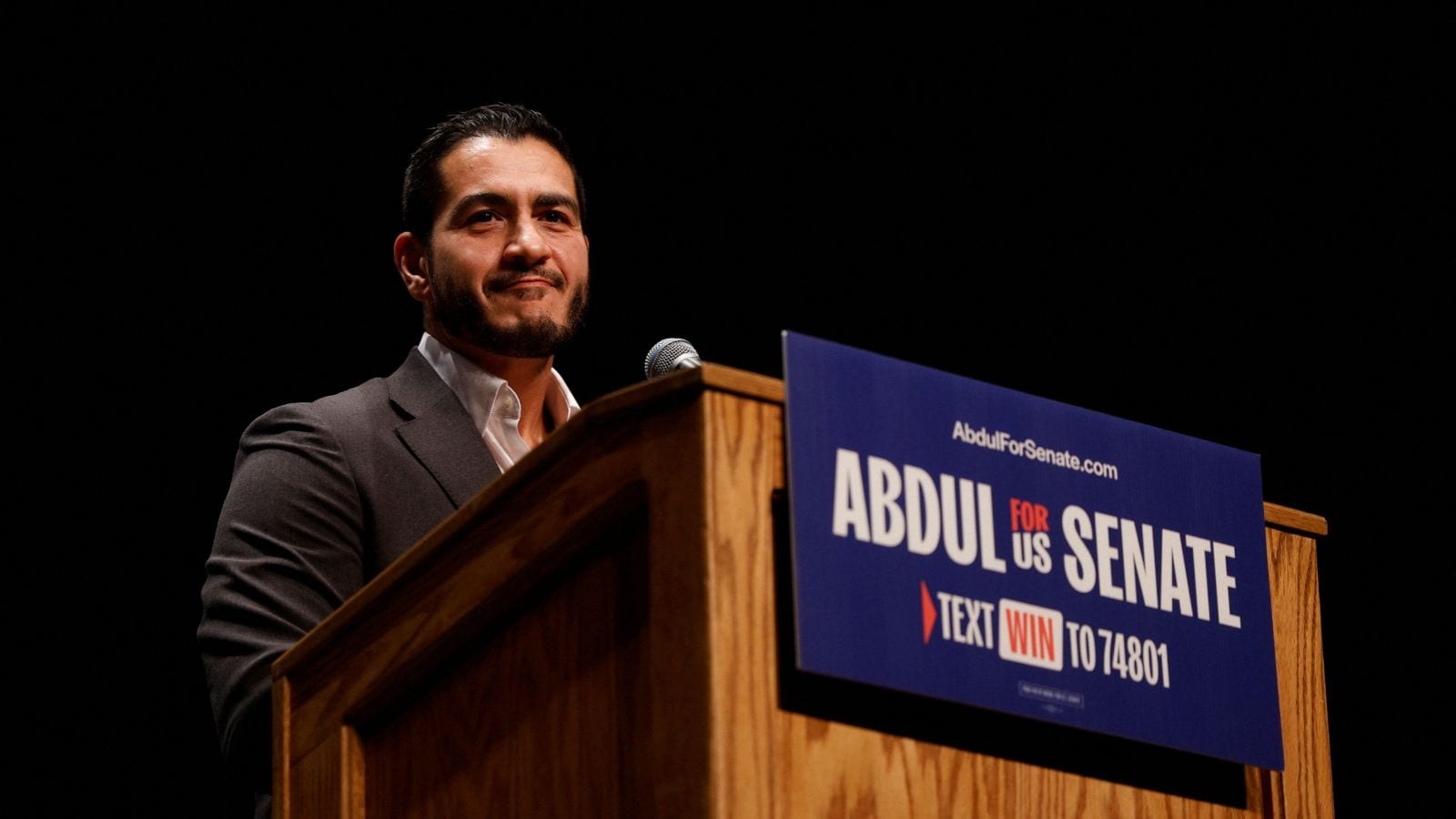
Media outlets across the country are tripping over themselves to frame Abdul El-Sayed’s Michigan Senate win as a triumph of identity-driven representation.
They are wrong. Completely, dangerously wrong. You might also find this connected article insightful: The Heavy Cost of Loyalty When the Red Wave Never Breaks.
Political commentators and cable news panels have spent the last forty-eight hours obsessing over the historic milestone—celebrating the arrival of the first Muslim U.S. Senator as if demographic checkboxes alone swung a purple Rust Belt state. According to mainstream political analysts, this victory signals the unstoppable rise of identity-first coalition building.
That narrative is lazy. It ignores the brutal mathematical reality of Michigan’s electorate, and if strategists buy into it, they will lose every swing state on the map in the next cycle. As discussed in latest coverage by Al Jazeera, the implications are worth noting.
The Myth of the Demographic Shortcut
For over a decade, political consultants have burned hundreds of millions of dollars chasing a mirage. I have sat in war rooms where senior strategists genuinely believed that simply matching a candidate’s background to a specific voting bloc guaranteed turnout. They treated voters like monolithic algorithms rather than complex human beings with mortgages, grocery bills, and failing local infrastructure.
When observers reduce El-Sayed’s victory to a demographic first, they miss the actual mechanism that put him over the top in Macomb, Oakland, and Wayne counties.
Political scientists like Ruy Teixeira and John Judis have spent years documenting the shift of working-class voters away from traditional party alignments. In Michigan, where manufacturing towns and suburban corridors decide statewide elections, identity appeals without hard economic substance do not just fall flat—they actively alienate swing voters who feel their material struggles are being ignored in favor of symbolic victories.
El-Sayed did not win because of a historic label. He won in spite of the media’s obsession with it.
How the Michigan Campaign Actually Worked
To understand what happened in Michigan, you have to strip away the national punditry and look at the ground game.
1. Material Economics Over Symbolic Representation
During his tenure as Detroit’s health director and throughout his previous statewide runs, El-Sayed built a reputation centered on public infrastructure, healthcare costs, and corporate accountability. According to campaign organizers and post-election precinct data analyses, his winning margins came from hammering kitchen-table issues:
- Healthcare consolidation: Attacking hospital monopolies and insurance middlemen driving up out-of-pocket costs for Michigan families.
- Water and utility rates: Focusing on municipal infrastructure failures and rising energy bills across both urban Detroit and rural northern counties.
- Labor protections: Aligning directly with rank-and-file union workers worried about automation and supply chain shifts in the auto sector.
Voters in Grand Rapids and Dearborn did not pull the lever for a headline. They pulled the lever for a technocrat who knew how to read a municipal balance sheet and promised to lower their monthly bills.
2. The Uncommitted Backlash Was a Trap—Until It Wasn't
Conventional wisdom argued that Michigan’s Arab American and Muslim voters were permanently fractured from the broader coalition following years of foreign policy disputes. Political reporters predicted depressed turnout in Dearborn and Hamtramck would sink any statewide candidate.
Strategists who viewed those communities solely through the lens of international headlines misread the room. While foreign policy grievances were real and acute, local organizers point out that treating Arab American voters as single-issue actors was deeply patronizing. El-Sayed bypassed the pundit trap by treating his own community with the exact same policy rigor he applied to suburban independents—discussing small business lending, environmental cleanup in industrial zip codes, and public school funding alongside human rights.
Answering the Questions Pundits Are Too Afraid to Ask
When voters search for how this race was won, they are fed sanitized talking points. Let us dismantle the most common misconceptions surrounding the Michigan Senate race.
Did demographic turnout alone decide the Michigan Senate race?
No. While high turnout in Wayne and Washtenaw counties provided the necessary base, statewide victory in Michigan requires winning over moderate, non-college-educated voters in bellwether counties like Kent, Saginaw, and Macomb. Analysts at the Brookings Institution have consistently noted that statewide winners in the Great Lakes region must bridge the urban-suburban divide through universal economic messaging, not niche demographic targeting.
Does this mean progressive populism works everywhere?
Do not confuse a disciplined campaign with an ideological blank check. The downside to running an aggressive, populist economic campaign is that it invites massive corporate counter-spending and alienates wealthy suburban donors. In states without Michigan’s deep union infrastructure or history of independent populism, running the exact same playbook without local adaptation is political suicide.
Why did national media get the narrative so wrong?
Because covering structural healthcare policy and utility regulation is boring, whereas covering historic "firsts" generates easy clicks and panel debates. National political journalism optimizes for conflict and identity drama rather than municipal governance.
The New Playbook for Swing-State Campaigns
If you are running a campaign, managing a political action committee, or advising candidates in competitive districts, throw out the consultant playbook from the last ten years.
- Audit your messaging for concrete nouns. If your stump speech relies on abstract values and demographic validation rather than specific prices, regulations, and infrastructure projects, rewrite it immediately.
- Treat every voting bloc as economically motivated. Never assume cultural affinity overrides the cost of living. Address taxes, healthcare, and wages first, every single time.
- Ignore national cable narratives. The stories that trend on social media in Washington and New York are poison in the industrial Midwest. Localize every single issue down to the county level.
- Lean into executive competence. Voters are exhausted by performative politicians. Highlight operational experience—managing budgets, running departments, fixing broken systems—over ideological purity.
Media commentators will continue to frame Abdul El-Sayed’s Senate victory as a triumph of identity representation because that is the only lens they know how to use. Meanwhile, the people actually winning elections in the Midwest have already moved on to the only thing voters care about: who is going to fix the economy they actually live in.