The neon sign in the window of the bodega on Fourth Street hums a low, electric frequency into the damp evening air. Inside, rows of brightly colored packaging line the shelf next to the usual suspects of midnight cravings: potato chips, energy drinks, chewing gum. But pick up one of these cans, look past the minimalist typography and the pastel watercolor gradient, and you will find a quiet revolution.
It is a hemp-derived THC beverage. It is cold. It is sparkling. And, according to a tangled web of federal oversight and agricultural loopholes, it probably shouldn't exist.
Yet here it is. Part of a twenty-eight-billion-dollar juggernaut that caught regulators completely off guard, built brick-by-brick on the back of an agricultural oversight and a public thirsty for something different.
To understand how a plant grown in ordinary dirt spawned a corporate heavyweight, you have to wind the clock back to a quiet autumn morning in 2018.
Congress sat down to pass a farm bill. It sounds mundane—a sprawling, multi-year legislative package primarily concerned with milk prices, crop insurance, and rural broadband. Buried deep within its thousand pages was a definition that would change the American landscape forever. Lawmakers decided to legally separate hemp from marijuana. The metric was simple: cannabis containing less than 0.3 percent delta-9 THC on a dry-weight basis was no longer a Schedule I controlled substance. It was just an agricultural commodity.
Nobody in that room anticipated biochemistry.
Chemists soon realized that CBD, abundant in legal hemp, could be easily converted in a lab into delta-8 THC, delta-9 THC, and a host of other psychoactive cannabinoids. Because the law focused exclusively on the source plant rather than the resulting molecule, a loophole wide enough to drive a John Deere tractor through yawned open.
Suddenly, gas stations in conservative rural towns and high-end boutiques in metropolitan centers were selling intoxicating products. No dispensaries required. No medical cards. Just an ID and a five-dollar bill.
Meet Marcus. Marcus is fictional, but he represents a hundred thousand small-business owners across the country. He owns three independent smoke shops in Ohio. Five years ago, his shelves were stocked with glass pipes and imported incense. Business was flat, choked by rising rent and aggressive online competition. Then came the hemp-derived seltzers and gummies.
Today, those products account for seventy percent of Marcus’s revenue.
He remembers the exact afternoon the first distributor walked into his shop carrying a cardboard box of sparkling water infused with five milligrams of hemp-derived THC. Marcus was skeptical. He cracked open a can, tasted citrus and hops, and waited. Twenty minutes later, the tight knot of anxiety in his lower back—a souvenir from twenty years of standing on concrete floors—just dissolved.
"It wasn't like getting blasted," Marcus told his wife that evening, staring at the empty aluminum can. "It was like exhaling for the first time in a decade."
Multiply Marcus by millions of consumers seeking an alternative to their Friday night bourbon or their Sunday afternoon wine. The appeal is visceral. It is about control. A standard cocktail carries a heavy caloric and physiological toll. A micro-dosed hemp beverage offers a gentle social lubricant without the spinning room or the brutal Tuesday morning hangover.
That emotional resonance created a tidal wave of capital. Venture capitalists who wouldn't touch traditional cannabis—still federally illegal and choked by banking restrictions—poured hundreds of millions into hemp supply chains. Farmers in Kentucky and North Carolina who had spent generations growing tobacco pivoted to fields of towering, resinous green stalks. Logistics networks formed. Packaging plants hummed.
It became an accidental empire.
But empires built on legal loopholes rarely survive the winter.
Washington has noticed. The agricultural committees that drafted the 2018 Farm Bill are looking at the upcoming reauthorization with sharp, corrective eyes. Public health officials are sounding alarms about unregulated manufacturing processes, mislabeled packaging, and products finding their way into the hands of teenagers who buy them off unmonitored bodega shelves.
The federal government hates a loophole. It views them as structural integrity failures in the house of laws.
Lawmakers are now drafting language that would effectively slam the door shut on intoxicating hemp derivatives by changing how the 0.3 percent limit is calculated, or by outright banning synthetic conversions. For the twenty-eight-billion-dollar industry, this is an existential crisis. It is a death warrant written in bureaucratic ink.
Lobbyists swarm Capitol Hill wearing expensive suits, carrying briefcases packed with economic impact studies. They argue that crushing the hemp market will destroy tens of thousands of jobs, devastate family farms, and push consumers back into the illicit market where safety standards do not exist.
They are not wrong. But the opposition is equally passionate. Parents' groups, substance abuse coalitions, and traditional state-licensed cannabis operators—who paid millions in licensing fees and compliance costs while hemp brands sold freely next to the register—are demanding a reckoning. They call the hemp market the "wild west." They call it a threat to public safety.
The tension crackles in hearing rooms where men and women in dark blue suits argue over the molecular structure of a weed.
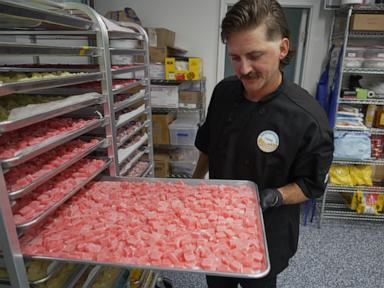
To walk through a modern hemp processing facility is to realize how far this industry has moved from the stoner stereotypes of the past. The air smells faintly of pine and sweetgrass, mixed with the sharp, sterile scent of medical-grade stainless steel. Giant extraction columns hum in rhythm. Technicians in white lab coats and hairnets monitor liquid chromatography screens, tracking purity levels down to the parts-per-million.
This is not back-alley chemistry. This is sophisticated, high-tech manufacturing trying desperately to legitimize itself before the hammer falls.
Yet, legitimacy is a moving target.
Consider the consumer safety argument. In many states with no active regulations on hemp products, anyone can buy a gummy containing fifty milligrams of THC—enough to send an inexperienced user into an existential panic attack—packaged in a wrapper that looks suspiciously like a popular brand of childhood candy. These bad actors provide the ammunition that federal prohibitionists need. They give politicians the soundbites required to justify a crackdown.
The responsible players in the industry know this. They are terrified of their own worst elements. Many trade associations are actively begging for federal regulation rather than federal bans. They want age limits, testing standards, child-resistant packaging, and clear taxation. They want to grow up.
Whether Washington will let them is another question entirely.
The clock is ticking down. Legislative sessions loom like storm clouds over the horizon. Every pallet of seltzer shipped, every acre of hemp planted, carries a quiet desperation. It is the weight of an entire economic ecosystem holding its breath, waiting to see if a stroke of a pen will wipe it from existence.
If the ban succeeds, the shelves in Marcus’s shop will empty out. The processing labs will go dark. The farmers will plow under their green fields and plant soybeans instead.
And consumers like Marcus will be left with a choice: return to the old ways, or retreat into the shadows where unregulated markets always thrive when the light of commerce is extinguished.
Standing in his shop, looking at the glowing cooler door, Marcus isn't thinking about market capitalization or legislative amendments. He is thinking about his customers. He thinks about the retired teacher who comes in every Thursday for a four-pack of peach-flavored relaxation, trading her prescription sleeping pills for something that grows out of the earth. He thinks about the veteran who found a way to quiet the noise in his head without waking up numb.
That is the invisible stake in this fight. It’s not just about balance sheets and corporate survival. It’s about how a society chooses to define wellness, and who gets to decide what we put into our own bodies when the sun goes down and the day’s work is finally done.
The neon sign hums on, oblivious to the machinery of state power churning in the distance. The liquid inside the can is cold. The market is twenty-eight billion dollars wide. And the night is only just beginning.