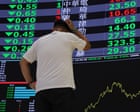
Your phone buzzes with a breaking news alert about a massive stock market drop, and your stomach immediately knots up. You wonder if you just lost thousands of dollars, if your retirement is ruined, or if you need to call your bank right now. Here is the truth that financial news anchors rarely say out loud because panic sells ads. If you haven't sold your shares, you haven't actually lost a single dime.
When share prices fall, the impact on your daily life depends entirely on whether you need that cash today, five years from now, or never. For most regular people with a workplace retirement plan or a basic brokerage account, a market dip is mostly psychological noise. On paper, your account balance shrinks. In reality, you still own the exact same number of shares in the exact same companies you owned yesterday.
The Difference Between Paper Losses and Real Money
Think of owning stock like owning a house in a neighborhood where real estate values suddenly dip. If your neighbor sells their identical home for $50,000 less than it was worth last month, Zillow will tell you that your house just lost $50,000 in value. Does your roof start leaking? Do you have to write a check to the bank? No. You only lose that money if you put a "For Sale" sign on your lawn and accept a lowball offer right then and there.
Wall Street calls this an unrealized loss. When share prices fall, your brokerage app turns red and shows a smaller dollar figure next to your name. That number is simply an estimate of what someone else is willing to pay for your shares at that exact second. Until you click the "sell" button, that loss exists only on a screen.
I've watched countless friends panic-sell during minor market corrections, locking in permanent losses just to make the red numbers go away. Honestly, the hardest part of investing isn't picking winning stocks. It's sitting on your hands when the market throws a tantrum. According to data from Charles Schwab, missing just the 10 best days in the S&P 500 over a 20-year period can cut your overall returns roughly in half. Those best days almost always happen right after the worst drops, meaning people who bail out during a slump usually miss the recovery.
How Falling Share Prices Hit Your Retirement Account
If you contribute to a 401(k), an IRA, or a pension fund, a drop in share prices is actually good news in disguise—assuming you aren't retiring next Tuesday.
Every two weeks, a slice of your paycheck automatically goes into your retirement account to buy shares of index funds or mutual funds. When share prices fall, that exact same dollar amount buys more shares than it did the month before. You are essentially shopping at a clearance sale.
Let's look at an illustrative example to see how the math works in your favor:
- Month 1 (High Market): You invest $500 when shares cost $100 each. You get 5 shares.
- Month 2 (Market Drop): Share prices fall by 20% to $80 each. Your existing 5 shares are now worth $400 on paper. Your next $500 contribution buys 6.25 shares.
- Month 3 (Recovery): Prices bounce back to $100. You now own 11.25 shares worth $1,125, even though you only put in $1,000.
This automatic buying habit is called dollar-cost averaging, and it quietly builds wealth for millions of workers who ignore the daily financial news.
Things look very different if you're already retired and living off your investments. If you have to sell shares every month to pay for groceries and electricity while share prices are down, you face what financial planners call sequence of returns risk. Selling during a downturn forces you to cash in more shares just to get the same amount of spending money, leaving fewer shares behind to grow when the market eventually recovers. That's why smart retirees keep one to two years of living expenses in plain cash or short-term Treasury bills, giving their stocks time to heal without being forced to sell at the bottom.
What Happens When You Don't Own Any Stocks at All
Maybe you don't own a single share of stock. You keep your money in a regular savings account, rent your apartment, and clock in at a steady job. You might think a stock market crash has nothing to do with you.
You'd be wrong.
Publicly traded companies run on confidence and access to cheap money. When a company's share price tanks, its board of directors gets nervous. Executives immediately start looking for ways to protect their profit margins and reassure anxious shareholders. Usually, the fastest way to cut costs is to freeze hiring, cancel planned expansions, or lay off workers.
Even if your employer is a small, family-owned business, you aren't totally insulated. When wealthy investors and middle-class homeowners see their stock portfolios shrink, they feel poorer. Economists call this the negative wealth effect. People stop booking expensive vacations, put off buying new cars, and skip Friday night dinners out. That drop in consumer spending ripples through the economy, hitting local restaurants, contractors, and retail shops.
Your pension fund or local government budget can also take a hit. Public pension systems—like CalPERS in California, the largest public pension fund in the United States—invest heavily in the stock market to pay benefits to retired teachers, firefighters, and police officers. Prolonged drops in share prices can force cities and states to raise local taxes or cut public services to fill the funding gap.
Do Dividend Payments Disappear When Stocks Drop
Many investors buy shares not just hoping the price will go up, but to collect regular cash payouts called dividends. If you own shares in established companies like Coca-Cola, Johnson & Johnson, or Procter & Gamble, they send you a small slice of their profits every three months.
Here is something that surprises a lot of beginners. Dividend payments are tied to the number of shares you own, not the current price of those shares on the stock market.
Suppose you own 100 shares of a company that pays an annual dividend of $2 per share. You get $200 a year. If the stock market panics and the share price drops by 30%, you still own 100 shares. As long as the company's underlying business is still profitable and making enough cash to cover the payout, you will still get your $200. In fact, because the share price is lower, the company's dividend yield (the annual dividend divided by the share price) actually goes up, making the stock more attractive to new buyers.
Of course, there is a catch. If share prices fall because the company itself is in deep financial trouble—like when major banks collapsed during the 2008 financial crisis—management will slash or completely eliminate the dividend to save cash. A falling stock price doesn't automatically kill your dividend, but the business problem causing the drop certainly can.
Why Share Prices Fall in the First Place
Understanding why the market is dropping helps take the sting out of watching your balance shrink. Share prices don't move because of some mysterious force; they move based on supply, demand, and human emotion.
- Company-Specific Bad News: A major tech company misses its quarterly sales target, a pharmaceutical firm fails a drug trial, or a CEO gets caught in a scandal. Investors dump that specific stock, pushing its price down while the rest of the market stays fine.
- Interest Rate Hikes: When inflation runs hot, central banks like the Federal Reserve raise interest rates to cool down the economy. Higher rates make it more expensive for companies to borrow money to grow, and they make boring, safe investments like government bonds look much more appealing than risky stocks.
- Recession Fears and Global Shocks: Wars, pandemics, oil shortages, or banking crises make investors nervous about future corporate profits. When fear takes over, big institutional funds sell stocks to raise cash, triggering a domino effect across global markets.
Historically, market drops are completely normal. According to data tracked by Capital Group, the S&P 500 experiences a decline of 10% or more (a market correction) about once every 18 months on average. Drops of 20% or more (a bear market) happen roughly every six years. They aren't signs that the financial system is broken; they are the regular price of admission for building long-term wealth.
Practical Moves to Make Right Now
If share prices are falling today and you feel the urge to do something, channel that energy into moves that actually protect your finances rather than sabotaging them.
Check Your Emergency Fund First
Before worrying about your investment portfolio, look at your regular bank account. If you have three to six months of basic living expenses sitting in a high-yield savings account, you have a buffer. That cash ensures you won't be forced to sell your stocks at a loss if your car breaks down or you lose your job during an economic downturn.
Harvest Tax Losses in Taxable Accounts
If you hold investments outside of a retirement account (in a standard individual brokerage account), you can turn falling share prices into a tax break. Under IRS rules, tax-loss harvesting allows you to sell losing investments to lock in a capital loss, which you can use to offset capital gains from winning investments. If your losses exceed your gains, you can use up to $3,000 of those losses to lower your regular taxable income each year, carrying any leftover losses forward into future tax years. Just watch out for the wash-sale rule, which blocks the tax deduction if you buy the exact same or a "substantially identical" security within 30 days before or after the sale.
Stop Checking Your App Every Hour
Delete the stock widget from your phone's home screen. Studies in behavioral finance, including famous research by economists Richard Thaler and Shlomo Benartzi on myopic loss aversion, show that the more frequently investors check their portfolios, the more likely they are to take poorly timed risks and panic-sell. Check your accounts once a quarter to make sure your automatic contributions are running smoothly, then close the tab and get back to your real life.