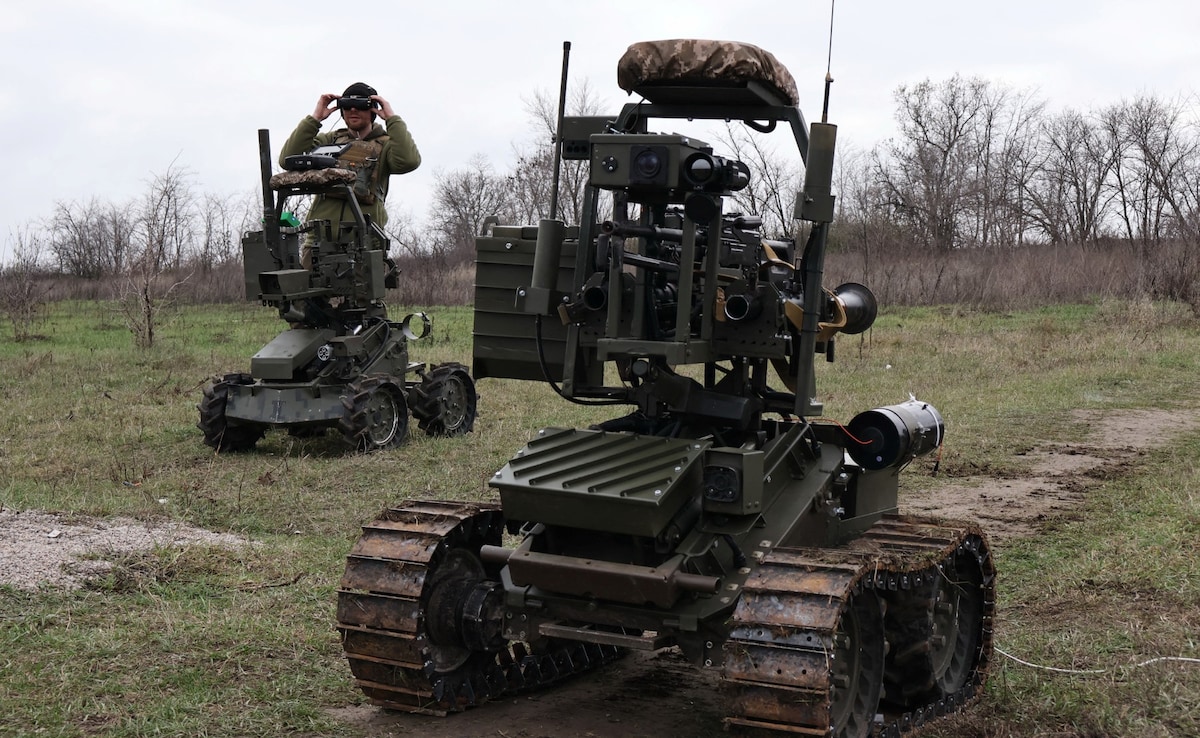
The tech-utopian press is obsessed with a fantasy. They look at the front lines in Ukraine and see a clean, automated revolution. They write breathless headlines about autonomous quadcopters and robotic ground vehicles—soldier replacements that don't eat, don't sleep, and don't bleed. They call it the dawn of frictionless warfare.
They are completely wrong.
Unmanned systems are not replacing the human cost of war. They are multiplying it. The lazy consensus states that a $500 first-person view (FPV) drone substituting for an artillery shell saves money and manpower. In reality, the logistics tail required to keep these "cheap" digital soldiers airborne is creating an unprecedented, invisible drain on human capital, supply lines, and state budgets.
The physical soldier hasn't been replaced. They’ve just been forced to become 24/7 tech support in a muddy trench.
The Logistics Ghost in the Machine
The core argument for robotic warfare relies on flawed math. Mainstream analysts look only at the point of impact. They see a drone strike a tank and calculate a massive return on investment.
They ignore the lifecycle. A human soldier requires food, water, and ammunition. A fleet of "autonomous" drones requires a massive, highly specialized ecosystem that is far more fragile than a standard infantry supply line.
- The Battery Chokehold: Lithium-ion batteries degrade rapidly in freezing winter temperatures. To keep a drone fleet operational, units require constant generator power, which demands diesel. The fuel saved by not driving heavy trucks is immediately consumed by generators keeping drone batteries at optimal charging temperatures.
- The Frequency Arms Race: A drone does not just fly. It occupies electronic space. The moment Russia deploys a new electronic warfare (EW) jamming suite, an entire batch of thousands of drones becomes instant e-waste. This forces immediate, manual hardware modifications on the front lines.
- The Software Supply Chain: Autonomous targeting algorithms require continuous data pipelines. Machine learning models must be trained on new camouflaged targets weekly. This demands data scientists, engineers, and secure servers running close to the combat zone.
I have analyzed defense tech procurement cycles for over a decade. I have watched defense startups burn through tens of millions of dollars trying to build the "perfect autonomous scout." The brutal reality of the battlefield always wins: dirt, moisture, and radio-frequency jamming turn advanced robotics into expensive bricks within hours.
When a drone fails, it doesn't fix itself. A human technician—who could otherwise be holding a rifle or operating a heavy weapon—has to sit in a bunker with a soldering iron, breathing toxic fumes, trying to flash new firmware while artillery rains down.
The Myth of the Cheap Attrition War
Let's dismantle the economic argument. The media loves to compare a $500 off-the-shelf drone to a $100,000 missile. It makes for a great infographic. But it fundamentally misunderstands wartime economics.
+---------------------------+------------------------+------------------------+
| Cost Vector               | Legacy Artillery Shell | Commercial FPV Drone   |
+---------------------------+------------------------+------------------------+
| Unit Manufacturing Cost   | $3,000 - $5,000        | $500 - $1,500          |
| Lifespan/Shelf Life       | 20+ Years              | Weeks (Due to EW)      |
| Human Labor Per Engagement| Low (Crew of 3-5)      | High (Pilot + Tech)    |
| Success Rate Under Jamming| 95%+ (Unaffected by EW)| 10% - 20%              |
+---------------------------+------------------------+------------------------+
When you look at the total operational cost, the narrative flips. Because commercial drone parts are highly susceptible to radio interference, the success rate of standard FPV strikes has plummeted. Units now have to launch ten, fifteen, or twenty drones just to hit a single target through a dense electronic warfare screen.
Multiply that $500 drone by twenty. Add the cost of the dedicated pilot, the spotter, the Starlink terminal needed for data relay, the generator fuel, and the specialized assembly team. Suddenly, your cheap alternative looks exactly like a traditional, expensive military procurement nightmare.
The Psychological Trap of Remote Killing
The armchair generals argue that remote warfare protects the mental health of troops by removing them from direct physical danger. This is a dangerous misunderstanding of human psychology.
During the counterinsurgency campaigns in the Middle East, legacy drone operators sitting in Nevada suffered from rates of PTSD that matched or exceeded those of boots-on-the-ground infantry. Why? Because they watched their targets for days. They saw the humanity, and then they watched the detonation in high definition.
In Ukraine, this effect is amplified and decentralized. Every FPV pilot is wearing virtual reality goggles. They are steering an explosive device directly into the face of another human being from a distance of three miles. They see the exact moment of impact in crisp, real-time video. Then the screen goes to static.
This is not a video game. The brain knows the difference. By distributing thousands of these systems across the infantry, the military is not reducing trauma; it is democratizing it. We are creating a generation of soldiers who are intensely traumatized not by the fear of being killed, but by the hyper-intimate, high-definition mechanics of execution.
Dismantling the Automated Defence Narrative
If you look at the data coming out of electronic warfare institutes, the premise of the completely autonomous robotic army falls apart entirely.
People Also Ask: Can AI drones operate without GPS?
The common answer is yes, using optical flow and terrain contour matching. The brutal truth is that these systems fail completely in smoke, dust, rain, or changing seasons. A forest that looked one way in summer looks entirely different to a computer vision algorithm after autumn defoliation or a heavy artillery bombardment that levels the trees. When the landscape changes, the autonomy fails. Humans must step back in.
People Also Ask: Do robots reduce the need for mobilization?
No. They increase it. For every drone operator on the front line, you need a multi-layered logistical apparatus behind them: parts couriers, software patches installers, 3D-printing assembly teams, and security details to protect the pilots, who are high-value targets for enemy counter-battery fire. Robots change the job description; they do not eliminate the personnel requirement.
The Dangerous Strategic Blindspot
By believing the hype that technology is solving the manpower shortage, Western defense ministries are making a catastrophic strategic error. They are using the presence of drones to justify sluggish ammunition production and slow infantry recruitment.
They assume that software can substitute for steel and meat.
Russia has taken the opposite approach. They have integrated drones heavily, but they treat them as an addition to, not a replacement for, massive industrial artillery production and mass mobilization. They understand a fundamental truth that the West has forgotten: you cannot hold ground with a quadcopter. You cannot clear a trench with a software update.
The reliance on these systems also creates a massive vulnerability. If a country's defense strategy rests on commercially sourced electronic components, their entire national security architecture is at the mercy of global supply chains. A single block on semiconductor exports or a factory fire in Shenzhen can instantly disarm an army that relies on digital gizmos rather than conventional kinetic weapons.
The Reality of the Digital Front Line
If you want to see the future of war, look closely at the units doing the actual fighting. They aren't sitting back drinking coffee while robots do the work. They are buried in frozen mud, frantically trying to shield their electronics from moisture while using jerry-rigged antennas to find a clear radio frequency that isn't being jammed to oblivion.
The downsides of this tech-centric approach are stark:
- It creates a hyper-centralized reliance on commercial tech giants who can alter terms of service or restrict geofencing at a whim.
- It generates immense electronic signatures, making drone operators incredibly easy to find and kill with traditional artillery.
- It creates a false sense of security among leadership, who look at live video feeds and believe they understand the battlefield, bypassing the crucial intuition of local commanders.
Stop looking at the curated viral videos of drone strikes. They are a marketing campaign disguised as military doctrine. Unmanned warfare isn't saving us from the horror of the trenches. It is just making the trenches more complicated, more expensive, and just as bloody.
The machine needs to be fed. And right now, it eats humans just as fast as any weapon ever devised.


