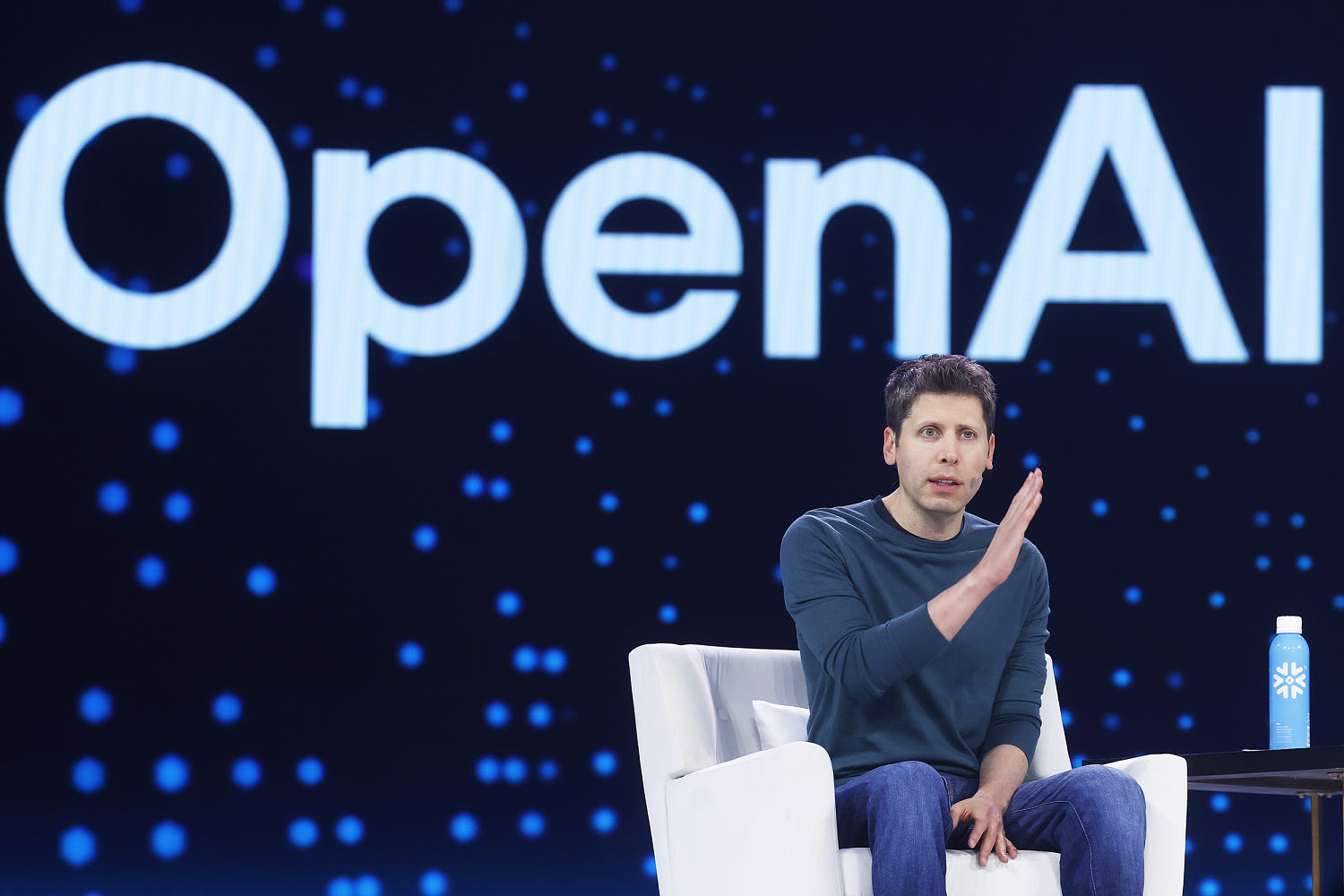
Every six months, tech executives march into congressional hearings, furrow their brows, mutter solemn platitudes about safety, and ask lawmakers to let them police themselves. They swear they are building guardrails. They promise that internal ethics boards will keep the code clean.
It is theater. Expensive, well-rehearsed, high-stakes theater.
The lazy consensus is that artificial intelligence companies can build their own speed bumps because they understand the mechanics of their systems better than any bureaucrat ever could. That is a comforting fiction. Expecting a company fueled by hyper-growth and venture capital to self-regulate its primary revenue engine is like asking a sugar corporation to audit the dental industry. They are structurally incapable of choosing restraint over market dominance.
I have watched enterprise leadership teams burn millions of dollars chasing compliance checklists that vanish the moment a competitor drops a faster model. The pressure to win supersedes every philosophical objection scribbled on a corporate manifesto. If an executive pauses development to prioritize safety while a rival sprints toward deployment, that executive gets replaced by the board before the weekend.
The Illusion of Ethical Guardrails
Look at how these internal governance frameworks operate in practice. They are staffed by researchers whose grants depend on corporate goodwill and lawyers whose job is liability mitigation, not societal preservation. When a safety team flags a structural flaw or a dangerous capability, the product launch schedule overrides the warning. The safety team is treated as a speed bump, not a stop sign.
The core misconception is that artificial intelligence safety is a technical hurdle to be solved with better alignment algorithms. It is not. It is an economic incentives problem. As long as the market rewards scale over stability, voluntary oversight is nothing more than a public relations budget item.
When OpenAI or Anthropic talk about responsible scaling policies, notice the fine print. Those policies contain convenient escape hatches. They allow the creators to loosen restrictions the moment competitive pressure spikes. It is a system designed to look rigid while remaining entirely flexible where it counts: the bottom line.
Who Actually Benefits From Government Inertia?
Lawmakers move slowly because they are outmatched by lobbyists and dazzled by venture capital hype. Tech bosses know this. They actively lobby for regulation—not to restrict their own power, but to write the rulebook in a way that locks out open-source competitors and smaller startups.
A heavy compliance burden imposed by government mandates looks like public safety to the untrained eye. To an insider, it is a moat. If you force every independent developer to run million-dollar safety audits before publishing a model, you instantly destroy the decentralized ecosystem that keeps big tech honest. The giants want regulation because they can afford the compliance cost; a basement coder in Austin cannot.
We keep asking how to help tech giants build better compliance frameworks. That is the wrong question entirely. The question we should be asking is why we are outsourcing our industrial policy to twenty-six-year-old product managers.
The Real Cost of Letting Silicon Valley Mark Its Own Homework
Pretending that self-regulation works has real-world consequences. It allows massive monopolies to externalize the social costs of their technology while privatizing the upside. When hallucinations corrupt legal briefs, when deepfakes destabilize elections, or when automated hiring models quietly discriminate against entire zip codes, the companies issue an apology tweet and double down on their next funding round.
There are no teeth because nobody wants to bite the hand feeding campaign contributions and economic growth metrics.
If you want proof, look at how data privacy has been handled for the last decade. We trusted companies to respect user data voluntarily. We accepted terms of service agreements written in dense legalese. Look where that got us. A digital landscape where surveillance is the default business model and opting out requires a law degree.
Expecting a different outcome with artificial intelligence is not optimism. It is willful blindness.
What Actually Needs to Happen
Stop waiting for boardrooms to develop a moral compass. They do not have one. They have quarterly targets.
Real oversight requires mandatory open-weight audits by independent, publicly funded scientific bodies—not corporate consultants. It requires strict liability laws that hold executives personally and financially accountable when their models cause systemic harm or violate labor laws. If a financial institution cannot launder money without federal oversight, an intelligence model capable of shifting global markets should not be deployed without external verification.
We need to strip away the mystique surrounding neural networks. Code is just digital machinery. Treat it like heavy industry, not a magical artifact beyond human comprehension.
Until we stop treating tech founders like philosopher-kings and start treating them like any other corporate entity managing high-risk assets, we will continue sliding down this slope. The illusion of self-regulation is comfortable, but the landing is going to hurt.
Stop asking them to behave. Start writing rules they cannot rewrite.