Every time a widebody jet drops fifty feet in a patch of clear-air chop, millions of passengers grip their armrests, whisper frantic prayers, and wonder if this is the end. Media outlets rush to publish breathless accounts of rattled passengers, spilled coffee carts, and bruised flight attendants. The lazy consensus says commercial aviation is becoming more dangerous, that climate change is turning the skies into an unpredictable obstacle course, and that you have every right to panic.
It is absolute nonsense. Don't forget to check out our earlier post on this related article.
I have spent two decades analyzing aviation safety data, sitting in cockpit jumpseats across thousands of hours of flight time, and watching sensationalist headlines turn basic atmospheric physics into a psychological horror movie. The media wants you terrified because fear drives clicks. Passengers want someone to blame for an uncomfortable ride. Let us strip away the hysteria and look at the brutal, unvarnished mechanics of flight.
The Airplane is Not a Boat on Water
The fundamental misunderstanding most flyers harbor comes from a terrestrial bias. We live on the ground, so we intuitively treat air like a liquid. When a car hits a pothole or a boat slams into a wave, the vehicle is supported by a medium that resists compression. Passengers map this physical reality onto an airplane, imagining that the aircraft is floating on a fragile ocean of air and that turbulence means the support structure is failing. To read more about the context of this, National Geographic Travel offers an excellent breakdown.
Physics laughs at this intuition.
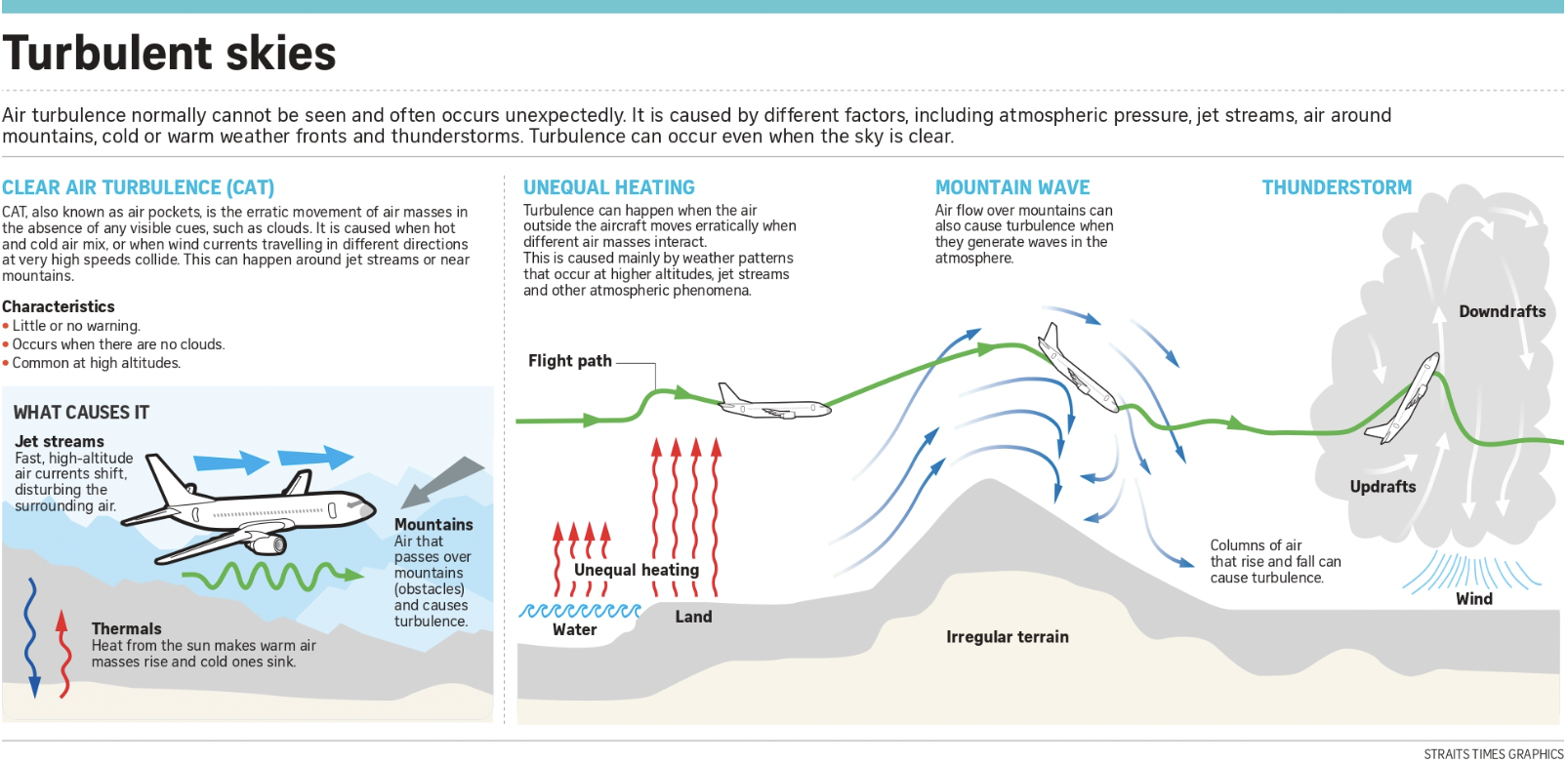
Air is a fluid, yes, but an aircraft wing generates lift by exploiting pressure differentials governed by Bernoulli and Newton. When an airplane encounters a pocket of rising or sinking air—whether caused by thermal convection, jet stream boundaries, or mountain waves—the aircraft does not fall out of the sky. It simply moves with the airmass.
Think of an airplane flying through turbulence not as a car bouncing over jagged rocks, but as a solid block of concrete encased in ballistic gel. The gel moves with every ripple of the surrounding medium, but the block itself remains structurally intact. Commercial airliners are engineered to withstand structural load limits far beyond anything nature can produce. Wings on a modern Boeing or Airbus can flex upward by over twenty feet without snapping. If you saw a wing bend in flight through your window, your nervous system would scream emergency. Yet that flexibility is precisely what saves the aircraft from shearing apart. The metal absorbs the kinetic energy, redistributes the stress, and keeps flying.
The Myth of the Sky Monster Called Clear Air Turbulence
Let us address the modern panic du jour: clear air turbulence. Journalists love this term because it sounds mysterious and untamable. It happens in cloudless skies, usually near jet streams, meaning pilots cannot see it on standard onboard weather radar.
Cue the panic. If the pilots cannot see it, how can they avoid it?
Here is what the experts will not tell you in a panicked news segment: radar detects moisture, not air movement. Clear air turbulence does not mean invisible destruction; it simply means the air is dry where the velocity shear is happening. Modern flight dispatchers and predictive meteorological models map wind shear zones with staggering precision. Pilots receive constant PIREPS (Pilot Reports) from aircraft flying ahead of them. When someone reports a rough ride, that data cascades through the network instantly.
Furthermore, severe turbulence—the kind that tosses unbelted passengers against the cabin ceiling—is exceptionally rare. According to safety boards, serious injuries from turbulence occur in a tiny fraction of a percentage of total flights, and almost universally share one single, avoidable characteristic: the passenger was not wearing a seatbelt.
Let that sink in. The danger of turbulence is not structural failure. The danger is your own stubborn refusal to keep your lap belt fastened when the little blue light is off.
The Economics of Fear
Why do airlines and media outlets conspire to keep you anxious? For the media, blood sells. A headline reading "Routine Flight Experiences Minor Atmospheric Disruption" gets zero engagement. "We Started to Plummet" pulls in millions of ad impressions.
For the airlines, the fear keeps you pliant. It justifies endless safety briefings you ignore, premium seating upsells for smoother rides near the center of lift, and the constant infantilization of the flying public.
I have watched nervous flyers spend thousands of dollars on anti-anxiety supplements, hypnotherapy apps, and fear-of-flying seminars, all because they do not understand the basic engineering envelope of the tube they are sitting in. You are sitting inside a pressurized aluminum cylinder tested to pressures double its operational maximum, held aloft by aerodynamic forces so reliable they have made commercial aviation the safest mode of human transport in history.
More people die choking on a peanut every year than have ever died from structural failure caused by atmospheric turbulence in the history of commercial jet travel. Let that proportion recalibrate your internal risk calculator.
How to Stop Being Terrified of the Inevitable Chop
If you want to stop white-knuckling your way across continents, you need to change your mental model of the atmosphere.
First, stop treating the seatbelt sign as an optional suggestion based on the flight crew's mood. Treat it as your mechanical anchor. When the air gets choppy, the plane is not crashing. It is settling into a different density layer of the atmosphere. The sensation of dropping is almost always an optical illusion compounded by vestibular disorientation in your inner ear. The aircraft rarely drops more than a few inches to a few feet; your brain interprets the deceleration and vertical acceleration as a fatal plunge.
Second, watch the flight crew. Cabin crew members have walked down thousands of miles of aisles. They have felt every variety of chop the troposphere can conjure. If the cart is still rolling and the flight attendant is calmly pouring coffee while holding a casual conversation with row twelve, the airplane is in zero danger. If the crew is strapped into their jumpseats, it is because of potential injury from objects flying around the cabin, not because the wings are coming off.
We have engineered an environment of absolute safety and then invented psychological torture to cope with its minor imperfections. Turbulence is not a malfunction of the flight; it is a feature of the medium.
Next time the cabin drops and the overhead bins start rattling, take a breath, tighten your lap belt, and remember that you are safer in that aluminum tube than you are sitting on your couch at home.
Stop fighting the sky. It is vastly stronger than you are, and it has been keeping you aloft the entire time.