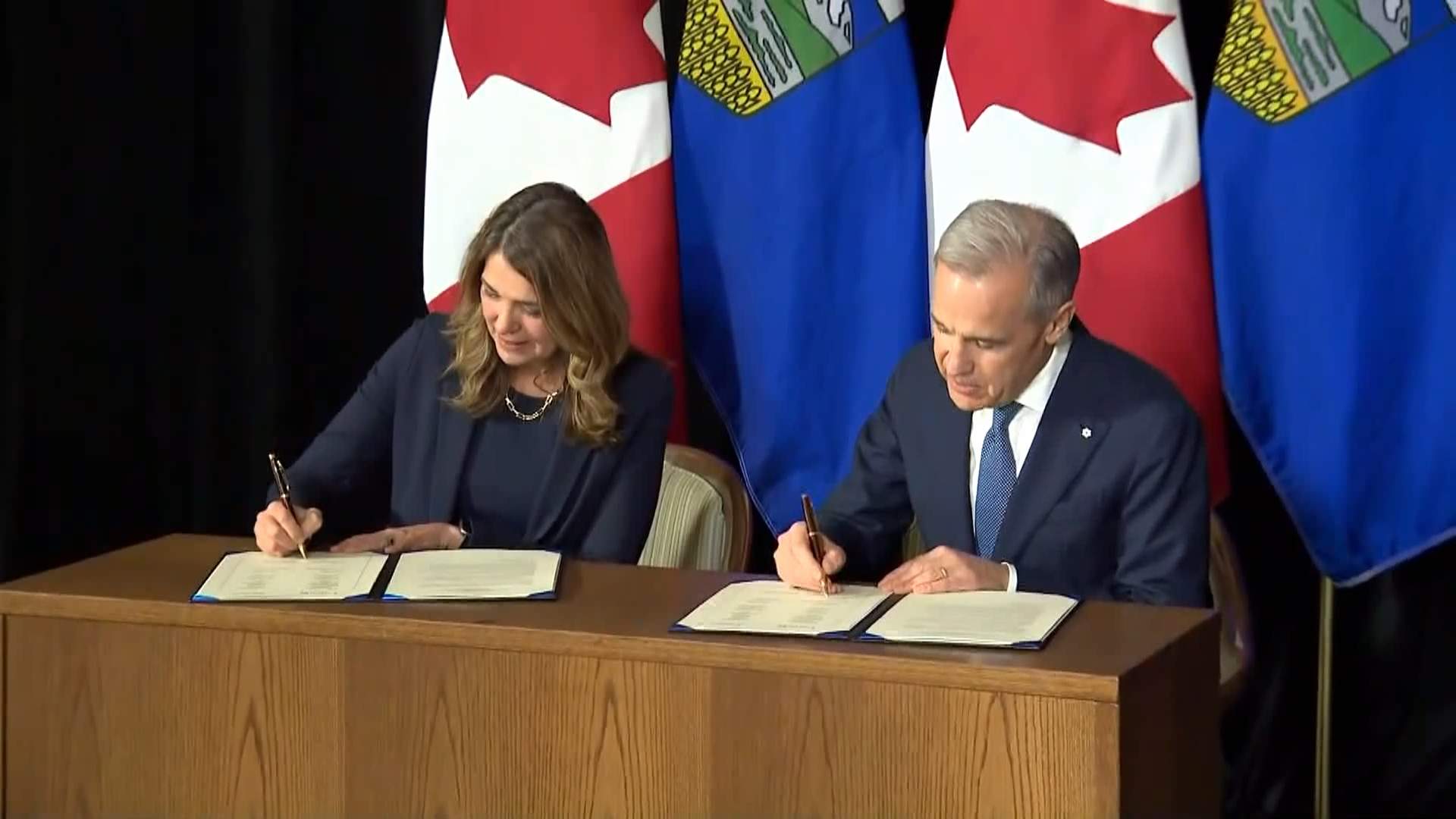
The Alberta government wants you to believe that a massive new oil pipeline to the West Coast will have shovels in the ground by September 2027. It's a beautiful narrative. Premier Danielle Smith and Prime Minister Mark Carney stood together, smiled for the cameras, and signed a shiny new implementation agreement. They promised a streamlined federal review, a cap on industrial carbon pricing compliance costs, and a fast track to Asian energy markets.
Don't buy the hype just yet. Building on this theme, you can find more in: The Anatomy of Speculative Convexity: Analyzing the South Korean Small Cap Surge.
If you look past the political theatre, the reality of building a multi-billion-dollar crude pipeline through British Columbia is messy. CIBC World Markets analysts Robert Catellier and Rogan Anantharajah didn't mince words in their recent industry update. They openly termed the government's aggressive schedule optimistic and reflective of a best-case scenario. That is bank-analyst speak for "this is almost certainly not going to happen on time."
The real question for investors, energy workers, and taxpayers isn't whether Canada needs more market access. We know it does. The real question is whether this specific timeline is grounded in reality or if it's just a political placeholder. When you analyze the structural, legal, and regional hurdles blocking this project, it becomes clear that Alberta's targets are sitting on a razor-thin margin of error. Analysts at CNBC have also weighed in on this situation.
The Clock Is Ticking Loudly on the Regulatory Fast Track
To understand how precarious this plan is, you have to look at the specific deadlines the government set up. Alberta plans to submit its formal proposal to the federal Major Projects Office by July 1, 2026. From there, Ottawa is supposed to designate it a project of national interest under the Building Canada Act by October 1, 2026.
That gives the federal government exactly three months. Anyone who has ever dealt with federal bureaucracy in Canada knows that ninety days is barely enough time to get a stamp approved, let alone a mega-project proposal that intends to ship one million barrels of oil per day.
The province is banking heavily on a "one project, one review" framework established in early 2026 to bypass the years of regulatory gridlock that killed past projects like Northern Gateway and Energy East. But speeding up the paperwork doesn't magically erase the physical and environmental realities of designing a massive pipeline route from scratch. Right now, Alberta is acting as the sole proponent because no private-sector company is willing to take on the massive financial risk. The province put up $14 million for early planning, but top pipeline executives are only offering technical advice, not capital. If corporate boards aren't willing to risk their own money on this timeline, you shouldn't bet your house on it either.
The Pathways Carbon Capture Deadlock
You can't talk about this pipeline without talking about carbon capture. Under the broader federal-provincial energy accord, the proposed West Coast pipeline and the massive Pathways Alliance carbon capture project are legally tethered together. They are a package deal. No carbon pipeline, no oil pipeline.
While Alberta and Ottawa managed to finalize their side-deal on industrial carbon pricing—agreeing to smooth out the hit and cap the market price of Technology Innovation and Emissions Reduction (TIER) credits at $130 per tonne by 2040—they still haven't settled the final funding agreement with the Oilsands Alliance.
- The Problem: The Pathways carbon capture network is a multi-billion-dollar endeavor.
- The Sticking Point: Industry players want concrete financial certainties, including robust carbon contracts for difference, before committing tens of billions in capital.
- The Risk: If the Pathways negotiations drag on past this summer, the July 1 pipeline submission deadline instantly falls apart.
British Columbia Is Prepping for a Fight
Even if Alberta and Ottawa hold hands and march through the regulatory phase in record time, the pipeline eventually has to cross the Rocky Mountains into British Columbia. That is where the real political warfare begins.
B.C. Premier David Eby reacted to the pipeline announcement with immediate, fierce hostility. He publicly slammed Ottawa for rewarding Alberta's "bad behaviour" while ignoring dozens of job-creating projects sitting in his own province. The political friction here isn't just noise; it has teeth.
A major component of Alberta's plan involves a northern port option because it offers a shorter shipping route to hungry markets in Asia. However, the federal northern oil tanker ban stands directly in the way. While the federal-provincial agreement hints at potential "adjustments" to the tanker ban once a project achieves national interest status, a coalition of coastal First Nations and environmental groups have already reiterated their absolute opposition to lifting or easing the ban.
Legal challenges over the duty to consult and the environmental integrity of the ecologically sensitive northern coast will hit the courts the moment Ottawa tries to alter that legislation. Canada's legal system does not move at a "best-case scenario" pace.
What This Means for Canada's Real Economy
Let's look at what is actually at stake if this project defies the odds. ATB Financial chief economist Mark Parsons pointed out that if this pipeline and the Pathways project are successfully executed, it represents the single largest upside to Western Canada's economic outlook. ATB estimates these projects could boost Alberta's real GDP by an average of 5.1 per cent and Canada's overall real GDP by 1.1 per cent between 2027 and 2035.
Potential Economic GDP Impact (2027-2035):
Alberta Real GDP:   +5.1%
National Real GDP:  +1.1%
That economic prize explains why Prime Minister Carney and Premier Smith are pushing so hard. It's about trying to restore international investor confidence in Canadian infrastructure. But there's a big difference between sending a positive signal to the markets and actually clearing a right-of-way through a mountain range.
If you are an energy investor or an operator looking at Western Canadian options, your immediate next steps should be grounded in caution. Do not price this pipeline capacity into your long-term production models for the early 2030s. Treat the September 2027 construction target as an absolute policy ceiling, not a baseline. Watch the July 1 filing date closely; if the province misses that deadline by even a few weeks, the entire house of cards pushes back by at least a year. Keep your eyes on the progress of the Pathways funding agreement this summer, because until the oilsands consortium signs on the dotted line for carbon capture, this West Coast pipeline remains an expensive piece of political fiction.

