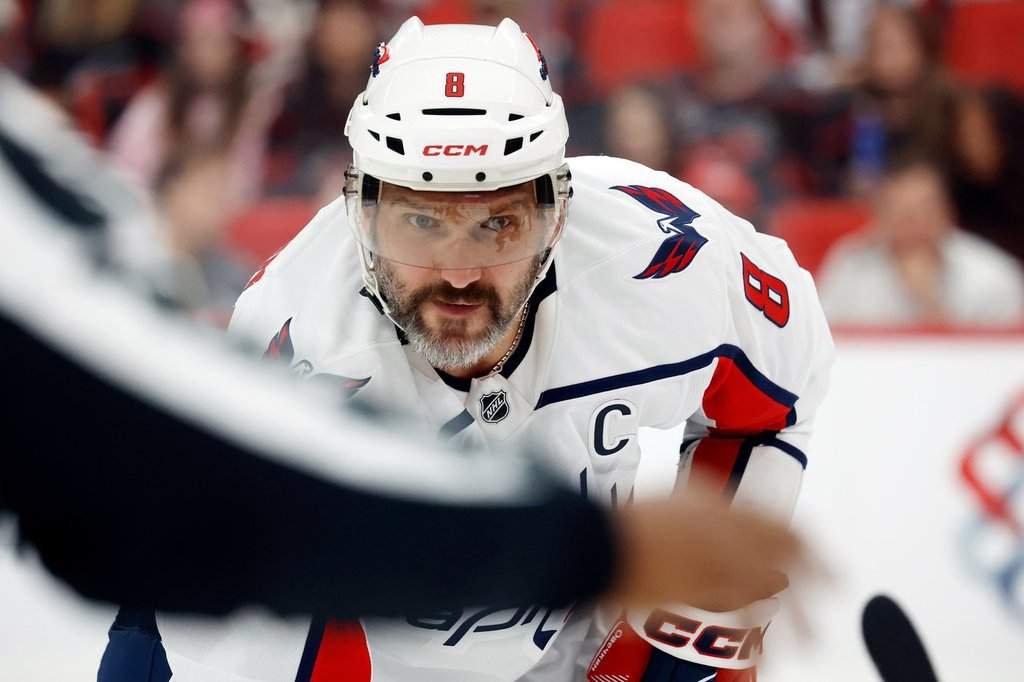
Demonstrations are slated outside Canadian NHL arenas as Washington Capitals captain Alex Ovechkin arrives for his first regular-season games in Canada during the final year of his contract. Ukrainian-Canadian advocacy groups and human rights organizations are organizing the pickets to protest Ovechkin’s long-standing public support for Russian President Vladimir Putin, turning what the league intended as a celebratory farewell tour into a tense collision between hockey nostalgia and wartime accountability.
The outrage is not new. Yet the stakes feel sharper now. For more than a decade, North American sports media treated Ovechkin’s political ties as an awkward footnote to his pursuit of Wayne Gretzky’s all-time goal record. Now, as his five-year, $47.5 million contract winds down and the war in Ukraine drags on, Canadian fans and activists are refusing to let the farewell tour pass without friction.
The Anatomy of a Sporting Boycott
Hockey is religion in Canada, which makes the protests uniquely potent. Canada is also home to the largest Ukrainian diaspora outside Eastern Europe, with more than 1.3 million citizens claiming Ukrainian heritage. When the Washington Capitals cross the northern border, they do not enter neutral territory.
Local chapters of the Ukrainian Canadian Congress and allied grassroots groups have spent months coordinating visibility campaigns timed to Washington’s Canadian road trips. Their strategy avoids disrupting the game itself, which would alienate casual ticket buyers and invite swift arena bans. Instead, organizers focus on the perimeter. They gather on public sidewalks outside security checkpoints, display banners highlighting Russian war crimes, and distribute flyers detailing Ovechkin’s political history to fans walking through the turnstiles.
The goal is simple. Activists want to strip away the comfortable separation between athlete and citizen that professional sports leagues rely on to protect their stars. In Toronto, Montreal, Winnipeg, and Ottawa, the presence of the Capitals roster forces local broadcasters, arena operators, and municipal politicians into an uncomfortable spotlight.
The Team Putin Problem
To understand why Ovechkin attracts this level of scrutiny while other Russian NHL players largely skate free, you have to look at his specific actions. Dozens of Russian-born players compete in the NHL without facing organized pickets. Most have kept their heads down since the full-scale invasion of Ukraine in February 2022, avoiding political statements and focusing entirely on hockey.
Ovechkin cannot claim that neutrality. In November 2017, he founded PutinTeam, a social movement explicitly designed to rally Russian athletes and celebrities behind Vladimir Putin’s 2018 presidential re-election campaign. The initiative was not a casual endorsement. It functioned as a state-aligned public relations apparatus, complete with glossy promotional videos and coordinated media rollouts.
Even after Russian tanks rolled into Ukraine, Ovechkin declined to scrub his digital footprint. His verified Instagram account continued to feature a profile photo of himself standing alongside Putin. When pressed by reporters in February 2022, Ovechkin offered a brief, carefully hedged plea for "no more war," while refusing to criticize the Russian leader directly, citing the safety of his family back in Moscow.
That explanation satisfied many North American hockey pundits, who quickly moved on to tracking his shot totals and power-play efficiency. For Ukrainian Canadians, however, a generic wish for peace does not erase years of active campaigning for an authoritarian regime.
How the NHL Protects Its Farewell Narrative
Professional sports leagues hate nuance during a legacy tour. From a commercial standpoint, the final season of a generational superstar is pure gold. Broadcasters build entire pregame shows around career retrospective packages. Apparel partners roll out commemorative merchandise. Opposing franchises prepare video tributes to play during first-period television timeouts.
The NHL has spent years cultivating this exact atmosphere around Ovechkin. Commissioner Gary Bettman and league executives have consistently framed Ovechkin’s late-career arc around pure athletic achievement, treating the chase for Gretzky’s 894 goals as a unifying milestone for the entire sport.
When political reality intrudes, the league’s standard playbook relies on strict narrative compartmentalization. League officials emphasize that NHL players are individual employees who do not represent their home governments. Arena security policies across Canadian venues strictly prohibit political signage inside the bowl, ensuring that television cameras capturing the ice surface rarely pick up signs of dissent.
This creates a stark visual split. Inside the arena, fans see a sanitized celebration of a Hall of Fame career, complete with standing ovations and corporate sponsorships. Outside on the concrete plaza, protesters stand behind metal barricades, holding photos of bombed Ukrainian cities while thousands of fans file past in red Capitals jerseys.
The Dilemma Facing Canadian Hockey Fans
Walk up to any ticket holder outside a Canadian arena on game night, and you will hear the tension playing out in real time. Most fans are not endorsing Russian foreign policy when they buy a seat to watch Washington play. They are paying to see one of the greatest goal scorers in hockey history before he hangs up his skates.
Sports fandom runs on emotional compartmentalization. People routinely separate an athlete's off-ice conduct, political allegiances, or personal failings from their on-ice brilliance. For decades, hockey culture in particular has prized a code of silence, discouraging players and fans alike from bringing politics into the rink.
Yet the Canadian public is unusually sensitive to the human cost of the war in Ukraine. Nearly every major Canadian city has welcomed thousands of displaced Ukrainians since 2022. Local youth hockey associations have donated equipment to refugee families, and community centers have hosted fundraisers across the prairies and major urban hubs.
As a result, cheering for Ovechkin carries a different weight in Edmonton or Winnipeg than it does in Washington, D.C. Fans find themselves caught between two competing impulses. One is the pure, lifelong appreciation of an elite athlete executing a lethal one-timer from the left faceoff circle. The other is an uneasy awareness that the man scoring the goal spent years lending his global celebrity to the political survival of Vladimir Putin.
The Limits of Arena Protests
Activists organizing these demonstrations harbor no illusions about changing the NHL’s schedule or forcing Washington to bench its captain. Under Canadian and American labor laws, as well as the NHL Collective Bargaining Agreement, a player cannot be suspended or barred from entering a venue simply because of past political speech that violates no league rules.
Furthermore, the Canadian government has already made its position clear through visa approvals. While Ottawa has imposed sweeping sanctions on Russian oligarchs, state media figures, and propagandists, Russian athletes competing in North American leagues have continued to receive work permits and border clearance.
Protesters know they cannot stop the puck from dropping. Their objective is cultural rather than legal. By showing up with megaphones and placards every time Ovechkin steps off a team charter in Canada, they aim to deny him the frictionless, universally adored exit that sports legends typically enjoy.
In a hypothetical example of how legacy tours usually unfold, a retiring star visits every city one last time, receives a custom painting or a charity donation from the home team, waves to a cheering crowd, and exits to glowing columns in the morning paper. That script requires collective amnesia. The demonstrators outside Canadian arenas are determined to keep memory alive.
Media Complicity and the Myth of Apolitical Sports
North American sports journalism has struggled to cover the Ovechkin paradox honestly. Beat writers rely on locker room access to do their jobs. Asking tough, recurring questions about geopolitics and authoritarianism risks alienating team public relations staff, coaching staffs, and the players themselves.
Consequently, coverage tends to fracture into two separate tracks. Columnists on the op-ed pages occasionally write sharp critiques of Ovechkin’s ties to the Kremlin, particularly when a Canadian road trip brings the issue back into local headlines. Meanwhile, the daily hockey coverage treats his final season strictly as a statistical victory lap, analyzing his ice time, linemates, and legacy alongside legends like Gordie Howe and Mario Lemieux.
This division allows the sport to avoid confronting a fundamental truth. International sports have never been separate from politics, especially in Russia, where elite athletic success has served as a primary instrument of state legitimacy since the Soviet era. When the Kremlin promotes a hockey star, it is not merely celebrating a game; it is projecting national strength and political stability.
Ovechkin did not invent that system, and expecting a hockey player raised in Moscow to publicly denounce a regime that holds immense leverage over his extended family is unrealistic. Critics who demand a dramatic public break with Putin often gloss over the very real personal risks involved for Russian nationals with deep roots in their homeland.
At the same time, acknowledging the constraints Ovechkin faces does not require pretending his past actions never happened. He was not a passive bystander drafted into a photo op. He willingly built a political brand around Putin when doing so carried prestige and institutional backing in Moscow.
What Happens When the Puck Drops
Security protocols around the Washington Capitals will tighten across every Canadian stop on their schedule. Arena operators have briefed local police departments on managing sidewalk demonstrations without blocking emergency exits or sparking confrontations between protesters and intoxicated fans. Inside the buildings, ushers will quietly confiscate any political banners that make it past security screening.
On the ice, Ovechkin will do what he has done for over twenty years. He will glide down the left wing, lean heavily into his stick, and fire blistering shots toward the net while television announcers tally his career totals.
Outside the glass, however, the atmosphere remains permanently altered. No amount of nostalgic highlight reels or corporate tribute videos can fully scrub the stain of PutinTeam from the record books, leaving Ovechkin’s Canadian farewell defined as much by the signs outside the arena as the goals scored within it.