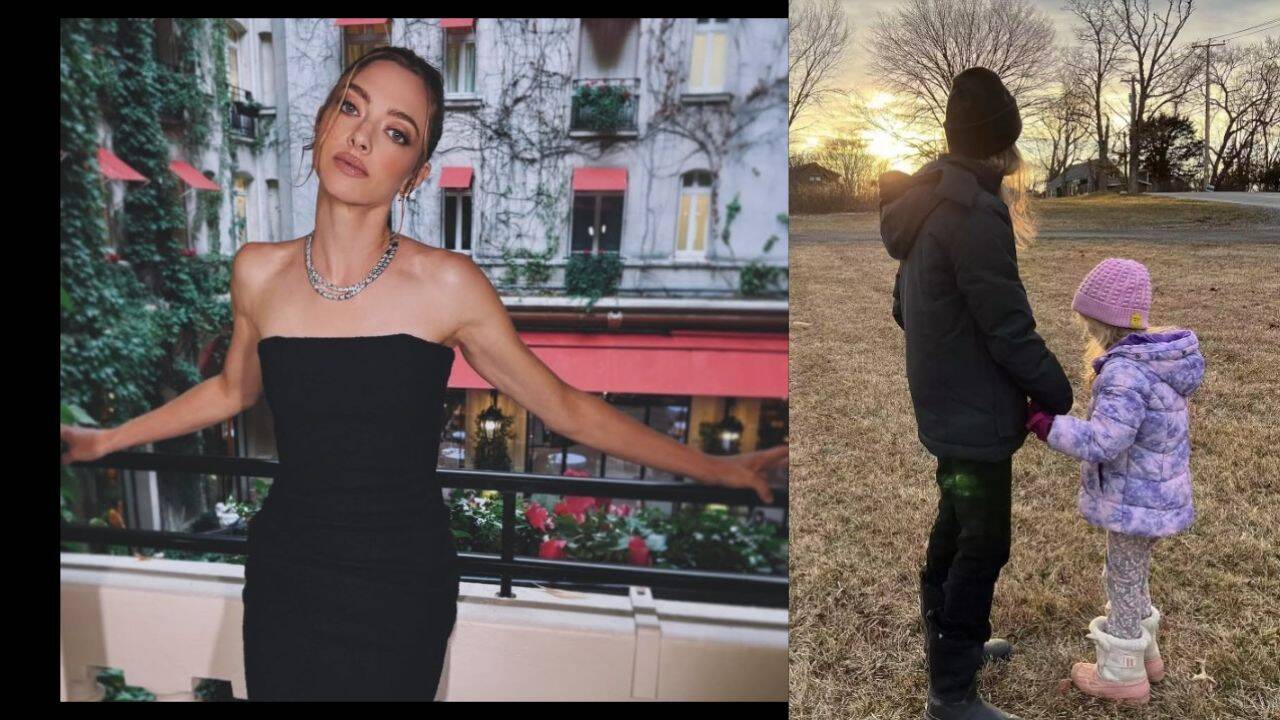
Most parents panic the second a PG-13 movie pops up on a ten-year-old's watchlist. Amanda Seyfried took a completely different route. She sat down with her nine-year-old daughter, Nina, and let her watch Mean Girls for the very first time.
And Nina loved it.
If you're a parent or a millennial who grew up quoting Karen Smith every Wednesday, that revelation hits differently. You start doing the mental math immediately. Wait—Mean Girls came out in 2004. The Burn Book, the Jingle Bell Rock dance, Regina George getting hit by a bus, and all those brutally specific high school insults were aimed squarely at teenagers two decades ago. Letting an elementary schooler dive straight into North Shore High sounds risky on paper. Yet when you actually break down why Seyfried made that call, it makes a lot of sense.
Why Amanda Seyfried Finally Showed Her Daughter Mean Girls
Amanda Seyfried shares two children with her husband, actor Thomas Sadoski. Their daughter Nina was born in March 2017, which means watching the 2004 comedy around age eight or nine puts her right at the cusp of those early social dynamics every kid eventually runs into.
Seyfried hasn't built her parenting style around bubble-wrapping her kids on a secluded farm—even though she literally lives on a farm in upstate New York. She's been open in interviews about wanting her children to understand what she does for a living without making fame weird or overwhelming. For years, Nina knew her mom was an actor, maybe recognized her voice from animated projects, or saw glimpses of her career from a distance. Mean Girls wasn't just any movie night pick. It was Seyfried's breakout film role, the exact performance that introduced her comedic timing to millions of people worldwide.
Think about what that moment looks like from a parent's chair. You aren't just pressing play on a teen comedy. You're showing your kid a time capsule of who you were at eighteen years old, playing a character whose entire charm rests on being sweet, clueless, and completely unbothered by the cruelty swirling around her.
Nina didn't just tolerate her mom's old movie. She genuinely loved it. That reaction tells us something huge about how Mean Girls holds up twenty-plus years later—and how kids actually process adult humor when a parent is sitting right next to them on the couch.
What Makes Karen Smith So Safe and Funny for Kids
Let's be honest about Mean Girls. If you haven't rewatched it recently, your memory probably lumps the whole movie into one big bucket of sharp, R-adjacent teen drama. Tina Fey's script originally earned an R rating from the Motion Picture Association before Paramount trimmed a few jokes and sexual references to secure the PG-13 rating.
So yes, there's plenty of mature material baked into the runtime. Coach Carr's health class speech, Regina George's bedroom scenes, and a handful of slurs that aged poorly definitely exist in the film.
Here's the catch though. Nine-year-olds don't process movies like adults do.
When an eight- or nine-year-old watches Mean Girls alongside a parent, half the edgy innuendo flies completely over their heads. What lands instead is the physical comedy, the bright 2000s wardrobe, the exaggerated high school cliques, and Karen Smith predicting the weather with her chest. Karen isn't malicious. She's goofy, loyal in her own strange way, and practically cartoon-like in her delivery. Watching your own mom play someone who asks if butter is a carb is pure gold for a kid.
I've watched plenty of parents stress over strict MPAA age brackets while ignoring the actual context of a movie. An arbitrary "13" stamped on a streaming thumbnail doesn't account for a kid's emotional maturity, or whether a parent is actively watching with them to explain what's happening on screen.
Is Mean Girls Actually Appropriate for a Nine-Year-Old
This is where the internet always splits into two camps. One group insists PG-13 means thirteen and up, end of discussion. The other group remembers sneaking into PG-13 comedies in fourth grade and turning out completely fine.
Both sides miss the real point. Age appropriateness isn't a rigid mathematical formula. Common Sense Media rates Mean Girls for ages 13 and older, pointing out the language, drinking at house parties, and heavy themes around relational aggression. Those warnings are fair if you're handing a kid an iPad and walking out of the room for two hours.
Co-viewing changes everything.
When you sit beside your child during a movie like Mean Girls, you control the room. You can skip past the thirty seconds of Coach Carr's terrible advice if you want, or let a joke pass without turning it into an awkward lecture. More importantly, Mean Girls isn't celebrating cruelty—it's actively mocking it. The entire third act is a massive takedown of how miserable mean girls actually make themselves and everyone around them.
What Kids Pick Up From Watching Early
Elementary school isn't some peaceful utopia free of drama. By third and fourth grade, kids are already dealing with exclusion on the playground, shifting friend groups, and subtle peer pressure.
- Visualizing clique behavior: Seeing Regina George manipulate Cady Heron gives kids a concrete, exaggerated example of fake niceness before they encounter subtler versions in middle school.
- Spotting bad apologies: The movie makes it painfully obvious when someone is only saying "I'm sorry" to save face.
- Understanding consequences: Nobody in Mean Girls wins by being cruel. The Burn Book blows up in everyone's faces, and real friendships only survive once the characters drop the act.
Instead of teaching a nine-year-old how to be mean, watching Tina Fey's script with a parent gives them vocabulary to spot manipulation early.
How Celebrity Kids Experience Their Parents' Famous Roles
Seyfried isn't the first star to hit that milestone moment of introducing her kid to her most iconic character, and the reactions across Hollywood vary wildly.
Some actors keep their filmographies locked in a vault until their kids hit high school. Others treat movie night like a normal part of family life. Kristen Bell has talked openly about her daughters watching Frozen endlessly without fully connecting Anna's voice to their mom until they got older. Meanwhile, actors known for horror or dark dramas obviously have to wait a decade or more before screening their best work.
Seyfried sits in a rare sweet spot. Her resume spans everything from Mamma Mia! to Les Misérables to The Dropout, yet Karen Smith remains the character strangers still quote at her in grocery stores. Letting Nina watch Mean Girls bridges the gap between "Mom at home on the farm" and "Amanda Seyfried, pop culture icon."
There's also a practical reality behind Seyfried's timing. You can't shield kids from iconic pop culture forever once they start hanging out with friends at school and birthday parties. By introducing Mean Girls herself at nine, Seyfried got to share the experience on her own terms rather than having Nina hear distorted versions of the movie on a school bus three years later.
How to Decide If Your Kid Is Ready for Classic PG-13 Comedies
If Seyfried's story has you eyeing your own DVD shelf or streaming queue for early-2000s favorites, don't just guess based on nostalgia. Your memory of a movie you loved twenty years ago is almost always softer than the actual cut.
Run through a quick gut-check before pressing play with an elementary or middle schooler:
- Rewatch or skim the parental guide first. Look up the specific content flags on IMDb or Common Sense Media so you aren't blindsided by a sudden scene you completely forgot existed.
- Separate crude humor from mean-spiritedness. Kids handle silly, slightly gross jokes way better than graphic violence or genuinely bleak emotional cruelty.
- Commit to sitting in the room. Never use a borderline PG-13 movie as background noise while you cook dinner in another room. Your presence is the safety net.
- Keep the commentary casual. If a joke crosses a line, don't pause the TV for a twenty-minute sermon. A quick "yeah, people definitely don't say that anymore" keeps the movie moving without making things weird.
Amanda Seyfried trusted her own judgment over a rating label, sat down with her daughter, and turned a 2004 cult classic into a shared family memory. If you're thinking about introducing your own kids to the movies that shaped your teenage years, take the exact same approach—watch it together, read the room, and let them enjoy the ride.