Washington is panicking over a handful of cheap plastic propellers in the Caribbean, and it is embarrassing to watch.
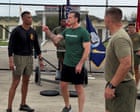
Defense Secretary Pete Hegseth stood on the tarmac at Guantanamo Bay, dressed in physical fitness gear, drawing a hard line against a bankrupt island. The media breathlessly repeated the establishment line: Cuba is acquiring Iranian and Russian drones, discussing hypothetical strikes on Florida, and posing a direct threat to the American homeland. Hegseth warned Havana that they are inviting a confrontation they "could not stand."
This entire narrative is built on a fundamental misunderstanding of modern asymmetric warfare. The defense establishment is treating 300 tactical drones like they are Soviet nuclear-tipped R-12 ballistic missiles from the 1962 missile crisis. They are entirely missing the point.
The Myth of the Cuban Threat
Let's look at the actual mechanics of the situation. The corporate media is hyper-focusing on reports that Cuba has acquired roughly 300 military drones from Russia and Iran. The establishment reaction has been a predictable mix of Cold War nostalgia and performative saber-rattling. We are implementing oil blockades, layering on economic sanctions, and acting as if Havana is about to launch an amphibious invasion of Key West.
I have spent years watching the Pentagon throw billions of dollars at defense systems designed for a century that no longer exists. This is the exact same failure of imagination.
Cuba is not a sovereign military threat to the United States. Cuba is an economic carcass. The island is suffering through endless power grid collapses, food shortages, and absolute financial ruin. The idea that Havana is going to initiate a first strike against a U.S. naval base or the Florida coast with mid-tier Shahed-style loitering munitions is a strategic absurdity.
If Cuba launches a single drone at Guantanamo Bay, the retaliation would wipe out their entire command and control structure within hours. The Cuban leadership knows this. Bruno Rodriguez and the rest of the regime are survivors; they are not suicidal.
The Real Asymmetric Value of Cheap Drones
So why did Cuba acquire 300 drones? It is not an offensive arsenal. It is a classic, low-cost defensive deterrent meant to manipulate American paranoia.
In modern defense economics, the cost-to-kill ratio is heavily skewed in favor of the asymmetric actor. Consider the basic math of a drone engagement:
$$Cost_{Asymmetric} \ll Cost_{Exquisite}$$
A standard Iranian-designed delta-wing drone costs anywhere from $20,000 to $50,000 to manufacture. To intercept that drone, the United States military typically deploys a surface-to-air missile, such as a RIM-162 Evolved SeaSparrow Missile (ESSM) or an Patriot interceptor, which costs between $1 million and $4 million per shot.
Cuba does not need to win a war against the United States. They just need to make the prospect of an American-enforced regime change look prohibitively messy and expensive. By leaking or allowing intelligence to surface about drone stockpiles, Cuba forces U.S. Southern Command to reallocate high-value air defense assets, scramble intelligence assets, and waste millions of dollars in logistical adjustments.
Havana spent a few million dollars on hardware from Tehran and Moscow, and in return, they received a personal visit from the U.S. Defense Secretary, a perimeter assessment by General Francis Donovan, and weeks of free media coverage that inflates their relevance on the world stage. Cuba didn't build a weapon; they built an attention trap. And Washington walked right into it.
The Blockade Blunder
The current U.S. strategy relies heavily on a devastating energy and oil blockade designed to squeeze the Cuban government until it collapses, following the recent script used against Venezuela. This approach demonstrates a total failure to understand the psychology of isolated regimes.
Sanctions and blockades do not destabilize entrenched authoritarian regimes; they institutionalize them. When you cut off the electricity and gas to an entire population, you do not spark a democratic revolution. You destroy the remaining private merchant class, eliminate civilian mobility, and make the entire population completely dependent on state-rationed handouts for survival.
More importantly, it forces the target nation directly into the arms of our primary geopolitical rivals. Cuba cannot buy oil or spare parts from the West, so they trade intelligence access and geographic positioning to Russia and China in exchange for survival.
During hearings, lawmakers pressed Hegseth on whether the Russian SIGINT (signals intelligence) complex in Lourdes has been reactivated, or if China is expanding its electronic spying footprint on the island. The defense establishment treats these developments as unprovoked aggression. In reality, they are the direct, predictable consequence of our own blockade policies. We created an economic vacuum, and Beijing and Moscow filled it.
Dismantling the Premise
The defense establishment constantly asks: How do we prevent Cuba from acquiring advanced weapons that threaten the U.S. homeland?
This is entirely the wrong question. The real question we should be asking is: Why are we allowing a bankrupt island nation to dictate our military posture in the Western Hemisphere?
The conventional wisdom says that the U.S. must project overwhelming force at the fence line of Guantanamo Bay to deter a communist resurgence. The brutal truth is that our obsession with the Cuban regime gives them the exact leverage they need to survive.
Consider the strategic alternative. If the United States lifted the embargo unilaterally, flooded the island with American tourism, permitted open telecommunications infrastructure, and allowed direct investment into the Cuban private sector, the communist regime would dissolve within a decade. The regime survives on the narrative of the American monster at the gates. Take away the monster, and the state has nothing to blame for its systemic failures.
Instead, we send the Defense Secretary to stand at the border in fitness gear, validating their propaganda and proving to the Cuban people that Washington is indeed planning an invasion.
The United States has a defense budget approaching a trillion dollars. We possess the most advanced carrier strike groups, fifth-generation fighter fleets, and nuclear deterrents on the planet. Acting terrified of 300 tactical drones on an island with a failing power grid is an admission of psychological vulnerability. Stop treating a regional nuisance like a peer competitor. Stop playing Havana's game.