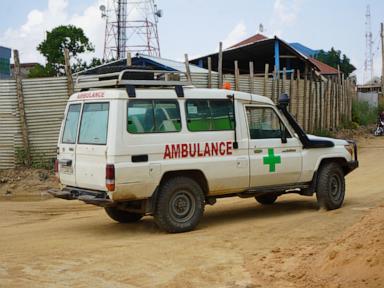
A high-stakes legal showdown is unfolding in Kenya over a secretively operated medical site.
Seven American aid workers recently arrived at a military base near Nanyuki to sit out a mandatory 21-day observation period after serving on the frontlines of an Ebola outbreak in the Democratic Republic of Congo. On the surface, placing healthcare personnel in a managed facility sounds standard. But there's a massive problem.
A Kenyan court explicitly ordered a total halt on setting up and operating this U.S.-backed bio-isolation center.
Public outrage isn't just about administrative technicalities. It stems from deep concerns regarding sovereignty, public health equity, and executive overreach.
A Direct Conflict Between Law and Diplomacy
The controversial 50-bed isolation unit sits on Laikipia Air Base, roughly 115 miles north of Nairobi. Washington backed the site to manage U.S. citizens exposed to Ebola in neighboring central African nations before they travel home.
The legal trouble started when civil rights groups—including the Law Society of Kenya and the Katiba Institute—filed petitions to block the project. They argued that bringing individuals potentially exposed to a deadly virus into Kenya places an unfair burden on local infrastructure.
Timeline of Events
------------------
• DRC Ebola Outbreak Expands: Hundreds killed; U.S. enacts strict return policies for workers.
• Facility Agreement Announced: U.S. pledges $13.5 million for Kenyan bio-preparedness.
• Legal Injunction Issued: High Court orders construction and operations suspended.
• Violations Alleged: Seven aid workers from Samaritan's Purse enter quarantine inside military tents.
The court sided with civil society, issuing an injunction that suspended operations. Kenya's Health Minister Aden Duale even acknowledged the halt. Yet, satellite images and statements from aid organization Samaritan’s Purse confirm the base is actively housing personnel.
Activists call this a blatant violation of judicial authority. When executive decisions override clear judicial mandates, public trust evaporates fast.
Why Local Communities Are Resisting
Protests in Nanyuki have turned deadly, leading to two recorded deaths during recent clashes with security forces. Residents aren't just angry; they're genuinely frightened.
Why ask a developing country to absorb the biological risk of another nation's emergency response personnel? That question drives local pushback.
While Kenya hasn't recorded local Ebola transmission during this outbreak, critics argue the risk-reward ratio is dangerously skewed. The U.S. pledged $13.5 million to support Kenya's broader health infrastructure in exchange for hosting the site. To many local observers, that transaction feels less like international cooperation and more like outsourcing biosecurity risks to an unprepared region.
The Medical Reality of the Site
None of the seven aid workers currently housed at Laikipia have shown active symptoms.
They're living in reinforced military tents pitched over gravel pads, equipped with basic cots and supplied by U.S. military logistics. The personnel work with Samaritan's Purse, an organization running relief units in eastern Congo.
- Ebola Transmission dynamics: The virus doesn't spread through the air like influenza or COVID-19. It requires direct contact with infected bodily fluids.
- Symptom monitoring: Individuals who are asymptomatic cannot transmit the virus.
- Incubation period: The standard monitoring window lasts 21 days.
Even though medical risk is low while individuals remain asymptomatic, local panic spreads quickly. Without transparent communication, fear usually wins out.
What Needs to Happen Next
This situation isn't going to resolve itself without decisive action. Foreign policy goals shouldn't run roughshod over domestic law and community consent.
To fix this standoff, several concrete steps are necessary immediately:
- Enforce Judicial Accountability: The Kenyan Ministry of Health must clarify whether it granted off-the-record exemptions or if officials bypassed the court injunction altogether.
- Increase Operational Transparency: U.S. officials and Samaritan's Purse must share safety protocols openly with local community representatives in Laikipia to demote panic with factual clarity.
- Re-evaluate Isolation Protocols: Future bilateral medical agreements need transparent legislative oversight rather than quick executive handshakes behind closed doors.
If governments want international aid efforts to succeed, they can't treat local legal systems as optional hurdles.
This Seven US Ebola aid workers quarantined in Laikipia coverage provides extra context on how local media reported the arrival of the foreign aid workers at the military base despite court challenges.