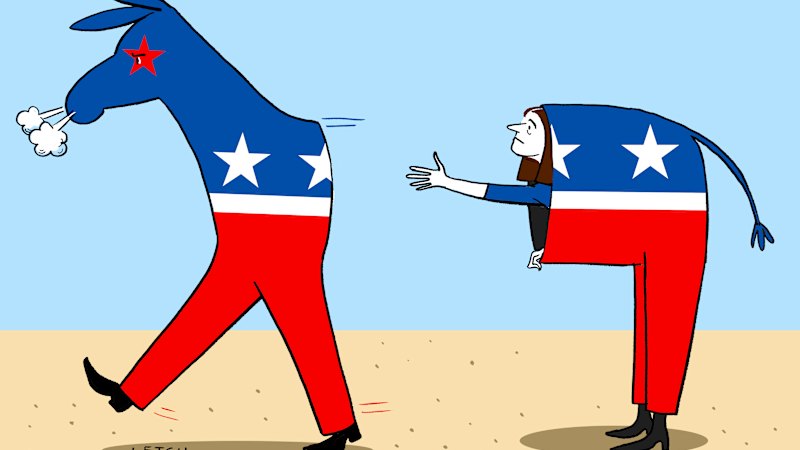
You keep waiting for the political fever to break. It isn't happening. The nostalgic yearning for a mythical era of bipartisan consensus and quiet legislative compromise is a trap. American politics has permanently morphed into an aggressive, insurgent-driven spectacle, and the primary catalyst is no longer just coming from the right.
On the left, a new wave of democratic socialist primary challengers is executing a playbook that looks suspiciously like the one Donald Trump used to capture the Republican Party. They are weaponizing anti-establishment anger, bypassing traditional party gatekeepers, and forcing incumbents to sweat for their political survival. If you think this is a temporary phase, you haven't been paying attention to the ground reality in deep-blue districts across the country. In similar updates, we also covered: The Anatomy of Managed Friction: How Structural Isolation Shields Domestic Economies From Regional Shock.
The Insurgent Playbook That Broke the Two-Party System
Look at what happened in recent congressional and local primaries. Organizations like the Democratic Socialists of America are no longer fringe campus clubs. They are functioning like a disciplined third party operating entirely inside the Democratic apparatus. They recruit, they fundraise, they organize ground games, and they target veteran establishment figures.
When insurgents toppled long-serving Democratic incumbents in New York and other urban strongholds, they proved a vital point. Incumbency is no longer a shield. NPR has also covered this fascinating subject in extensive detail.
This mirrors the exact mechanism Trump used to reshape the GOP. Take over the ballot line, energize a disillusioned base with uncompromising rhetoric, and paint the party establishment as weak, out-of-touch enablers. The establishment fights back with cautious moderates, but the energy belongs to the insurgents.
Centrist Democrats look at these primary losses and panic. They argue that sharp-edged leftist politics hands Republicans an easy weapon. President Donald Trump and Republican leaders have leaned heavily into this opening, branding their opponents with sweeping anti-communist attacks ahead of the midterms. They want voters to see every progressive candidate as a threat to the American economic fabric.
Yet, the left-wing populist response is simple. Standing for nothing yields nothing. When housing costs soar, wages stagnate, and healthcare remains a financial cliff, incremental tweaks don't cut it. Voters want fighters.
Why the Old Rules of Engagement Are Dead
For decades, political analysts operated under a comforting assumption. Extremes on both sides would eventually moderate once they hit the hard wall of general election arithmetic. That logic assumed voters always preferred the sensible middle.
The data tells a different story now. Younger generations coming of age post-2008 have a vastly different view of capitalism and state intervention than their parents did. When half of young adults view socialist frameworks more favorably than traditional corporate capitalism, the electoral incentives shift completely. You can't scold voters back into a 1990s neoliberal consensus when they're drowning in debt.
This creates a permanent state of internal civil war within both major parties. Republicans wrestle constantly between populist nationalists and legacy fiscal conservatives. Democrats are split down the middle between defensive centrists wanting a return to cautious management and aggressive democratic socialists pushing for structural overhauls.
Normal is gone because the underlying economic grievances driving these shifts aren't going away.
Navigating the New Political Reality
If you're trying to make sense of where elections are heading, stop looking for signs of a cooling-off period. Expect higher volatility, more primary upsets, and sharper ideological polarization.
Keep a close eye on resource allocation during cycle battles. When progressive factions pull party infrastructure into safe urban seats for ideological purity tests, it drains resources from competitive swing districts that actually decide control of Congress. That tension is the defining internal drama of modern democratic politics.
Stop expecting a reset button. This is the new baseline. Adapt your expectations to a system defined by permanent friction, insurgent disruption, and ideological warfare from top to bottom.
Why Both Republicans and Democrats Are Worried About the DSA
This video provides an on-the-ground look at how democratic socialist primary challenges are reshaping internal party dynamics and causing anxiety for political establishments.
http://googleusercontent.com/youtube_content/1