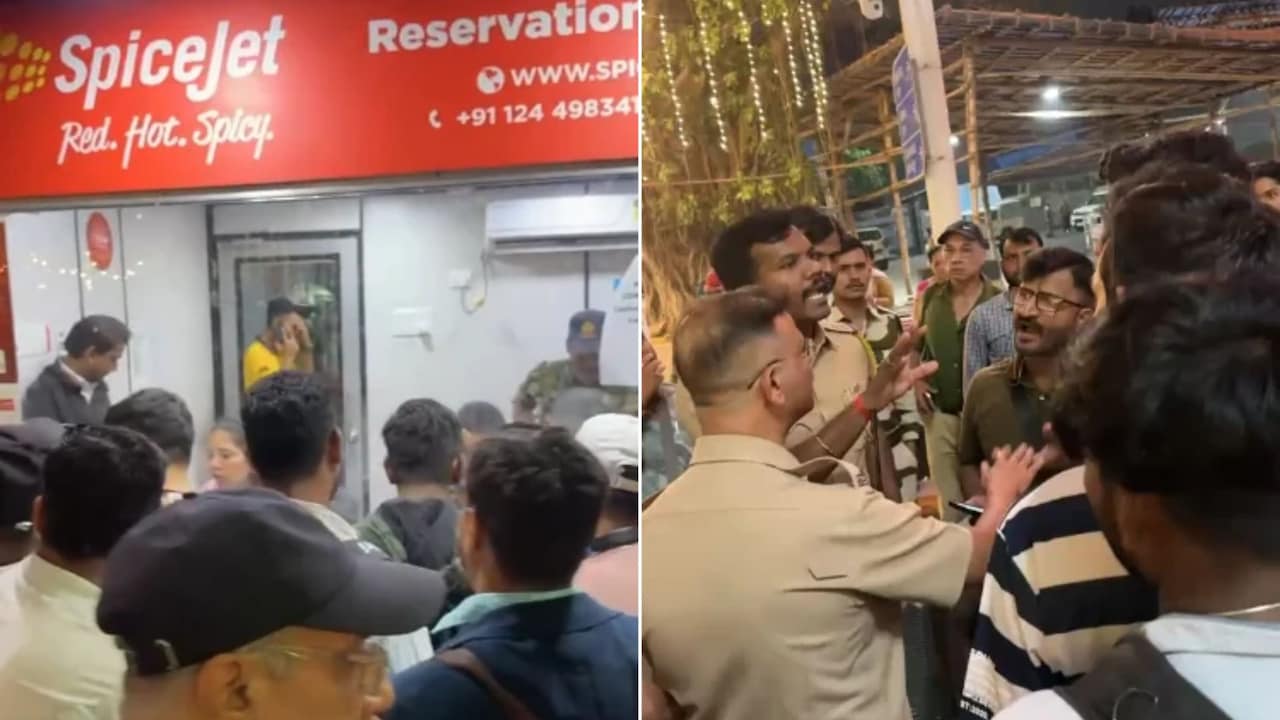
When an airline halts all departures out of a primary hub past 7:00 PM, stranding hundreds of passengers in Mumbai, the disruption is rarely an isolated weather anomaly or a singular mechanical fault. Instead, a complete evening departure freeze represents a systemic cascade failure across four tightly coupled operational domains: fleet utilization buffers, crew duty time limitations, airport slot congestion, and liquidity-constrained maintenance workflows. Understanding this breakdown requires shifting away from surface-level passenger complaints and examining the structural mechanics of low-cost carrier (LCC) hub operations at Chhatrapati Shivaji Maharaj International Airport (BOM).
The Mechanics of Evening Hub Collapse
In commercial aviation, schedule integrity degrades non-linearly throughout the operating day. Low-cost carriers maximize return on invested capital by pushing daily aircraft utilization to the upper limits of mechanical and regulatory tolerance, often targeting 12 to 14 block hours per airframe. To achieve this, turnaround times—the window between an aircraft reaching the gate and pushing back for its next sector—are compressed to 25 or 35 minutes.
This zero-slack architecture functions efficiently only when every upstream dependency executes on schedule. When minor friction enters the system at 9:00 AM—such as an air traffic control (ATC) holding pattern, a delayed baggage reconciliation, or a minor avionics reset—the deficit is absorbed into subsequent sectors. By 7:00 PM, cumulative micro-delays cross a critical threshold where recovery becomes mathematically impossible within the remaining operating window.
The structural failure at Mumbai manifests through three compounding feedback loops:
- The Crew Flight Duty Time Limitation (FDTL) Cliff: Aviation regulators enforce strict caps on how long pilots and cabin crew can remain on active duty to prevent fatigue-induced errors. When morning and afternoon sectors slip by two to three hours, incoming flight crews scheduled to operate evening departures out of Mumbai legally "time out" before their inbound aircraft even touches down. Without a deep bench of standby reserve crews stationed locally at the hub, an airworthy plane sitting at a Mumbai gate cannot legally push back.
- Slot Forfeiture and Runway Bottlenecks: Mumbai operates as one of the world's most capacity-constrained single-runway-equivalent airports (using intersecting runways 09/27 and 14/32 where only one can be active for primary operations at a time). Airlines hold rigid departure slots. Missing an assigned 7:15 PM departure window does not merely push the flight back by ten minutes; it drops the aircraft into a congested queue behind carriers operating on schedule. Once pushed past peak evening banks, flights collide with night-curfew restrictions at destination airports or mandatory overnight runway maintenance windows at BOM.
- Ground Handling and Bay Saturation: A halted departure occupies a physical parking stand or aerobridge. As outbound flights freeze, inbound aircraft landing in Mumbai lack gate assignments, forcing them onto remote bays or active taxiways. Ground support equipment (GSE)—fuel bowsers, pushback tugs, potable water trucks, and catering vehicles—becomes pinned to stationary aircraft, starving other flights of basic turnaround services.
Financial Stress and the Spare Parts Bottleneck
While schedule compression explains how a hub freezes, financial liquidity dictates why the carrier cannot buy its way out of the disruption. In a healthy airline balance sheet, operational resilience is purchased through spare aircraft (hot spares), local line-maintenance inventory, and third-party wet-lease agreements during peak travel seasons.
When an airline operates under prolonged financial restructuring, vendor payment arrears, or lessor disputes—a recurring structural vulnerability in Indian budget aviation—maintenance, repair, and operations (MRO) workflows suffer first.
- Cannibalization of Grounded Airframes: When cash-on-delivery terms replace credit lines with global component suppliers, engineers resort to robbing serviceable parts from aircraft already in heavy maintenance to keep active tail numbers flying. This shrinks the active fleet size, eliminating the spare airframes needed to rescue stranded passengers when a primary jet develops an Aircraft on Ground (AOG) fault.
- Vendor De-prioritization: Third-party ground handlers, fuel suppliers, and catering contractors operate on thin margins. Carriers with delayed payment histories frequently face cash-and-carry fuel terms or delayed ground servicing. A 20-minute delay waiting for fuel clearance confirmation from corporate treasury is enough to trigger the FDTL cliff for the cockpit crew.
Distinguishing Verified Operational Facts from Systemic Hypotheses
In evaluating an evening departure freeze affecting hundreds of passengers at Mumbai, rigor demands separating confirmed operational realities from analytical inferences regarding root causes.
Confirmed Operational Realities:
- Scale of Disruption: Hundreds of passengers stranded post-7:00 PM equates to roughly three to six narrowbody departures (typically Boeing 737 or Airbus A320 family aircraft carrying 160 to 189 passengers each) failing to launch during the prime evening wave.
- Downstream Network Contagion: Because aircraft operate on multi-leg rotations (e.g., Delhi–Mumbai–Bengaluru–Kolkata), halting departures in Mumbai simultaneously cancels the return sectors from destination cities, stranding an equal number of passengers across the domestic network the following morning.
- Regulatory Obligations: Under India's Directorate General of Civil Aviation (DGCA) Civil Aviation Requirements (CAR), carriers are legally mandated to provide meals, refreshments, alternate flights, or full refunds, and hotel accommodation for overnight delays—obligations that immediately spike the airline's cash burn during a disruption.
Analytical Hypotheses Requiring Internal Telemetry:
- Primary Trigger Identification: Without access to the airline's Operations Control Center (OCC) logs, it cannot be stated definitively whether the 7:00 PM freeze began with an ATC restriction in Mumbai airspace, a localized IT outage in departure control systems, or a synchronized crew duty-time timeout.
- Cash-Flow Intervention: While vendor friction frequently exacerbates recovery times for distressed carriers, attributing a specific evening's halt to unpaid fuel or airport dues remains a hypothesis unless corroborated by airport operator notices or regulatory filings.
The Cost Function of a Hub Freeze
To understand the severity of stranding hundreds of passengers overnight, one must calculate the true economic cost function of an unrecovered hub disruption. Airlines track direct operating costs, yet the total financial damage extends far beyond fuel and crew overtime.
$$C_{\text{total}} = C_{\text{duty}} + C_{\text{reaccommodation}} + C_{\text{ripple}} + C_{\text{brand}}$$
- Duty of Care ($C_{\text{duty}}$): Putting 500 passengers into Mumbai airport hotels—where last-minute corporate inventory is scarce and expensive—alongside ground transfers and meals instantly consumes tens of thousands of dollars in unbudgeted cash outflow.
- Reaccommodation and Interline Leakage ($C_{\text{reaccommodation}}$): When an airline lacks seat capacity on its own next-day flights (which often run at 85% to 92% load factors), it must either refund tickets at peak walk-up fares or endorse passengers onto rival carriers at full IATA interline rates, turning a profitable route into a severe net loss.
- Network Ripple Costs ($C_{\text{ripple}}$): Repositioning out-of-place aircraft and deadheading rested crews on competitor flights to restore schedule equilibrium takes 36 to 72 hours. During this recovery window, fleet utilization drops, depressing revenue per available seat kilometer (RASK) while fixed lease and overhead costs remain constant.
- Yield Erosion ($C_{\text{brand}}$): Corporate travelers and high-yield last-minute bookers—the segment that subsidizes discounted advance-purchase fares—abandon carriers with unpredictable evening reliability. Once corporate travel desks shift volume to competitors, recovering that market share requires aggressive fare discounting that depresses yields for quarters.
Operational Failure Modes in Terminal Management
When departures halt past 7:00 PM, the failure rapidly transitions from an airside logistics problem to a terminal crowd-management crisis. Airport terminals are designed for continuous throughput, not static warehousing of passengers.
The breakdown at the boarding gate follows a predictable sequence:
- Information Asymmetry: Gate agents typically operate on the lowest tier of the OCC communication hierarchy. When dispatchers delay a flight in rolling 30-minute increments to avoid triggering mandatory hotel accommodations or statutory cancellation metrics, gate staff lack accurate estimated departure times (ETDs). Passengers perceive this rolling delay strategy as deliberate deception, escalating terminal friction.
- Baggage Reconciliation Lock-In: Once checked luggage is loaded into the cargo hold of an aircraft scheduled for a 7:00 PM departure, aviation security protocols prohibit the plane from departing without its passengers, and passengers cannot easily exit the sterile security zone without retrieving their bags. Offloading 150 bags from a narrowbody hold in a congested Mumbai ramp area requires up to 45 minutes of manual labor, further paralyzing ramp crews.
- Security Re-Screening Bottlenecks: If stranded passengers exit the terminal for food or accommodation, every individual must clear Central Industrial Security Force (CISF) checkpoints again the following morning, colliding with the scheduled 6:00 AM morning departure rush and creating secondary delays for unaffected flights.
Limitations of Standard Recovery Playbooks
In theory, an airline's Operations Control Center possesses standard playbooks to break a hub freeze: canceling low-load-factor flights to consolidate passengers onto high-capacity aircraft, swapping tail numbers between routes, or deploying reserve crews. In practice, these levers fail under specific structural constraints:
- High Load Factors Eliminate Consolidation: When domestic flights operate above 88% capacity, there are no empty seats available on subsequent flights to absorb 500 stranded travelers. Consolidation simply shifts the backlog rather than clearing it.
- Fleet Heterogeneity Blocks Tail Swaps: If an airline operates mixed sub-fleets (for example, standard Boeing 737-800s alongside 737 MAX variants or regional turboprops), pilots type-rated on one variant cannot legally fly another, and gate configurations or payload-range limits prevent arbitrary aircraft substitutions.
- No Silver Bullet for Infrastructure Scarcity: No internal software optimization can generate extra runway slots at Mumbai during peak hours or bypass statutory pilot rest minimums. Once the 7:00 PM threshold passes without positioned crews and cleared slots, operational paralysis is locked in until the morning bank opens.
Passenger Mitigation Tactics During Evening Hub Disruptions
Travelers routed through congested hubs like Mumbai on high-utilization carriers must treat evening departures (anything scheduled after 6:00 PM) as high-variance assets. Relying on gate announcements guarantees being trapped at the back of the reaccommodation queue.
- Monitor Inbound Aircraft Telemetry: Use live flight-tracking data to identify the exact tail number assigned to your flight at least four hours prior to departure. If the inbound aircraft is delayed by more than 90 minutes two sectors upstream, initiate rebooking immediately before the official delay hits the airport departure boards.
- Bypass Gate Queues via Parallel Channels: The moment a rolling delay crosses two hours past 7:00 PM, simultaneously queue at the physical transfer desk, call the airline's reservation center, and use the mobile app's self-service rebooking portal. Inventory on the first 6:00 AM departure the next morning disappears within minutes.
- Travel Carry-On Only on Evening Sectors: Checked luggage binds you to the disrupted aircraft's physical turnaround cycle. Without checked bags, you can abandon a frozen flight, exit the terminal immediately, and book an alternative carrier before walk-up fares spike.
Strategic Imperatives for Airline Operations
For carrier leadership and network planners, preventing recurring evening freezes at capacity-constrained hubs requires sacrificing theoretical utilization metrics in favor of structural schedule integrity.
- Introduce Firebreak Buffers in the Afternoon Bank: Insert a mandatory 60-to-90-minute ground buffer on select hub rotations between 3:00 PM and 5:00 PM. This absorbs morning ATC and weather delays before they infect the critical evening departure wave.
- Station Dedicated Standby Crew Reserves at BOM: Maintain a dedicated pool of local reserve cockpit and cabin crews at Mumbai specifically for the 6:00 PM to 11:00 PM window, decoupling evening departures from inbound crew duty-time expirations.
- Enforce Hard Cancellation Cutoffs: Replace rolling 30-minute delay extensions with a strict decision gate. If an aircraft and crew cannot realistically push back by 9:30 PM, cancel the sector immediately, trigger automated digital hotel vouchers, and protect the crew's rest period so the aircraft launches on time at 6:00 AM the next day.