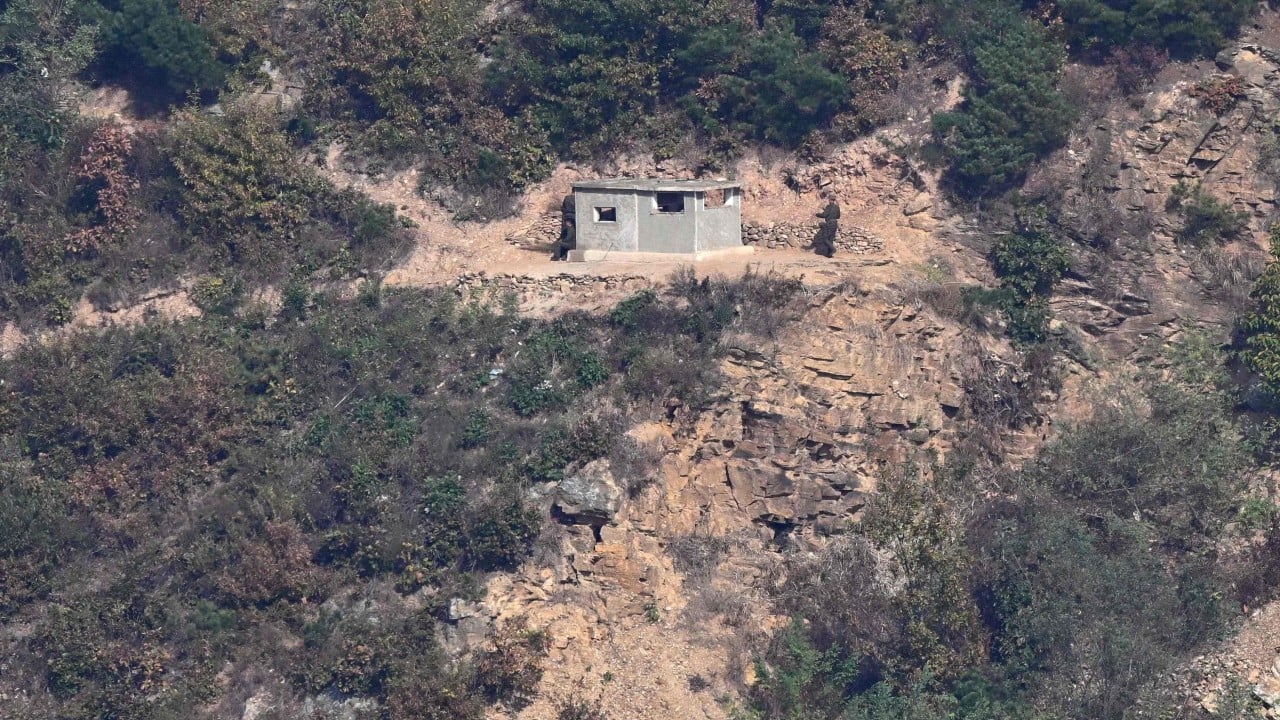
An investigation into the death of a frontline South Korean soldier near the North Korean border operates as a multi-layered triage system designed to resolve three distinct operational variables before public disclosure—external kinetic engagement, internal unit failure, or non-hostile misadventure. Because the Korean Demilitarized Zone (DMZ) functions as a hyper-sensitive strategic tripwire where an unverified shot can trigger immediate artillery escalation, military authorities prioritize containment and forensic verification over rapid public transparency. Understanding these probes requires mapping the structural friction between tactical security protocols, domestic conscription politics, and inter-Korean deterrence mechanics.
The Three-Vector Causal Matrix
When a fatality occurs within a General Outpost (GOP) or Guard Post (GP) sector, military investigators immediately partition the inquiry into three mutually exclusive causal hypotheses. Standard reporting often treats these probes as linear fact-finding missions, missing the reality that each hypothesis triggers an entirely different chain of command and diplomatic posture.
Vector One Cross-Border Kinetic Action
The highest-consequence hypothesis involves hostile fire, infiltration, or unexploded ordnance originating from the Korean People's Army (KPA). Establishing this vector requires ballistic trajectory mapping, acoustic sensor triangulation, and thermal surveillance reconciliation across the Military Demarcation Line (MDL). If evidence points to external aggression, the investigation ceases to be a criminal or administrative matter and becomes an operational trigger under the Combined Forces Command rules of engagement. The investigative bottleneck here is attribution: determining whether a discharge represents a localized border guard discipline breakdown or a sanctioned strategic probe by Pyongyang.
Vector Two Internal Systemic Failure
The second vector examines intra-unit dynamics, encompassing negligent weapons handling, training accidents, and self-inflicted harm driven by barracks friction. South Korea relies on universal male conscription, placing young, often reluctant recruits into high-stress, isolated environments with live ammunition and lethal weaponry. When a death occurs without external contact, investigators scrutinize command climate, shift rotation fatigue, and psychological screening logs. Historical precedent shows that institutional pressure to maintain unit readiness metrics often creates incentives for local commanders to classify ambiguous deaths as isolated accidents rather than systemic leadership failures.
Vector Three Environmental and Infrastructure Hazards
The frontline terrain along the 248-kilometer border is mountainous, heavily mined, and subject to extreme seasonal shifts. Fatalities frequently stem from unmarked legacy landmines displaced by monsoon erosion, structural collapses in aging concrete fortifications, or cold-weather physiological failure during winter patrols. Separating environmental accidents from negligence requires forensic engineering and meteorological reconstruction, slowing the investigative timeline considerably.
The Structural Friction of Frontline Forensics
Conducting a forensic investigation inside the DMZ violates nearly every standard principle of crime scene preservation. In a civilian jurisdiction, investigators secure a perimeter, control environmental variables, and spend days cataloging trace evidence. On the inter-Korean border, the scene itself is an active combat zone under constant visual and electronic surveillance by an adversary.
Investigators face four immediate operational constraints:
- Tactical Exposure: Forensic teams cannot deploy standard lighting, wide-area grid markers, or prolonged unarmored personnel concentrations near the MDL without inviting KPA sniper or artillery targeting. Evidence collection often occurs under cover of darkness or behind improvised visual screens, degrading photographic and spatial documentation.
- Jurisdictional Contention: Following revisions to South Korea's Military Court Act, deaths involving potential crimes or unclear circumstances require coordination between military police and civilian investigative agencies. Handing over chain-of-custody records from a classified GOP sector to civilian prosecutors creates classification bottlenecks. Civilian investigators lack the security clearances to inspect tactical sensor logs, while military officers resist exposing defensive blind spots in public court filings.
- Acoustic and Electronic Ambiguity: Modern GOP sectors rely on automated surveillance systems, vibration sensors, and closed-circuit thermal cameras. However, mountainous topography creates radar shadows and acoustic echoes. A single gunshot reverberating off granite ridgelines can register on multiple sensors with conflicting timestamps, requiring specialized signal processing to isolate the point of origin.
- Ammunition Accountability Audits: Every round issued to frontline sentries is logged by batch number and weight. Investigators execute an immediate physical count of magazines, primer strikes, and brass casings. A discrepancy of a single casing shifts the inquiry toward unauthorized discharge, while an intact loadout shifts focus toward external fire or non-ballistic trauma.
The Conscription Accountability Loop
The political weight of a frontline death in South Korea is dictated by the social contract underlying mandatory military service. When the state compels citizens to serve in hazardous conditions, any non-combat fatality generates acute domestic scrutiny. Parents, civic advocacy groups, and opposition lawmakers view unexplained border deaths through the lens of institutional negligence rather than unavoidable military risk.
This dynamic produces a predictable institutional tug-of-war:
- Information Asymmetry: During the initial 48 to 72 hours, the Ministry of National Defense (MND) holds a monopoly on primary evidence. To prevent premature panic or market instability, initial press briefings rely on deliberately vague terminology—stating only that a soldier was found with fatal injuries and that the cause is under investigation.
- The Cover-Up Hypothesis: Because past administrations occasionally obscured instances of barracks hazing or safety violations to protect officer promotions, public baseline trust in initial military disclosures remains low. Silence or procedural delay is automatically interpreted by domestic observers as evidence of concealment rather than forensic thoroughness.
- Command Risk Aversion: Division and regiment commanders know that a preventable fatality on their watch effectively terminates career advancement. This creates an acute principal-agent problem: the central ministry requires unfiltered truth to manage national security, while local officers face overwhelming incentives to frame facts in ways that minimize command culpability.
Deterrence Signaling and Information Control
Every public detail released about a border incident doubles as a strategic signal to North Korea. If South Korean authorities prematurely announce that a soldier died from an accidental self-inflicted wound, they inadvertently inform KPA intelligence of a localized readiness lapse or morale issue within that specific sector. Conversely, if Seoul publicly speculates about external fire before possessing irrefutable ballistic proof, it corners itself into a retaliatory posture that could escalate into an unwanted border skirmish.
Information management therefore operates on a strict two-track model. Internally, alert postures along the affected sector are quietly elevated—reinforcing quick-reaction forces, repositioning counter-battery radar, and restricting patrol movements. Externally, communications are sanitized to strip away tactical specifics, withholding exact grid coordinates, unit designations, and sensor capabilities. The public receives a procedural update while the adversary is denied actionable intelligence.
Limitations of Current Investigative Protocols
Even with advanced surveillance infrastructure and reformed military-civilian oversight, frontline death probes suffer from inherent structural blind spots. First, automated border systems are calibrated to detect mass movement and incoming projectiles, not micro-events inside enclosed guard posts. When an incident occurs inside a hardened bunker or blind spot, investigators remain heavily reliant on eyewitness testimony from squad mates who share intense social bonds and face shared command pressures.
Second, psychological autopsies—used to determine whether a death resulted from acute mental distress—are constrained by institutional stigma. Conscripts frequently conceal depression or interpersonal conflict to avoid being reassigned to administrative units, which peers often view as a mark of weakness. Consequently, official medical and counseling records routinely show a clean bill of health right up until a catastrophic event, masking underlying vulnerabilities from post-incident reviewers.
Strategic Execution for Institutional Reform
To resolve the recurring crisis of credibility surrounding frontline fatalities, military and civilian oversight bodies must decouple tactical security from forensic transparency. Authorities should establish a standing, pre-cleared joint forensic unit composed of civilian ballistics experts, medical examiners, and military intelligence officers who hold permanent top-secret clearances. Deploying a unified team within the first six hours eliminates the chain-of-custody friction between military police and civilian courts, secures perishable ballistic data before weather or tactical shifts degrade the scene, and removes local commanders from the initial evidentiary loop—ensuring that both national security signaling and domestic accountability rest on verified physical mechanics rather than institutional damage control.