The waiting room smells faintly of old linoleum, wet wool, and quiet despair. Under the flickering fluorescent tubes of a Montreal hospital, an elderly man shifts his weight, wincing as his knee throbs against the chill. He has been here for six hours. Not because the doctors do not care, but because somewhere up the administrative food chain, a spreadsheet is being updated, a committee is scheduling another meeting to discuss the schedule of a committee, and a multi-billion-dollar health agency is growing its payroll by the hundreds.
This is the daily reality behind the sterile headlines of Quebec politics.
When the Coalition Avenir Québec launched Santé Québec as a crown corporation, the pitch was efficiency. It was supposed to streamline operations, cut through decades of red tape, and act as a single employer to manage the sprawling network of health and social services. Instead, critics argue it birthed an administrative leviathan. Within a remarkably short span, the employee headcount inside the state-owned apparatus swelled from hundreds to over a thousand, while patients continued to face grueling wait times for surgeries and primary care clinics struggled to keep their doors open.
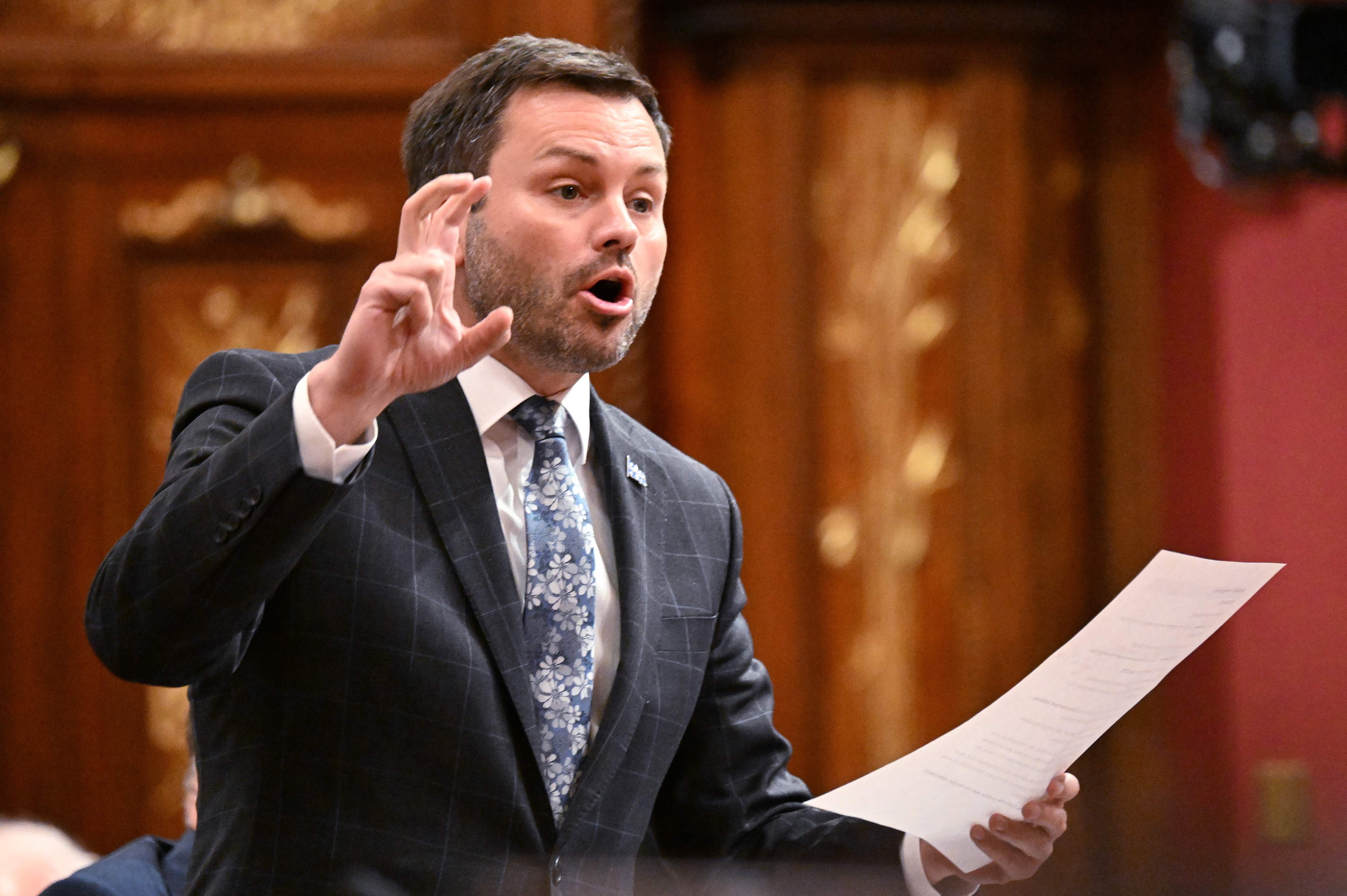
Now, the political fault lines are fracturing wide open. Parti Québécois Leader Paul St-Pierre Plamondon has drawn a hard line in the snow, standing outside the crowded entrance of Maisonneuve-Rosemont Hospital to make a dramatic vow. If his party forms the next government, Santé Québec will be abolished.
The declaration was direct, sharp, and entirely unpolished. He called the agency a bureaucratic monster.
To understand why this promise carries such heavy weight, one must look at how health administration has evolved in the province. Imagine an inverted pyramid where every layer of management added at the top pushes fewer resources down to the actual bedside. Nurses burnout. Family doctors are overwhelmed. Patients wait months for essential procedures. The promise behind dismantling Santé Québec is simple in theory: cut away the bloated corporate superstructure, redirect those millions of dollars straight into frontline care, breathe life back into local CLSCs, and shorten the surgical queues that plague the system.
Naturally, the ruling government has pushed back hard. Health Minister Sonia Bélanger dismissed the proposal as unrealistic and simplistic, arguing that untangling the massive web of employee transfers—nearly nine hundred positions shifted over from the ministry—would throw the system into chaos. From the government’s perspective, the hard work of structural consolidation has already been done, and turning back now is a logistical impossibility.
Yet, public skepticism runs deep. For everyday citizens navigating the labyrinth of Quebec healthcare, structural consolidation feels abstract when you cannot find a family doctor or secure a timely scan.
The debate goes beyond partisan sparring. It touches on a fundamental philosophical question about what a government is actually for. Is the state meant to manage massive corporate entities that insulate political leaders from accountability, or is it supposed to guarantee that a citizen in pain can see a physician without losing a day of their life in a plastic chair?
The clock is ticking toward the next electoral showdown. As the rhetoric heats up between opposition challengers and cabinet ministers, the patient in the waiting room remains right where they were. Waiting. Watching. Wondering if anyone in power will ever fix the machine before it breaks completely.