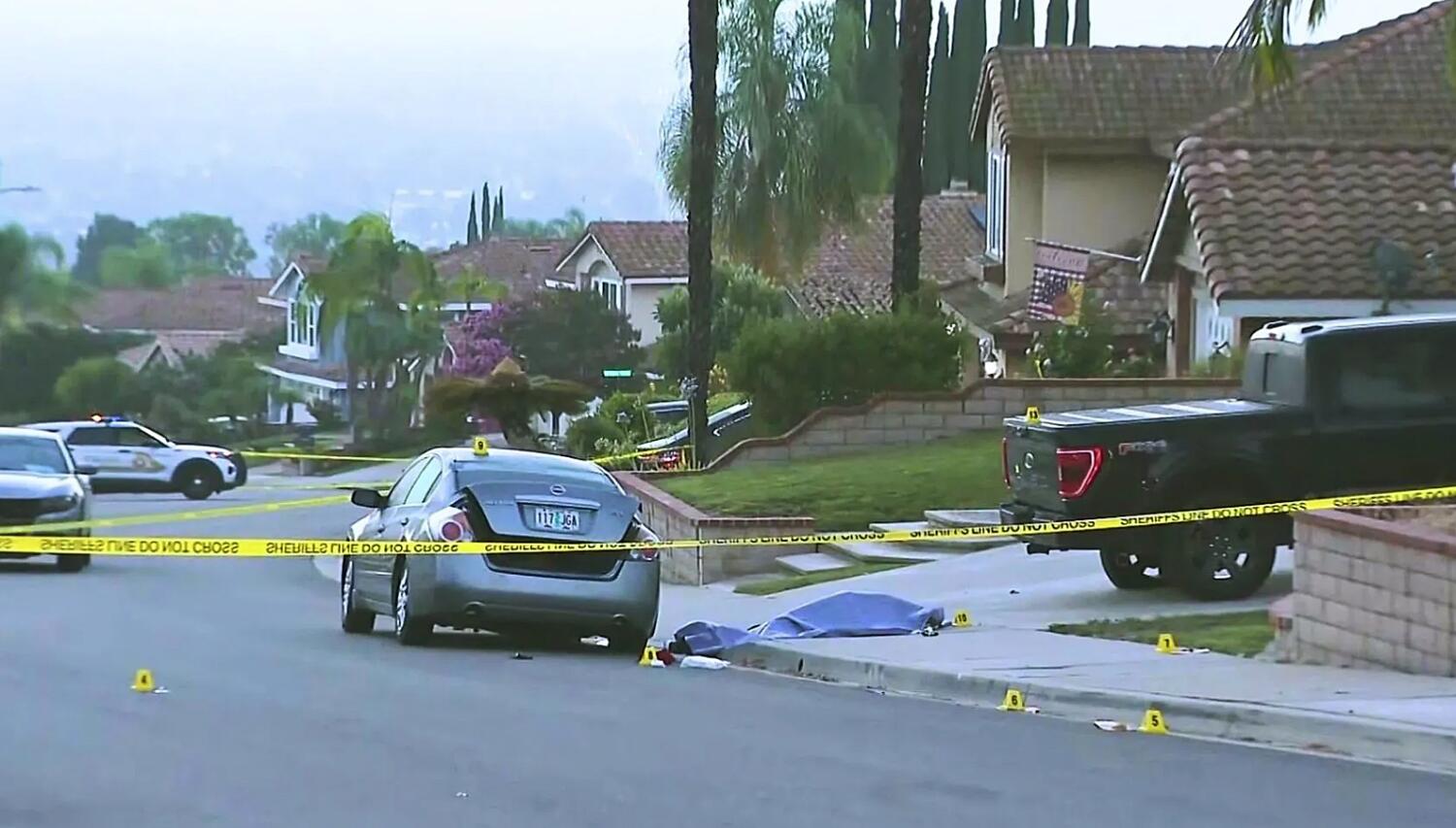
Violent crime rarely manifests as random chaos; it operates on predictable mechanical triggers, escalation vectors, and tactical responses. The sequence of events on Monteverde Drive and Wandering Ridge Drive in Chino Hills offers a clinical case study in operational violence, law enforcement interception, and structural failure points. Deconstructing this incident requires moving past narrative summaries to evaluate the exact variables governing offender behavior, police tactical deployment, and systemic vulnerabilities.
The Operational Mechanics of the Abduction
The abduction of 60-year-old Shukur Aikebaer on the night of July 29, 2026, began with an engineered environmental disruption. San Bernardino County Sheriff's Department homicide investigators established that the residence's electrical panel was intentionally manipulated to cause a power interruption. Meanwhile, you can read similar stories here: Why Trump Ordering Weekend Strikes on Iran Changes Everything Right Now.
This vector exploits a predictable human baseline response:
- The Diagnostic Reflex: Homeowners experiencing sudden, unexplained power loss instinctively seek to inspect local infrastructure (the breaker panel) rather than assume active threat vectors.
- Spatial Vulnerability: Moving from a secure interior envelope to an exterior utility panel shifts an individual from a defensible space into an unlit, unmonitored transition zone.
- Asymmetric Positioning: Perpetrators Zhengfeng Bo (67) and Jianquan Bo (66) of Irvine utilized this environmental control mechanism to establish physical proximity and tactical surprise before executing the initial shooting and forced confinement.
Investigative disclosures confirm that a prior working relationship existed between the victim and at least one of the perpetrators. This establishes the incident not as a predatory stranger crime, but as a targeted dispute escalation. Targeted extrajudicial abductions rely on domestic or professional intelligence gathering, meaning the aggressors possessed baseline knowledge of the target's physical layout and nightly routines. To understand the full picture, check out the excellent article by The Guardian.
The Interception Window and Pursuit Dynamics
The transition from the initial crime scene to the mobile phase introduced severe time-compression variables for law enforcement. A reporting party alerted dispatch at approximately 10:14 p.m. after hearing gunshots and screaming. The rapid deployment of deputies resulted in the immediate spotting of the suspect vehicle operating at high speeds.
The failure-to-yield response from the driver initiated a short vehicular pursuit terminating on Wandering Ridge Drive. From a tactical risk-management perspective, high-speed pursuits involving confirmed violent felonies create a dual-pressure environment:
- Containment Urgency: Allowing a fleeing vehicle carrying an active hostage to escape perimeter containment exponentially degrades recovery probability.
- Terminal Escalation Risk: Pressuring an offender cornered by law enforcement often triggers a psychological tipping point where the perceived cost of surrender outweighs the perceived cost of immediate lethal action.
The divergence in suspect behavior during the vehicle stop highlights the erratic nature of high-stress compliance models. Passenger Jianquan Bo complied with deputy commands and was taken into custody without incident. Driver Zhengfeng Bo refused compliance, establishing an immediate active-threat posture.
The Terminal Vector and Lethal Force Application
The final phase of the incident unfolded within seconds of the vehicle stop, characterized by a rapid breakdown of containment barriers. Zhengfeng Bo exited the vehicle, bypassed standard flight-or-hide vectors, and advanced directly to the open trunk where the victim was confined.
The operational intent at this moment shifted from evasion to asset destruction. Zhengfeng Bo fired into the trunk, inflicting a fatal gunshot wound on Aikebaer. This action triggered an immediate counter-response: a deputy-involved shooting that resulted in the fatal striking of the suspect.
To evaluate the law enforcement response, three distinct vectors must be measured:
- Time-to-Intervention: Deputies were forced to react to an unannounced, deliberate execution attempt occurring mere feet away from their positions. The kinetic window between the suspect opening fire into the trunk and the return of defensive fire was effectively instantaneous.
- Proportionality and Necessity: Under standard law enforcement use-of-force doctrines, an active threat causing imminent death or great bodily injury to a third party (the hostage) mandates lethal intervention to preserve life.
- Outcome Metrics: Despite immediate lifesaving measures administered by deputies at the scene, both Zhengfeng Bo and Shukur Aikebaer were pronounced dead, resulting in a dual-fatality outcome that underscores the lethality inherent in compressed-timeline hostage assaults.
Systemic Vulnerabilities and Post-Incident Architecture
The aftermath shifts the analytical focus to evidence recovery and judicial processing. Homicide detectives, aided by the Irvine Police Department, executed search warrants at the shared residence of the suspects in Irvine, recovering physical evidence linked to the sequence. Jianquan Bo was booked into the West Valley Detention Center under charges of murder and kidnapping, held without bail pending district attorney review.
The structural lessons of this event point directly to the limitations of residential hardening against targeted actors. Standard residential security focuses on perimeter entry points (doors and windows) while leaving exterior utility infrastructure (electrical panels, main breakers, and HVAC disconnects) exposed. When an adversary possesses localized operational knowledge and utilizes utility manipulation as a force multiplier, standard home defense models face structural bypass. Mitigation requires integrated, uninterrupted power supplies, isolated exterior security lighting tied to independent battery networks, and closed-circuit surveillance arrays covering utility transition zones to eliminate the blind spots exploited in targeted confrontations.