Survival in an arid environment without clothing or water hinges on three intersecting variables: thermodynamic regulation, lost-person behavioral geometry, and search-grid allocation. When a two-year-old child wanders from a residence into the Arizona desert wearing only a diaper, the operational clock does not run on standard missing-person timelines. Standard adult dehydration models fail here. Instead, search and rescue (SAR) commanders must manage an acute thermodynamic emergency compounded by unpredictable pediatric movement patterns and extreme terrain occlusion.
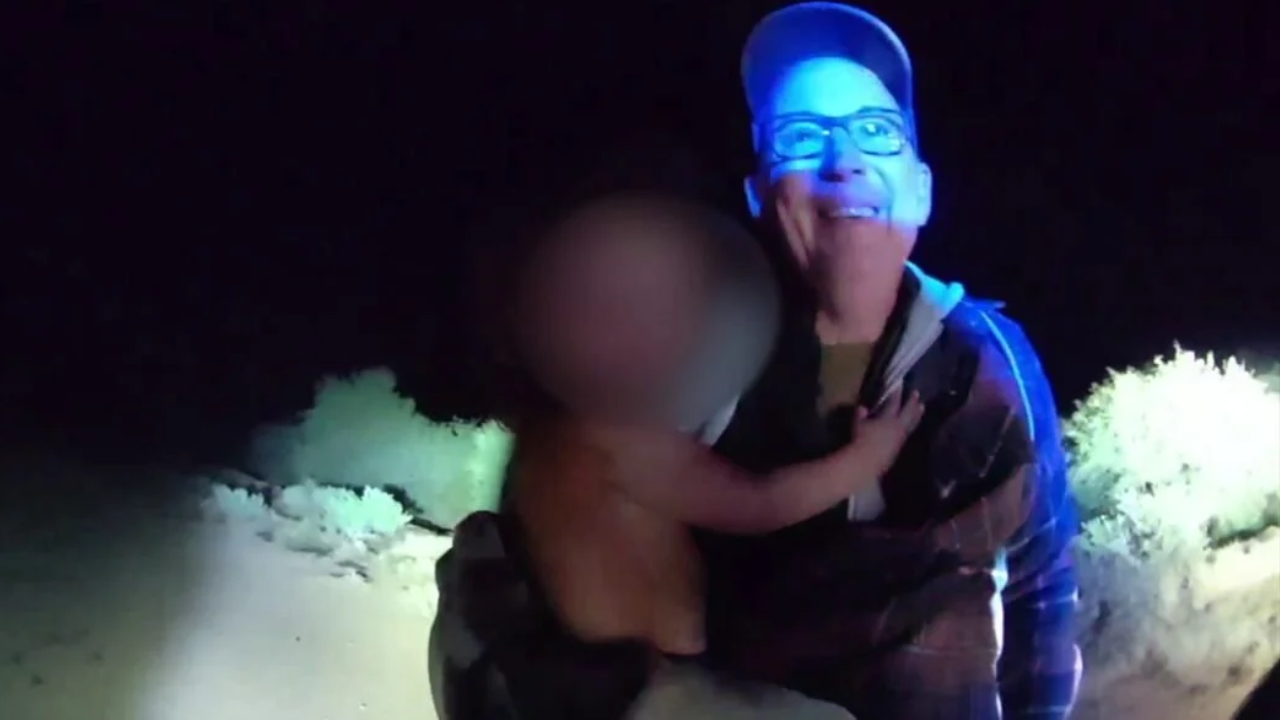
The baseline facts of the incident establish the operational parameters: a two-year-old child exited a home in Arizona wearing only a diaper, entered the surrounding desert scrub, and was later located alive beneath a bush by a civilian volunteer. Standard news coverage treats this outcome as a simple stroke of luck. Operational analysis reveals the opposite. Survival and recovery in this scenario result from specific physiological mechanisms, predictable behavioral shelter-seeking, and the mechanics of decentralized search saturation.
The Physiological Cost Function of Pediatric Desert Exposure
To understand why the recovery window in an Arizona desert is measured in hours rather than days, one must examine pediatric thermoregulation and fluid dynamics. A toddler is not a scaled-down adult; their physiological architecture creates a radically steeper risk curve when exposed to ambient desert temperatures and solar radiation.
Surface-Area-to-Mass Ratio and Thermal Gain
Heat exchange between the human body and the environment occurs through radiation, conduction, convection, and evaporation. A two-year-old possesses a significantly higher body-surface-area-to-mass ratio than an adult. In an environment where ambient air temperature exceeds skin temperature (roughly 33°C or 91.4°F), the direction of convective and radiative heat transfer reverses. Instead of shedding metabolic heat into the environment, the body absorbs thermal energy from the air and the ground.
Wearing only a diaper removes all textile barriers against direct solar radiation and convective heat gain from hot desert winds. Without clothing to create an insulating boundary layer of air, the child's skin absorbs short-wave solar radiation directly and long-wave infrared radiation reflected off sand and rock. Because the child has a smaller total thermal mass, this rapid heat influx elevates core body temperature much faster than it would in an adult exposed to identical conditions.
Evaporative Cooling and Fluid Depletion
The primary mechanism for defending core temperature against environmental heat gain is the evaporation of sweat. This defense mechanism carries a severe metabolic penalty: rapid depletion of extracellular fluid.
- Total Body Water (TBW) Vulnerability: While infants and toddlers have a higher percentage of total body water relative to body weight compared to adults, their absolute fluid reserve is small. Losing even a minor volume of water through sweating and respiratory water loss rapidly reduces blood plasma volume.
- Cardiovascular Strain: As plasma volume drops, blood viscosity increases and stroke volume decreases. To maintain cardiac output and perfuse vital organs—and to keep pumping blood to the skin for cooling—heart rate must climb.
- The Hyperthermic Tipping Point: Once fluid depletion reaches a critical threshold, the body prioritizes central blood pressure over thermoregulation. Peripheral vasoconstriction occurs, halting sweat production. At this exact point, evaporative cooling stops entirely, and core temperature spikes toward heatstroke, risking central nervous system dysfunction and cellular damage.
The location of the recovery—underneath a bush—directly interrupted this fatal trajectory. By moving beneath desert scrub, the child eliminated direct solar radiation and reduced ambient air temperature through localized shade, flattening the thermal gain curve and preserving enough extracellular fluid to sustain life until discovery.
Behavioral Geometry of the Lost Toddler
Search commanders rely on empirical behavioral profiles—often categorized through established Lost Person Behavior frameworks—to assign probability distributions to a search grid. Two-year-olds occupy a distinct behavioral category characterized by limited cognitive mapping, low endurance, and instinctive responses to environmental discomfort.
Locomotion Limits and Terrain Friction
A two-year-old's stride length and musculoskeletal endurance severely restrict their maximum travel radius. Unlike an adult or an older child who may walk purposefully along a trail or ridgeline for miles, a toddler navigates terrain through erratic, short-burst locomotion.
Desert terrain introduces high physical friction. Loose sand, uneven caliche, rock outcroppings, and spiny vegetation (such as cholla, prickly pear, or mesquite) act as physical barriers. Bare feet without shoes drastically reduce travel velocity and distance. Every step across hot substrate or thorny debris forces micro-adjustments, frequent stops, and changes in direction. Consequently, the theoretical maximum distance from the Point Last Seen (PLS) shrinks rapidly. While search teams must account for outliers, the statistical probability density for an unshod toddler concentrates heavily within a tight radius of the origin point.
The Micro-Shelter Reflex
When toddlers experience sensory overload—driven by heat, glare, fatigue, or fear—their behavioral response shifts from exploration to concealment. Unlike older individuals who may climb to high ground to gain visibility or stay on open trails to be seen, young children instinctively seek small, enclosed spaces that mimic the security of a crib or indoor corner.
This creates a severe detection paradox for search operations:
- Physical Protection: Crawling under a dense desert bush provides immediate relief from solar radiation and wind.
- Visual Occlusion: That same dense canopy breaks up the human silhouette, absorbs light, and casts deep shadows that mask the child from aerial thermal imaging and ground-based visual sweeps.
- Acoustic Suppression: Exhaustion and dehydration induce lethargy and sleep. A sleeping toddler will not respond to vocal calls, rendering auditory search techniques ineffective.
The child's position under a bush was not random; it was the predictable result of an instinctive shelter-seeking reflex triggered by thermal and sensory stress.
Search Grid Mechanics and Volunteer Force Multiplication
In missing-person operations, the tension between speed and thoroughness dictates tactical deployment. Professional SAR teams bring technical expertise, tracking skills, and command structure, yet they face a hard constraint: limited personnel during the initial operational period.
The Line-of-Sight Bottleneck in Arid Scrub
Desert environments appear open from a distance, creating a dangerous optical illusion for searchers. At ground level, washes, arroyos, boulders, and low-lying scrub create thousands of dead zones where line-of-sight is blocked within a few meters.
A standard hasty search—where small teams move quickly along roads, trails, and drainage ditches—covers ground rapidly but misses subjects concealed beneath vegetation. To locate a non-responsive, stationary subject smaller than one meter in length hidden under a bush, searchers must execute a close-order grid search. In a grid search, personnel walk shoulder-to-shoulder or within strict visual overlap, inspecting every square meter of terrain, including looking underneath vegetation canopies.
Integrating Civilian Volunteers into the Search Matrix
Deploying civilian volunteers introduces both operational risk and decisive mathematical advantage. Unmanaged volunteers can destroy tracks, wander off-grid, and become secondary rescue subjects due to heat exhaustion. However, when properly integrated into an Incident Command System (ICS), volunteers solve the coverage bottleneck.
The operational math is straightforward. Search effectiveness is a function of the Probability of Area (POA)—the likelihood the subject is in a specific sector—multiplied by the Probability of Detection (POD), which measures the thoroughness of the search within that sector.
- Professional Trackers: Maximize POD on sign (footprints, disturbed soil) along likely routes of travel, narrowing the POA.
- Volunteer Grid Lines: Maximize raw physical coverage across high-probability zones near the Point Last Seen, driving up the POD for stationary, concealed subjects.
A volunteer locating the child under a bush demonstrates the exact value of dense human sensor networks. Aerial assets (helicopters with Forward-Looking Infrared cameras and drones) struggle during peak desert heat because the ground radiates thermal energy at temperatures similar to or higher than the human body, washing out thermal contrast. Canine units face degraded scent cones in hot, dry air where thermal updrafts pull scent particles straight up rather than along the ground. In these conditions, human eyes physically checking beneath brush at close range remain the most reliable detection sensor available.
Operational Limitations and Failure Points
Analyzing a successful rescue requires identifying the narrow margins that separated recovery from fatality. No search methodology guarantees success, and the mechanisms that enabled survival in this instance carry inherent vulnerabilities.
First, civilian volunteer mobilization suffers from latency. Assembling, briefing, equipping, and deploying untrained searchers takes time—time that directly erodes a toddler's physiological reserve. If the child had wandered into an area with lower brush density, or if ambient temperatures had been higher, the mobilization lag would have exceeded the child's hyperthermic threshold.
Second, visual grid searches depend entirely on searcher discipline and illumination angles. Shadows beneath desert flora shift continuously with the sun's azimuth. A searcher walking past a bush from the north may see only a dark void beneath the branches, while a searcher approaching from the south with the sun behind them illuminates the interior space. Without overlapping, multi-angle sweeps, even dense grid lines can walk directly past a concealed child.
Third, reliance on reactive search operations addresses the symptom rather than the root vulnerability. Residential perimeters bordering open desert frequently lack physical redundancy. Standard door latches and single-barrier fences fail routinely against the persistence of a curious two-year-old.
Tactical Protocol for High-Risk Pediatric Desert Incidents
To replicate this successful outcome and compress the time-to-recovery in future pediatric desert disappearances, emergency managers and residential communities must replace reactive improvisation with standardized containment and search protocols.
- Enforce Immediate 300-Meter Saturation: Upon receiving a report of a missing toddler in arid terrain, command must immediately establish a 300-meter containment perimeter around the Point Last Seen. Before deploying specialized assets to distant washes or roads, all initial responders must execute a high-density, low-speed visual sweep of every bush, culvert, and shadow within this inner ring, forcing searchers to bend down and inspect beneath vegetation canopies.
- Deploy Rapid-Tasked Volunteer Corridors: Rather than holding civilian volunteers in staging areas for hours while awaiting full command buildup, assign field-trained team leaders to manage small squads of five to ten volunteers immediately. Restrict these squads strictly to cleared, flat, high-probability zones near the residence with mandatory water carry and strict visual-contact spacing, turning raw manpower into an immediate detection grid.
- Implement Multi-Layer Residential Barriers: Homes interfacing with desert terrain require physical engineering controls rather than behavioral supervision alone. Install top-mounted door locks at least 1.5 meters above the floor, self-closing spring hinges on all exterior doors, and audible chime alarms on every exit point to eliminate the unmonitored exit window entirely.