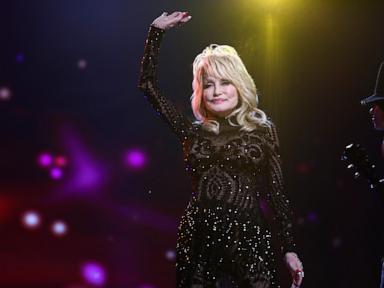
Dolly Parton did not build a six-hundred-million-dollar empire through raw vocal talent alone. Cultural longevity in the entertainment sector requires an operational framework that converts creative output into defensible intellectual property, sustained equity, and a diversified asset portfolio. Observers frequently attribute her endurance to charm or authenticity, missing the rigorous economic architecture underpinning her six-decade career.
Analyzing Parton requires examining three distinct operational pillars: absolute asset ownership, structural brand differentiation, and compounding vertical integration. These mechanisms explain how an artist originating from rural Appalachia engineered one of the most resilient business models in modern media history.
The Publishing Asset Model
The primary driver of long-term wealth in the music industry is not performance revenue or record sales, but publishing ownership. Most artists trade their copyright equity early in their careers for immediate liquidity and distribution access. Parton rejected this dilution.
When Elvis Presley's manager, Colonel Tom Parker, demanded half of the publishing rights to "I Will Always Love You" as a condition for Presley recording the track, Parton refused. That single refusal protected an asset that would later compound exponentially when Whitney Houston covered the song in 1992, driving global royalties across multiple generations.
Owning over three thousand copyrights creates a defensive moat against industry volatility. Streaming payouts fluctuate, and touring schedules carry high physical and financial overhead, but a catalog of protected intellectual property functions as a high-margin annuity. Parton understood that a song is a legal asset class. By retaining the underlying publishing rights, she ensured that every subsequent cover, synchronization license, and broadcast incurred a direct royalty payment to her balance sheet, eliminating intermediaries who traditionally capture the majority of passive music revenue.
Structural Brand Differentiation
Branding is frequently misconstrued as visual styling or public relations. In economic terms, branding is a mechanism designed to lower customer acquisition costs and create pricing power through instant recognition. Parton weaponized hyper-visibility to occupy a distinct market position.
The intentional theatricality of her appearance served a strategic function. By leaning into a caricature of Appalachian glamour, she established a visual trademark that bypassed traditional noise in country music and pop culture. This differentiation prevented market substitution. When consumers sought her specific style of storytelling, no competitor could provide a substitute because the personal brand and the creative output were inextricably linked.
Crucially, this differentiation did not alienate mainstream audiences when she crossed over into pop and film during the late 1970s and 1980s. Instead, her cultural footprint expanded because her core identity remained stable while her distribution channels multiplied. The risk of over-saturation was mitigated by pairing the flamboyant public persona with an intensely private, highly disciplined operational focus behind the scenes.
Compounding Vertical Integration
The most sophisticated aspect of Parton's enterprise strategy is her pivot from a talent-for-hire model to vertical ecosystem ownership. Artists typically rely on third parties to manage merchandising, touring, and media appearances, forfeiting margin at every step of the supply chain. Parton internalized these functions.
The establishment of Dollywood in Pigeon Forge, Tennessee, in 1986 shifted her business model from linear income generation to compounding regional infrastructure. The theme park, water park, and dinner theaters do not merely generate cash flow; they anchor an entire geographic economy that utilizes her brand as its primary traffic driver.
This creates a self-reinforcing loop:
- Music releases and media appearances generate top-of-funnel awareness.
- Regional tourism assets capture physical foot traffic and retail spending.
- Film and television production ventures, such as Sandollar Productions, control visual media rights and distribution margins.
- Philanthropic initiatives, notably the Imagination Library, cement long-term public trust and brand equity at zero marginal customer acquisition cost.
Each node in this network strengthens the others. A visitor to the theme park purchases merchandise tied to her catalog; a listener on a streaming platform encounters references to her Appalachian heritage that drive tourism interest. This diversification isolates her enterprise from the boom-and-bust cycles typical of the recorded music sector.
Capital Allocation and Liquidity Constraints
A critical assessment of any business model requires evaluating its constraints and missed efficiencies. Despite generating hundreds of millions in enterprise value, Parton has historically prioritized reinvestment and philanthropic output over aggressive personal wealth accumulation.
This philosophy explains why her net worth, while substantial, remains lower than contemporary tech-adjacent music moguls who leverage external venture capital and private equity buyouts. By self-funding her ventures and maintaining tight control without outside equity partners, she sacrificed rapid scaling speed for absolute operational autonomy. For creators and executives evaluating this trajectory, the trade-off is clear: absolute control limits short-term velocity but guarantees long-term systemic survival.
The blueprint left by this enterprise does not rely on serendipity or changing industry tides. It demonstrates that creative longevity is a byproduct of rigorous copyright defense, uncompromising brand distinctiveness, and the systematic conversion of cultural influence into owned infrastructure.