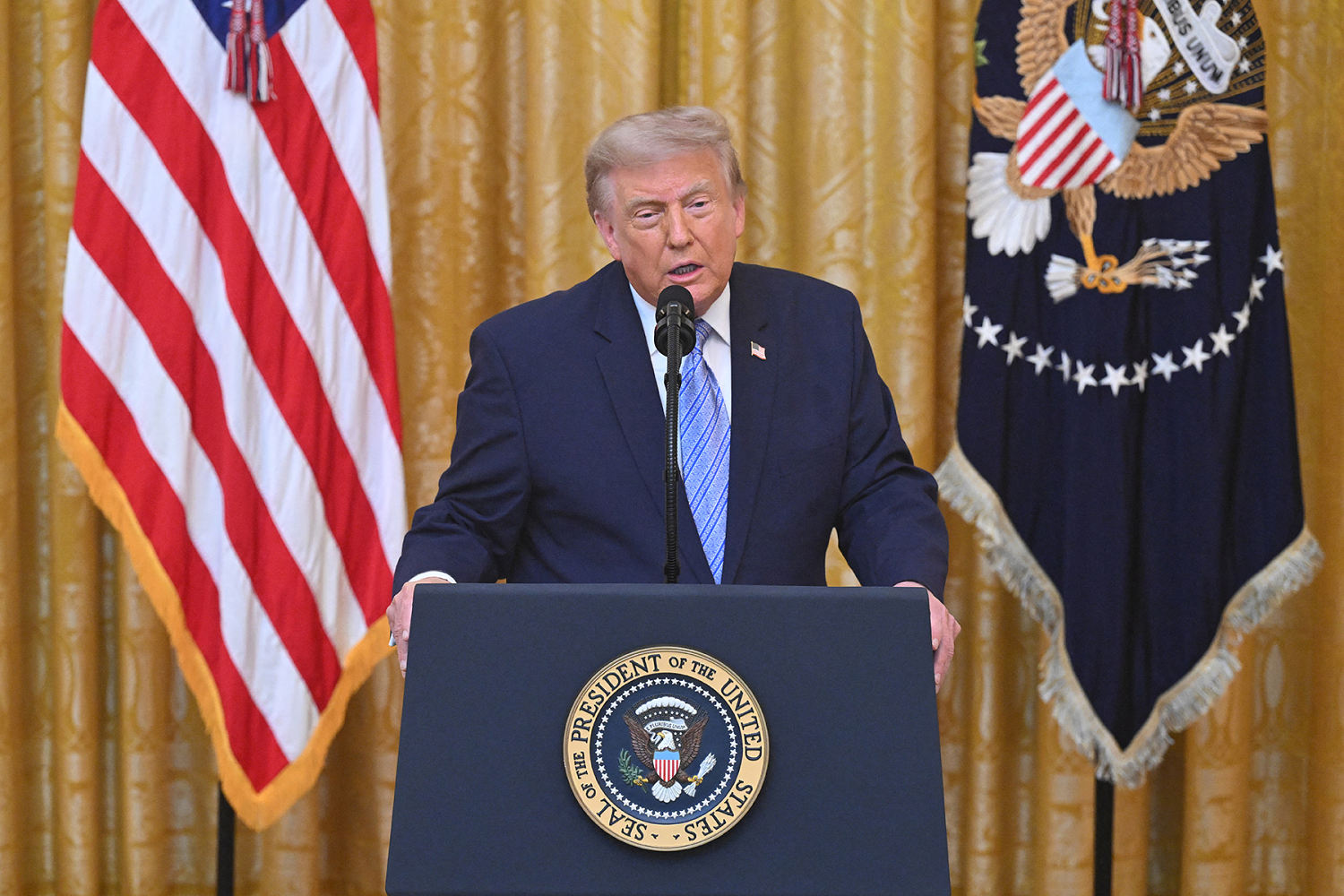
A state address delivered during an active military conflict serves two asymmetric functions: operational mobilization or structural narrative diversion. The prime-time executive address concerning voting systems and unverified foreign interference operates entirely as an exercise in structural diversion, strategically timed to arbitrage compounding domestic and geopolitical liabilities.
When an administration simultaneously navigates an active, multi-front naval and air engagement with Iran, accelerating domestic energy inflation, and highly unpopular structural immigration adjustments, the political cost of defensive communication becomes prohibitive. Survival requires shifting the battlefield. By engineering a high-velocity conflict with mainstream media apparatuses and reviving highly polarized election-integrity narratives, the executive branch constructs an alternative focus for public attention. This framework maps the underlying mechanics, systemic bottlenecks, and macroeconomic feedback loops driving this strategy.
The Dual-Front Vulnerability Matrix
To understand the necessity of the prime-time diversion, one must first quantify the structural vulnerabilities the administration face across two main axes: geopolitical exposure and domestic macroeconomic strain.
+------------------------------------------------------------------------+
|                      GEOPOLITICAL EXPOSURE                             |
|  - Multi-front naval/air conflict with Iran                            |
|  - Reinstated blockade and kinetic strikes                             |
|  - Persistent asymmetric disruptions in the Strait of Hormuz           |
+------------------------------------------------------------------------+
                                   |
                                   v
+------------------------------------------------------------------------+
|                    MACROECONOMIC STRAIN SYSTEM                         |
|  - Supply-side energy shock (Crude oil transport bottlenecks)          |
|  - Correlated surge in retail fuel and diesel prices                   |
|  - Downstream pass-through inflation to retail and grocery supply lines |
+------------------------------------------------------------------------+
The Geopolitical Friction Points
The administration's military campaign against Iran has evolved into an indefinite war of attrition, with four out of five citizens anticipating an protracted timeline. The execution of a naval blockade and kinetic strikes has failed to yield an immediate decisive outcome. Instead, it has introduced persistent asymmetric threats to shipping lanes, creating a strategic bottleneck that standard military projection cannot easily resolve.
The Macroeconomic Transmission Mechanism
The political danger of the conflict is not rooted in foreign policy preferences, but in its direct pass-through effect on the domestic economy. The mechanism functions through a highly sensitive economic chain:
- Supply-Side Shock: Kinetic operations near the Strait of Hormuz increase maritime insurance premiums and disrupt crude oil transport vectors.
- Wholesale and Retail Price Compounding: Higher input costs drive immediate spikes in domestic refined product pricing, specifically diesel and regular unleaded gasoline.
- Downstream Pass-Through Inflation: Because logistical networks rely entirely on freight transportation, the increased cost per ton-mile of diesel acts as a structural tax on all consumer goods. A gallon of milk or a crate of consumer electronics carries the embedded cost of its transport fuel.
The administration faces a clear political threat: public dissatisfaction escalates as weekly consumer expenditures rise, directly linking the ongoing war to household financial strain.
The Divergent Narrative Architecture
Faced with a deteriorating macroeconomic narrative, the executive office deployed a multi-layered diversionary architecture designed to replace the complex economic conversation with an intense, identity-driven debate over institutional legitimacy.
       [ EXECUTIVE CRISIS: STAGNANT WAR & ENERGY INFLATION ]
                                 |
         +-----------------------+-----------------------+
         |                                               |
         v                                               v
[ LAYER 1: INSTITUTIONAL RE-LEVERAGING ]     [ LAYER 2: MEDIA CONFLICT ARBITRAGE ]
- Unverified Declassification                - License Revocation Threats
- Structural Substitution (SAVE Act)         - Platform Arbitrage (Streaming)
Institutional Re-Leveraging
The first layer requires introducing a high-stakes, unverified claim to seize the news cycle. Declassifying ambiguous intelligence files regarding historical foreign electoral influence serves as an ideal mechanism. By shifting public attention back to disputed outcomes, the administration forces opposition parties and media networks into a predictable defensive pattern: cyclical fact-checking and institutional defense.
This move directly supports a specific legislative goal: the push for the SAVE America Act. This is a clear example of structural substitution. The administration swaps a difficult, defensive debate about real-time energy inflation for a highly motivating, base-mobilizing legislative fight over voting rules and citizenship verification.
Media Conflict Arbitrage
The second layer exploits the changing media distribution landscape. When major networks (including CNN, NBC, and ABC) chose to relegate the primetime address to digital streaming platforms rather than interrupting broadcast schedules, it created a distinct political opening.
The administration immediately leveraged this platform choice, reframing a routine scheduling decision into a coordinated effort to suppress their message. Threatening to review or revoke broadcast licenses serves two strategic purposes:
- Suppression of Adverse Coverage: It signals regulatory risk to corporate media parent companies, disincentivizing aggressive critical analysis of the concurrent military actions.
- Audience Consolidation: It drives core supporters off mainstream networks and onto controlled digital and streaming ecosystems, where the administration's narrative faces no real-time fact-checking or pushback.
Parallel Regulatory Adjustments and Downstream Friction
While public attention was focused on the dramatic primetime address, the administration quietly moved ahead with major regulatory changes in other areas, showing a coordinated push to reshape policy under the cover of a media storm.
The publication of the revised "public charge" rule in the Federal Register highlights this dual-track approach. By widening the criteria for legal residency denial to include non-cash assistance like Medicaid, SNAP, and housing subsidies, the administration aims to fundamentally change the immigrant applicant pool.
The real significance of this policy lies in its broad, indirect consequences. The strict enforcement of these rules triggers a well-documented chilling effect across immigrant communities. Families frequently withdraw from vital health and nutrition programs that they or their citizen children are legally eligible for, driven by fear of hurting their legal status.
This shift creates a clear public health and economic trade-off:
+-------------------------------------------------------------------------+
|                  REGULATORY ACTION: PUBLIC CHARGE RULE                  |
+-------------------------------------------------------------------------+
                                    |
                                    v
+-------------------------------------------------------------------------+
|                    IMMEDIATE BEHAVIORAL RESPONSE                        |
|   - Widespread withdrawal from Medicaid, SNAP, and housing benefits    |
|   - Avoidance of preventive medical care and nutritional assistance    |
+-------------------------------------------------------------------------+
                                    |
+-----------------------------------+-------------------------------------+
|                                                                         |
v                                                                         v
+---------------------------------------+ +---------------------------------------+
|     LOCAL HEALTHCARE BOTTLENECK       | |       DOWNSTREAM ECONOMIC SHIFT       |
| - Shift from preventive care to expensive| | - Short-term drop in direct federal  |
|   emergency department interventions | |   welfare outlays                     |
| - Uncompensated care burdens on local  | | - Long-term drop in labor efficiency  |
|   municipal healthcare systems        | |   and productivity                  |
+---------------------------------------+ +---------------------------------------+
Strategic Limits of Narrative Arbitrage
No diversionary strategy works indefinitely. The core weakness of using media spectacles to manage political risk is that narrative cannot alter material economic facts.
While core political supporters remain highly receptive to the administration's framing, independent and swing voters judge performance based on tangible conditions: real wages, fuel prices, and conflict duration. A strategy built on constant distraction faces a major bottleneck: the daily cost of living. If gasoline prices remain high due to ongoing maritime conflict, the psychological power of media attacks and election disputes will steadily diminish.
The administration is approaching a critical decision point. To maintain political viability ahead of the midterm elections, they must either achieve a rapid, decisive victory in the international conflict to lower energy costs, or deploy increasingly aggressive regulatory and legal distractions to keep the public focused elsewhere. Relying purely on media fights while fundamental economic conditions worsen is a strategy with a clear expiration date.
Deploy capital and position assets under the assumption that defensive political actions will intensify. This will likely cause continued regulatory unpredictability in immigration and media markets, while the underlying energy supply risks remain unresolved.