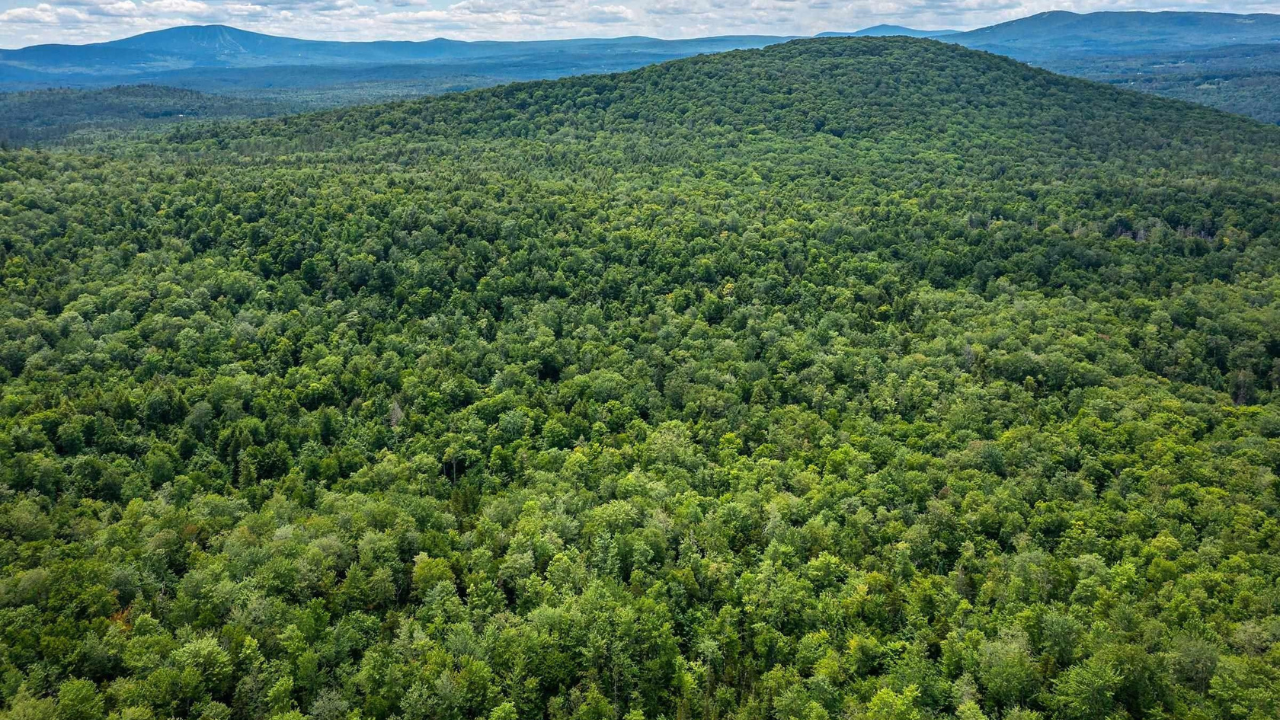
In 1850, New England was an ecological desert. Driven by a century of intensive agrarian expansion, sheep farming, and industrial fuel requirements, regional forest cover collapsed from over 90% at the dawn of European colonization to less than 30% across much of the southern tier. Today, that same landscape is roughly 60% forested.
Popular media often frame this transformation as a romantic tale of nature "reclaiming" its territory. This framing is fundamentally flawed. It mischaracterizes a highly predictable, macro-economically driven phenomenon known in resource economics as the Forest Transition Model. The structural trajectory of New England's forests is not a mystical triumph of wilderness; it is a direct consequence of shifting economic gravity, agricultural optimization, and thermodynamic transitions.
By analyzing the specific socio-economic variables, ecological successions, and modern structural headwinds, we can decode the true mechanisms behind one of the largest self-assembled carbon sinks on earth.
The Three Pillars of Forest Transition
The transition of a landscape from net deforestation to net reforestation is governed by structural economic shifts rather than localized conservation campaigns. In New England, this transition was executed through three distinct macro-economic levers.
1. Agrarian Arbitrage and Spatial Optimization
Prior to the mid-19th century, New England’s rocky, post-glacial soils were cleared to sustain subsistence farming and local sheep pasture. The system was highly inefficient. The construction of the Erie Canal in 1825, followed by the rapid expansion of the trans-Appalachian railroad network, exposed New England’s agricultural economy to a brutal geographic reality.
The deep, stone-free silt loams of the Midwestern United States possessed agricultural yields that dwarfed northeastern outputs. This created a massive regional imbalance:
- The Cost Function of Transport: Cheap rail and canal transport reduced the price of importing Midwestern grain and meat to the East Coast below the marginal cost of producing food locally on stony New England hillside farms.
- Capital and Labor Migration: Facing negative economic margins, generations of New England farmers abandoned their marginal fields and migrated west or moved to rapidly industrializing manufacturing cities along regional waterways.
The physical abandonment of these agricultural plots removed the primary biological suppression mechanism (grazing and tilling), initiating passive ecological succession.
2. Fuelwood Substitution and the Fossil Energy Pivot
Up through the mid-19th century, wood was the primary industrial and domestic energy carrier in North America. The early railroad infrastructure itself accelerated deforestation, consuming vast volumes of timber both for track ties and to fire early steam locomotives.
The critical inflection point came when the transportation network matured sufficiently to import dense fossil fuels at scale. The substitution of wood by Pennsylvania anthracite coal transformed the regional energy balance:
$$E_{substitution} = \frac{\text{Energy Density of Anthracite Coal (26–30 MJ/kg)}}{\text{Energy Density of Air-Dried Wood (16–19 MJ/kg)}}$$
Because coal delivered a dramatically higher energy-to-mass ratio, it rapidly replaced wood for heating, smelting, and steam generation. This energy pivot instantly decoupled industrial growth from local timber harvesting rates, allowing standing biomass to accumulate.
3. Industrial Consolidation of Timber Networks
As local, highly fragmented subsistence logging operations collapsed, the timber industry consolidated and migrated. Commercial forestry shifted its footprint to the vast, uncut softwoods of the Pacific Northwest and the fast-growing southern pine belts. While Maine retained a working industrial forest model in its northern tier, southern New England became a silvicultural afterthought, leaving local ecosystems to regenerate undisturbed by industrial-scale clear-cutting.
The Chronology of Natural Succession
To understand how a forest regenerates without human planting, one must look at the highly ordered biophysical succession that occurred on New England’s abandoned soils. The process is not uniform; it is a predictable sequence of biological colonizations determined by species-specific reproductive strategies and light requirements.
[Abandoned Field]
       │
       ▼ (Years 1–5)
[Pioneer Herbs & Grasses] (Crabgrass, Goldenrod, Aster)
       │
       ▼ (Years 5–20)
[Early-Successional Woody Species] (Grey Birch, Sweet Gum, Eastern Red Cedar)
       │
       ▼ (Years 20–80)
[Mid-Successional Canopy Monocultures] (White Pine dominant on open soils)
       │
       ▼ (Years 80+)
[Late-Successional Hardwood/Hemlock climax] (Red Oak, Red Maple, Beech, Hemlock)
The White Pine Wave (The Old-Field Phase)
When a plowed field or pasture is abandoned, the bare mineral soil or grass cover provides an ideal seedbed for wind-dispersed pioneer species. In central New England, the dominant pioneer tree was the Eastern White Pine (Pinus strobus).
White pine is a prolific seed producer with lightweight, winged seeds that can travel hundreds of meters on the wind. Because grazing cattle had stripped competing hardwood saplings, vast swathes of abandoned land regenerated into dense, even-aged, virtual monocultures of white pine. This structural phase peaked between 1890 and 1910, creating a massive timber resource that ironically spurred a brief, late-stage boxboard milling industry.
The Hardwood Understory Climax
White pine monocultures carry a fundamental biological limitation: they are highly shade-intolerant. A white pine seedling cannot grow under the dark canopy of its parents.
As the first-generation pine canopy matured and thinned—a process accelerated by logging for boxboards and the catastrophic 1938 New England Hurricane—it created a microclimate characterized by high soil organic matter and filtered light. This environment favored shade-tolerant hardwoods, including:
- Red Oak (Quercus rubra)
- Red Maple (Acer rubrum)
- American Beech (Fagus grandifolia)
- Eastern Hemlock (Tsuga canadensis)
These species, which had survived as suppressed saplings in the understory, rapidly ascended to fill the canopy gaps. Today, this transition is complete across most of the region, yielding the characteristic mixed-hardwood-conifer temperate forests observed today.
Carbon Dynamics: The Hidden Value of Mature Biomes
The reforestation of New England serves as a premier real-world case study in natural carbon sequestration. However, the carbon dynamics of these recovering forests are highly non-linear.
Data collected over decades at the Harvard Forest Long-Term Ecological Research (LTER) site reveals that the rate of carbon capture in these second-growth forests actually doubled between 1992 and 2015. This surge is driven by the aging cohort of dominant red oaks, which are currently in their peak biomass-accumulation phase (roughly 80 to 120 years old).
A common misconception is that mature forests stop sequestering carbon once they reach a steady state. In reality, while net primary productivity may slow down, the total carbon pool—particularly in the forest soils, woody debris, and deep root networks—continues to expand. The structural complexity of these maturing stands creates highly stable carbon sinks that are far more resilient to climatic shocks than young, single-species commercial plantations.
The Modern Reversal: Structural Bottlenecks to Recovery
The narrative of endless forest expansion has officially reached its limit. For the first time in 150 years, New England is losing forest cover. This reversal is not driven by traditional commercial logging, but by permanent, structural conversions of the landscape.
┌─────────────────────────────────────────────────────────┐
│              Drivers of Modern Forest Loss              │
└───────────────────────────┬─────────────────────────────┘
                            │
         ┌──────────────────┴──────────────────┐
         ▼                                     ▼
┌──────────────────┐                  ┌──────────────────┐
│ Suburbanization  │                  │  Infrastructure  │
│  & Fragmentation │                  │  & Clean Energy  │
└────────┬─────────┘                  └────────┬─────────┘
         │                                     │
         ▼                                     ▼
• Arterial road corridors             • Commercial solar arrays
• Low-density housing                 • High-voltage transmission lines
• High perimeter-to-area ratios       • Permanent soil compaction
1. Suburbanization and Habitat Fragmentation
The primary driver of modern forest loss is suburban sprawl, particularly in the outer rings of major metropolitan areas like Boston. Because this development is highly distributed—consisting of low-density housing and arterial road corridors—the damage is disproportionate to the absolute acreage cleared.
This creates a severe fragmentation bottleneck. When a continuous forest is carved into smaller parcels, the ratio of forest edge to interior forest increases exponentially. This "edge effect" alters microclimatic conditions (increased wind, higher temperatures, lower humidity), facilitates the invasion of non-native species, and disrupts the migration corridors of deep-forest specialists.
2. The Clean Energy Land Use Paradox
A modern structural conflict has emerged between carbon sequestration in standing biomass and the land requirements of utility-scale renewable energy. To meet regional decarbonization goals, developers are clearing hundreds of hectares of intact second-growth forest to install photovoltaic solar arrays and high-voltage transmission lines. This represents a permanent land conversion where the soil profile is altered, eliminating both the active carbon sink and the underlying ecological matrix.
The Strategic Path Forward
To maintain the ecological and climate stabilization benefits of New England's second-growth forests, regional environmental strategy must pivot from passive observation to active, structured conservation. Relying on "nature taking its course" is no longer viable in a fragmented, human-dominated landscape.
Regional policymakers and conservation trusts should focus capital on securing permanent restrictive conservation easements on high-value, contiguous parcels. By paying landowners to permanently forfeit development rights while allowing sustainable, selective forestry, states can maintain large, intact forest blocks.
Priority must be placed on connecting existing state parks, wildlands, and protected municipal watersheds. Creating wide, unfragmented north-south wildlife corridors is the single most effective way to allow plant and animal species to migrate as climate zones shift northward.
:max_bytes(150000):strip_icc():focal(749x0:751x2)/auschwitz-2-691cb034ee9e43cfa45a0969012c6337.jpg)