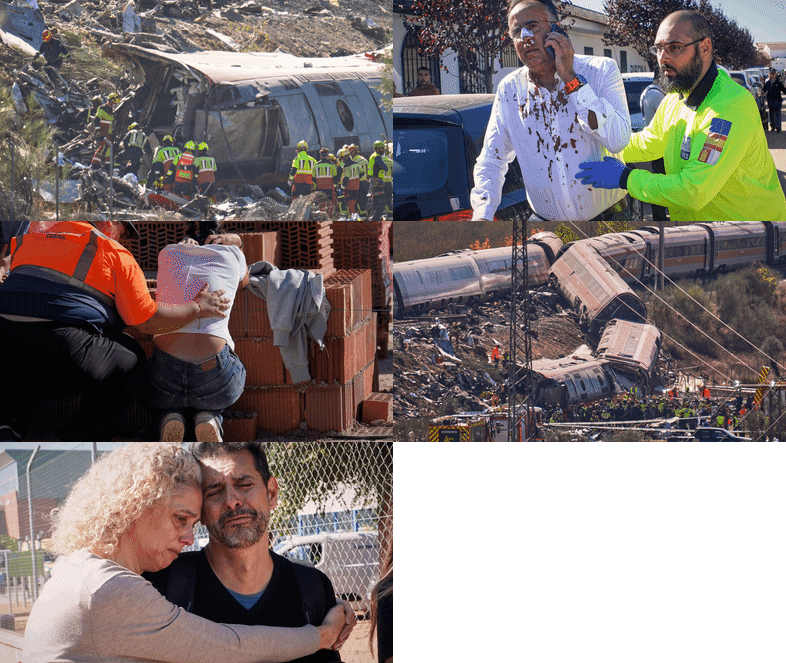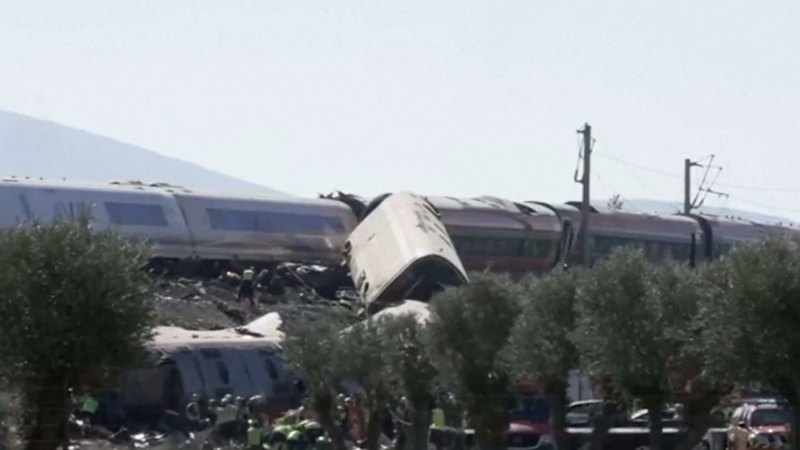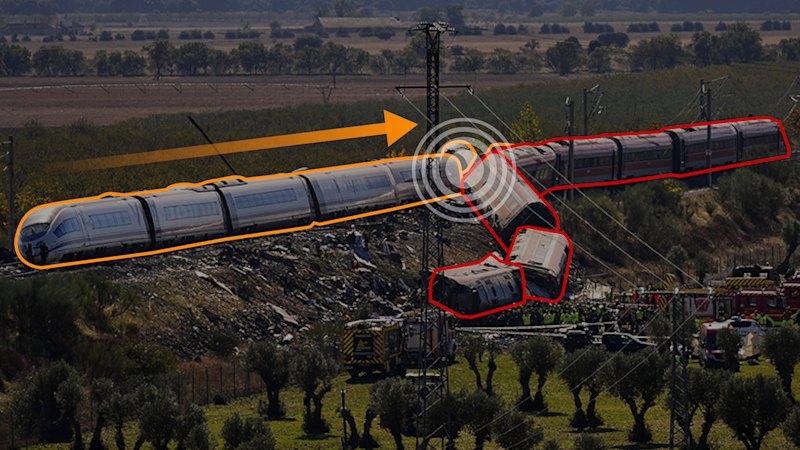
Labeling a catastrophic rail derailment "inexplicable" is an admission of analytical failure, not an accurate description of physical reality. High-speed and conventional rail disasters do not materialize from statistical anomalies; they are the deterministic outputs of intersecting mechanical, procedural, and systemic failures. Understanding how a major Spanish train crash unfolds requires stripping away sensationalist framing and applying rigorous failure-mode engineering, human-factors psychology, and infrastructure risk modeling.
The Myth of the Single Point of Failure
Public reporting surrounding major rail incidents frequently fixates on the immediate proximate cause—an operator failing to brake, a switch failing to throw, or a sudden loss of track integrity. In complex socio-technical systems like national rail networks, single-point failures rarely produce mass-casualty events on their own. Modern rail architecture relies on defense-in-depth: overlapping layers of physical, electronic, and procedural barriers designed so that the failure of one layer is absorbed by the next.
When a catastrophic crash occurs in Spain—whether on the high-speed Alta Velocidad Española (AVE) network or the conventional Red Nacional de los Ferrocarriles Españoles (Renfe) lines—it signals a simultaneous breach across at least three distinct operational domains:
- Kinetic Energy Management: The failure to dissipate forward momentum within the physical constraints of track geometry (curvature radius, superelevation, and grade).
- Signaling and Interlocking Logic: A breakdown in the automated communication loop between trackside infrastructure and onboard train control computers.
- Cognitive Load and Human-Machine Interface (HMI): The saturation of the operator's working memory, leading to degraded situational awareness at critical transition zones.
To analyze a derailment accurately, one must separate known physical facts (speed at impact, track curvature, active signaling architecture) from investigative hypotheses (software latency, operator distraction, deferred maintenance). Confusing the two leads to premature scapegoating of front-line operators while leaving systemic architectural flaws untouched.
The Physics of Track Geometry and Kinetic Thresholds
Every railway curve possesses a strict physical limit dictated by Newtonian mechanics. As a train enters a curve, centripetal force must be supplied by the interaction between the wheel flanges and the outer rail, assisted by superelevation (the banking of the track).
The lateral acceleration experienced by the rolling stock scales with the square of the velocity ($a_c = \frac{v^2}{r}$, where $v$ is velocity and $r$ is the radius of curvature). Doubling a train's speed does not double the outward lateral force; it quadruples it.
The Transition Zone Vulnerability
The highest risk profile in any rail network exists at transition zones—segments where high-speed, straight-line trackage feeds directly into lower-speed, high-curvature infrastructure, often near urban terminals or complex junctions.
- Established Fact: When a train enters a curve at twice its rated design speed, the lateral force exceeds the combined resistance of the train's mass and the rail's superelevation.
- Mechanical Outcome: The wheel flanges climb the outer rail head, resulting in immediate derailment. Because kinetic energy scales with the square of velocity ($E_k = \frac{1}{2}mv^2$), the energy dissipated during impact is four times greater than at the rated speed, turning passenger carriages into projectiles and causing severe structural telescoping.
When external observers call such an event inexplicable, they are ignoring the deterministic nature of this equation. Once the velocity threshold is crossed at the point of curvature, no human intervention can alter the trajectory. The crash is mathematically guaranteed before the first carriage leaves the rails.
Signaling Architectures and the Automation Gap
Spain operates a bifurcated rail signaling environment, and the friction between its systems represents a primary structural vulnerability. Understanding this architecture explains how a train can physically reach a curve at lethal speed despite decades of safety engineering.
ERTMS versus ASFA
The Spanish network utilizes two primary train protection frameworks:
- ERTMS (European Rail Traffic Management System): Specifically Level 1 and Level 2, which provide continuous or semi-continuous speed supervision. ERTMS calculates a dynamic braking curve based on the train's weight, braking capability, and upcoming track geometry. If the operator fails to decelerate, the system automatically triggers emergency braking.
- ASFA (Anuncio de Señales y Frenado Automático): A legacy, beacon-based (balise) system designed primarily for conventional lines. Standard ASFA monitors signal aspects (green, yellow, red) and enforces speed limits at specific discrete points rather than calculating continuous braking curves for permanent civil speed restrictions (like sharp curves).
The critical vulnerability emerges at the interface boundaries where ERTMS coverage ends and ASFA coverage begins, or where ERTMS is temporarily deactivated due to onboard software incompatibilities or trackside maintenance.
- The Systemic Flaw: If a high-speed train transitions from continuous ERTMS supervision to legacy ASFA supervision immediately prior to a severe curve, the technological safety net vanishes precisely when kinetic energy is at its peak.
- The Operational Consequence: The burden of calculating the deceleration profile shifts instantaneously from an automated, deterministic computer algorithm to the biological working memory of a single human operator.
Human Factors and Cognitive Saturation
Blaming an operator for missing a braking point ignores well-established principles of cognitive psychology and human-factors engineering. In high-automation environments, human operators are notoriously poor at maintaining sustained vigilance—a phenomenon known in systems engineering as the irony of automation.
When an automated system handles 95% of the operational workload, the human operator transitions from an active controller to a passive monitor. Passive monitoring induces cognitive underload, which degrades situational awareness. When an anomaly occurs—or when the system drops out of automated supervision at a transition zone—the operator must rapidly switch from passive monitoring to active, high-stakes calculation.
Mechanisms of Cognitive Failure
Several compounding mechanisms degrade human performance in the cab during critical phases:
- Inattentional Blindness: When an operator is processing an auditory alert, responding to a dispatch radio call, or clearing a routine system acknowledgement, visual cues outside the cab (such as trackside speed signs) fail to register in conscious awareness.
- Habitual Motor Programs: Operators running familiar routes rely on muscle memory triggered by environmental landmarks. If visibility is degraded by weather, or if an unexpected distraction interrupts the sequence by even four to six seconds, the window for initiating a standard service brake application closes. At 200 kilometers per hour, a six-second delay equates to over 330 meters of unbraked travel.
- Alarm Fatigue: Legacy systems like ASFA require frequent manual acknowledgements for routine signals. When an operator presses an acknowledgement button dozens of times per hour, the motor action becomes decoupled from conscious threat assessment. The alarm ceases to function as a warning and becomes a reflex.
Infrastructure Degradation and Maintenance Asymmetries
Not all derailments stem from overspeeding at transition zones. When track geometry itself fails under normal operating speeds, the root cause lies in asset lifecycle management and maintenance prioritization.
Rail infrastructure is a dynamic mechanical system subjected to millions of load cycles. Heavy axle loads, thermal expansion, and ground settlement continuously degrade track alignment.
The Capital Expenditure Bias
National rail operators and infrastructure managers (such as Spain's Adif) face persistent budgetary pressure to expand high-visibility high-speed corridors while maintaining aging regional networks. This creates a structural maintenance asymmetry:
- Diagnostic Latency: Track geometry cars (ultrasonic and laser-equipped inspection trains) detect micro-fractures in rails, ballast fouling, and subtle shifts in track gauge. However, inspection intervals are finite. A sub-surface rail defect—such as rolling contact fatigue—can propagate rapidly between scheduled diagnostic runs under extreme seasonal temperature swings.
- Deferred Remediation: Identifying a defect does not equate to fixing it. When maintenance backlogs accumulate, infrastructure managers rely on temporary speed restrictions (TSRs) rather than immediate physical replacement. Each TSR introduces another manual compliance point into the network, increasing cognitive load on operators and expanding the surface area for human error.
Quantifying the Investigation Matrix
To determine the exact causal chain of a Spanish rail disaster, forensic investigators do not look for a single narrative; they audit three distinct data streams to establish an objective timeline.
1. The Onboard Event Recorder (Black Box)
This unit captures high-frequency telemetry: wheel rotation speed, throttle position, brake pipe pressure, horn activation, and exact timestamps of every button pressed by the operator. Comparing brake pipe pressure drops against the physical distance to the point of derailment establishes whether the braking system responded within mechanical tolerances or suffered pneumatic/electronic failure.
2. Trackside Interlocking Logs
Infrastructure servers record the exact state of every switch, signal aspect, and track circuit occupancy sensor at millisecond resolution. This data proves whether a switch moved prematurely under a moving train, whether a false green aspect was displayed, or whether a track circuit failed to detect a stationary obstacle ahead.
3. Metallurgical and Geotechnical Forensics
Physical examination of the fractured rails, wheelsets, and subgrade reveals the sequence of structural failure. Investigators examine fracture surfaces under electron microscopes to distinguish between pre-existing fatigue cracks (indicating missed maintenance) and instantaneous brittle fractures (indicating impact damage caused by a derailment already in progress).
Limitations of Technological Remedies
A common institutional reflex following a catastrophic crash is to mandate immediate software patches or blanket hardware rollouts. Strategists and policymakers must recognize the strict operational limitations of these interventions:
- Software Complexity Risk: Adding new automated braking rules to existing ERTMS/ASFA interfaces increases code complexity. Every new conditional loop introduces potential edge-case bugs, false emergency brake activations, and system lockups that force operators to bypass the safety system entirely just to keep trains moving.
- The Financial Constraint: Retrofitting every kilometer of secondary and conventional Spanish track with ERTMS Level 2 requires billions of euros and multi-year corridor shutdowns. Capital constraints guarantee that mixed-signaling environments will persist for decades.
- False Sense of Security: Increasing automation without redesigning the human-machine interface exacerbates vigilance decrement. Unless cabs are engineered to keep operators actively engaged in the control loop, higher levels of baseline automation will simply make the rare human-takeover scenarios even more lethal.
The Strategic Mandate for Rail Risk Reduction
Eliminating catastrophic derailments in mixed-architecture networks requires abandoning reactive, blame-oriented investigations in favor of systemic architectural hardening. Infrastructure managers and rail operators must execute three specific operational shifts:
- Enforce Hard-Coded Speed Supervision at Transition Zones: Where full ERTMS deployment is financially unviable, deploy localized, fail-safe digital balises (such as upgraded ASFA Digital profiles with continuous curve-speed monitoring) specifically at the entry points of all high-curvature zones. Never rely on static signage and human memory to manage kinetic energy drops exceeding 40 kilometers per hour.
- Eliminate Non-Essential Cab Distractions: Implement sterile-cockpit protocols—modeled directly on commercial aviation—during all approach phases to junctions, terminals, and signaling transition boundaries. Restrict non-emergency dispatch communications and secondary telemetry alerts whenever a train enters a deceleration zone.
- Shift Maintenance from Scheduled to Predictive Telemetry: Equip commercial passenger rolling stock with continuous, real-time accelerometers and acoustic sensors. Instead of waiting for dedicated inspection trains to survey the network once a quarter, use every revenue-earning train as a diagnostic sensor to detect track geometry degradation and rail fractures the moment they initiate.