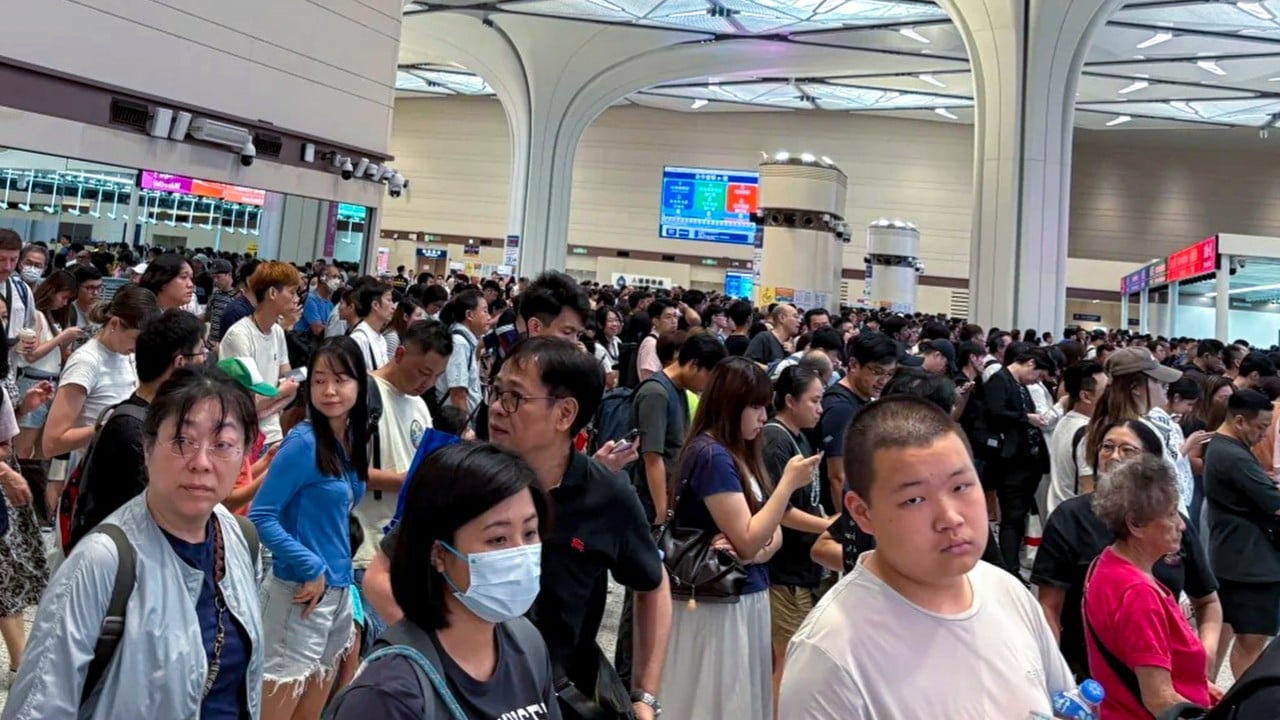
Standard reporting on border congestion treats queues at Huanggang Port as an additive problem: too many travelers showed up, signage was unclear, and a few gates glitched. That framing confuses symptoms with system dynamics. When a high-volume cross-border checkpoint experiences severe congestion, queue length is governed by nonlinear queueing mechanics where arrival volatility, service-time variance, and state-synchronization lag compound one another. This analysis deconstructs the three-factor narrative—confusion, traffic surge, and system issues—and replaces it with an operational framework built on queueing theory, information friction, and coupled infrastructure failure.
Deconstructing the Three-Factor Narrative
Lawmakers and commentators typically attribute border delays to three discrete buckets: traveler confusion, sudden traffic surges, and technical or procedural glitches. While each label points to real friction at Huanggang Port, treating them as independent causes obscures how they interact under load.
A rigorous operational diagnosis separates known structural mechanics (how batch arrivals, inspection gates, and two-jurisdiction handoffs behave under capacity limits) from educated hypotheses regarding specific incidents where full telemetry is not publicly disclosed. Without published minute-by-minute arrival curves, gate-level service distributions, or error logs, exact numeric attribution for any single queue spike remains a hypothesis rather than a settled measurement.
To make the competitor's three buckets analytically useful, we can map them onto three structural mechanisms:
- Information Friction (the "confusion" bucket): Mismatches between traveler mental models and actual routing rules, eligibility requirements, or lane assignments at the moment of decision.
- Arrival-to-Capacity Asymmetry (the "traffic surge" bucket): Episodes where arrival rates exceed effective throughput, or where arrivals cluster into tight bursts driven by holidays, transport schedules, or peak commuting windows.
- Throughput and State Degradation (the "system issues" bucket): Any drop in per-lane processing speed or cross-system coordination, whether from software slowdowns, hardware faults, manual secondary checks, or synchronization delays between adjacent control points.
The fatal flaw in treating these as a simple checklist is assuming they add linearly. In reality, they multiply. A modest arrival spike that would clear within thirty minutes under frictionless routing and full lane availability can trigger hours of backlog when wayfinding slows lane selection and a single inspection or clearance bottleneck cuts service capacity by a fraction.
Queueing Dynamics and Arrival Volatility
At a border checkpoint, travelers do not arrive as a smooth, predictable stream. They arrive in waves shaped by public holidays, weekend travel patterns, cross-boundary transport schedules, and regional events. In queueing theory, when both inter-arrival times and service times exhibit variability—and utilization approaches or exceeds system capacity—wait times expand non-linearly rather than rising in steady proportion to headcount.
Consider a simplified mental model of a multi-lane checkpoint operating near saturation. Suppose ten lanes can each process one traveler every thirty seconds under ideal conditions, yielding a theoretical ceiling of twenty travelers per minute. If travelers arrive at an average of nineteen per minute, the system looks balanced on paper. Yet if a transit schedule or holiday peak pushes arrivals to twenty-eight per minute for forty-five minutes, the checkpoint accumulates a net surplus of nine travelers per minute—more than four hundred people added to the queue before recovery even begins. Once the surge subsides back to eighteen per minute, clearing that accumulated buffer at a net recovery rate of just two travelers per minute takes over three hours, assuming zero further disruptions.
Two operational realities make real border queues even harsher than textbook models:
- Non-uniform lane utilization: Travelers rarely distribute evenly across open channels. Visibility bias, habit, and late-stage lane changes pull disproportionate volume into familiar or prominent lanes while adjacent capacity sits underused.
- Service-time tails: A single complex case—a document discrepancy, a secondary inspection, an equipment re-scan, or a group traveler needing manual assistance—can stretch a thirty-second transaction into several minutes, blocking a server or forcing downstream merges.
Because Huanggang Port sits on a major cross-boundary corridor between Shenzhen and Hong Kong, demand is sensitive to calendar concentration and infrastructure transitions. Even when macro demand is anticipated, localized spikes in specific traveler cohorts—such as private vehicles, coaches, or pedestrian groups—can overwhelm dedicated sub-processes while other zones run below capacity.
Wayfinding, State Lag, and Coupled Bottlenecks
What lawmakers call "confusion" is rarely pure ignorance; it is usually information latency arriving too late to alter behavior. A traveler who discovers a lane rule, document step, or route split only at the decision point cannot smoothly self-sort. Instead, they hesitate, ask staff, or cross streams—injecting variance directly into the physical flow.
Wayfinding fails most acutely during transitions: new facility layouts, reconfigured checkpoints, temporary crowd controls, or shifting operating modes. Under normal volume, a confused traveler costs thirty seconds of staff time and minor local friction. Under peak volume, that same hesitation cascades backward through upstream merge points, reducing effective arrival flow into downstream gates.
What lawmakers call "system issues" is equally multi-layered. A technical or procedural stall at a border crossing rarely stays confined to one machine:
- Local server or reader degradation: Slower verification or retries extend per-person service time across every traveler using that lane.
- Upstream-downstream coupling: If one control stage slows or halts, holding areas fill up. Once holding areas reach capacity, upstream entry must be throttled, turning a localized delay into a corridor-wide queue.
- Cross-jurisdictional handoff friction: Cross-border movement involves sequential or coupled processes across jurisdictions and transport modes. Any lag in data exchange, passenger clearance synchronization, or vehicle release propagates across the interface.
A practical example illustrates how these forces compound without requiring a dramatic breakdown. Imagine a busy evening period where arrivals tick upward while two inspection stations require manual resets and updated signage leaves first-time crossers unsure which queue matches their travel mode. None of those three factors is catastrophic in isolation. Together, slow stations shrink capacity, hesitant travelers widen service-time variance and block merges, and surging arrivals turn minor delays into a self-reinforcing jam.
What Standard Metrics Miss
Public debates over port queues almost always rely on headline counts: total daily crossings, peak hourly totals, or anecdotes of multi-hour waits. Those metrics are blunt instruments for operational control.
Total daily volume masks peak-to-mean concentration. A port can record an ordinary daily total while enduring an intense two-hour bottleneck caused by synchronized arrivals. Similarly, average wait time hides tail severity: a small share of travelers trapped in stalled lanes or secondary checks can experience delays orders of magnitude worse than the median traveler, driving sharp spikes in public frustration and media scrutiny.
Furthermore, throughput measured at the exit gate does not equal demand or internal flow. When a bottleneck forms upstream, exit counts can appear steady—capped at maximum discharge rate—even as the queue behind the choke point grows rapidly. Judging system health by exit throughput alone is like judging traffic flow on a highway by counting cars passing a single tollbooth while a five-mile backup builds behind it.
Tactical Operational Playbook
Fixing recurring border congestion requires treating the checkpoint as a dynamic flow system rather than a static facility. The following sequence targets the highest-leverage failure modes:
- Instrument arrival and stage telemetry: Track arrival rates, queue lengths, per-lane service times, and exception rates in short time buckets (such as five- or fifteen-minute intervals) across every distinct traveler flow, rather than relying solely on aggregate daily totals.
- Decouple surge waves from gate capacity: Use dynamic lane allocation, pre-arrival digital declarations or eligibility checks where applicable, and staggered or metered release upstream so bursty arrivals are smoothed before hitting constrained inspection points.
- Push decision-critical wayfinding upstream: Place clear, unambiguous routing cues well ahead of merge points and split zones, using plain visual distinctions aligned with how travelers actually categorize themselves (mode, document type, group status) rather than internal administrative jargon.
- Isolate high-variance exceptions: Route complex cases, mismatches, and manual verifications to dedicated exception bays immediately upon detection so a single lengthy check does not stall a primary lane.
- Run pre-surge readiness drills before peak windows: Pre-position staffing buffers, verify failover procedures for scanning and clearance hardware, and test contingency lane configurations ahead of known holiday or event surges rather than scrambling after queues form.
Operational Limitations and Trade-Offs
Even well-engineered queue management runs into hard physical and institutional constraints. Infrastructure footprints are fixed in the short term; adding physical lanes or expanding concourses requires major capital investment, engineering lead times, and cross-boundary coordination.
Every operational lever also carries a trade-off. Aggressive metering or holding upstream prevents internal gridlock, but shifts wait time outside the terminal and can spill congestion onto connecting roads or transit hubs. Rapid exception diversion speeds primary throughput, yet requires dedicated staffing and space that sit idle during off-peak hours. And security, customs, and immigration mandates set non-negotiable verification standards—speed cannot be purchased by bypassing due diligence.
Strategic Recommendation
Port authorities and transport planners should stop treating border queues as a public-relations problem to be explained away after peak crowds disperse, and instead operate Huanggang Port around real-time bottleneck containment and pre-surge capacity activation. Establish explicit congestion triggers tied to queue growth rate and lane utilization—not post-hoc complaints—that automatically open swing capacity, deploy mobile wayfinding and triage staff at decision splits, and divert high-variance exceptions before arrival surges compound into multi-hour backlogs.