A Las Vegas jury required less than three hours to convict sixty-three-year-old Duane Davis of first-degree murder with a deadly weapon, closing a judicial vacuum that persisted for nearly thirty years. The trial mechanics provide a masterclass in how a cold case transforms into a conviction not through breakthrough forensic technology or pristine physical evidence, but through the defendant's monetization of his own criminal liability.
The Economics of Confession and Self-Incrimination
The prosecution did not prove that Davis pulled the trigger during the September 1996 drive-by shooting. Under Nevada law, direct participation as a shooter is functionally irrelevant if the state establishes accomplice liability or conspiracy. The state built its operational architecture entirely around Davis's own public admissions, recorded interviews, and his 2019 memoir, Compton Street Legend. You might also find this similar story useful: The Anatomy of a Vacated Seat Strategic Mechanics of the Holborn and St Pancras By-election.
This dynamic reveals a fatal miscalculation in modern criminal enterprise: the tension between street credibility and legal exposure. For decades, law enforcement possessed circumstantial indicators connecting the South Side Compton Crips to the murder, but lacked admissible proof. Davis operated under the assumption that historical distance and institutional apathy insulated him. When he converted his historical role into intellectual property, he altered his risk profile.
The evidentiary structure relied on a straightforward causal chain: As discussed in detailed reports by Al Jazeera, the results are notable.
- Motive generation: The physical altercation involving Orlando Anderson in the lobby of the MGM Grand earlier on the night of September 7, 1996.
- Resource allocation: Davis acquiring a .40-caliber Glock pistol and supplying it to the occupants of the backseat of the white Cadillac.
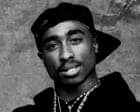
- Execution: The orchestration of a deliberate vehicular pursuit and U-turn to locate the target vehicle carrying Tupac Shakur and Marion Suge Knight.
Defense counsel attempted to frame these published accounts as commercial exaggerations designed to extract financial gain from a public hungry for sensationalism. The jury rejected this defense because the core logistical admissions—specifically, Davis's continuous placement of himself inside the vehicle as an active coordinator—remained invariant across multiple mediums over several years.
The Structural Bottlenecks of Cold Case Prosecution
The nearly three-decade lag between the crime and the verdict exposes systemic frictions inherent in historical homicide investigations. Traditional criminal cases rely on immediate forensic preservation, pristine witness recollection, and prompt ballistic matching. None of these variables remained functional by the time the indictment was secured in 2023.
The primary constraints faced by the Clark County District Attorney's office included witness attrition and evidentiary decay. Multiple primary actors—including the suspected shooter Orlando Anderson and the driver Terry Brown—were deceased long before the trial commenced. Furthermore, members of the victim's entourage exhibited persistent reluctance to participate in judicial proceedings, requiring the court to issue compulsory process orders to secure testimony.
This environment forced the prosecution to rely on a substitution strategy: replacing physical forensics with behavioral and historical context. By deploying a gang expert to outline the rigid hierarchy of the South Side Compton Crips, prosecutors established that a leader of Davis's stature did not merely suggest retaliation; his directives carried operational enforcement. The absence of physical DNA or a recovered firearm became secondary to the linguistic footprint Davis left behind in his memoirs and police interviews.
The Failure of Immunity Boundaries
A critical operational element of the historical investigation involved a 2008 proffer agreement. Davis had previously given statements to a joint federal and local task force detailing his involvement under an agreement designed to shield those statements from direct use in future prosecutions.
The legal vulnerability emerged when Davis failed to recognize the jurisdictional boundary between protected investigative cooperation and unshielded public dissemination. While the proffer protected his historical police interviews, it provided zero immunity for commercial books and unprompted media appearances. When a suspect trades confidentiality for notoriety, the legal protections evaporate. Davis traded the security of federal confidentiality for the currency of public notoriety, creating the exact evidentiary trail the state utilized to bypass its historical shortage of physical witnesses.
Strategic Implications for Institutional Accountability
The closure of this docket highlights the limits of statute-of-limitation-free homicide charges when balanced against investigative inertia. For years, cultural critics and family members pointed to the delayed response as evidence of systemic indifference. The operational record indicates that the delay was less an artifact of targeted malice than a structural failure to bridge the gap between street intelligence and admissible courtroom testimony.
When a criminal enterprise operates on insular codes of silence, external investigators face an impenetrable information barrier. That barrier is rarely breached by police pressure; it is typically dismantled by internal hubris. Duane Davis engineered his own indictment by substituting legal caution for commercial self-promotion.
File the legal motion for sentencing under the statutory parameters of first-degree murder with a deadly weapon, recognizing that the appellate phase will test the limits of utilizing a defendant's memoirs as primary substantive confessions.