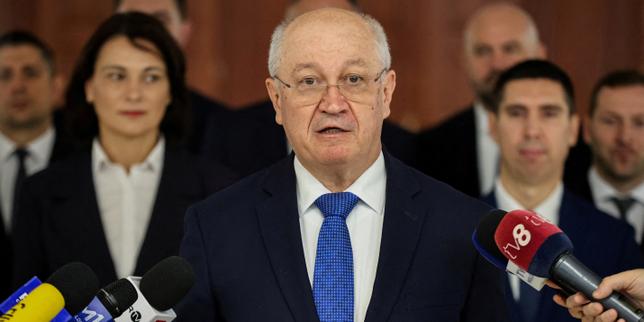
The resignation of Moldovan Prime Minister Alexandru Munteanu on July 3, 2026, represents more than a localized political disruption; it is an analytical case study in institutional fracture. Ostensibly framed around personal principles and conviction, Munteanu’s departure exposes the systemic vulnerabilities that emerge when an administration tries to dual-track aggressive economic modernization alongside deep-seated governance reform. By understanding the operational failures within state-owned enterprises (SOEs) that precipitated this collapse, analysts can map the structural limits of rapid institutional cleanup in transitioning economies.
The event triggers an automatic constitutional mechanism: the dissolution of the entire cabinet, forcing the executive into a restricted caretaking role and opening a volatile 15-day window for legislative renegotiation. To comprehend how a technocratic administration appointed in November 2025 disintegrated in less than eight months, one must dismantle the specific governance architecture that failed.
The Catalyst Architecture: The Corporate Governance Vulnerability
The direct mechanism of the government's collapse was not macroeconomic underperformance, but a critical failure in the governance of state-controlled infrastructure—specifically concentrated in the state-owned air navigation service provider, MoldATSA. The crisis highlights the structural risk of using SOEs as patronage vectors rather than independent fiscal entities.
The structural failure can be modeled via three interconnected variables:
- Asymmetric Recruitment Criteria: Senior executive appointments prioritized political alignment or transactional loyalty over specialized technocratic competence. This mismatched capability compromised operations inside highly sensitive infrastructure sectors.
- Board Layering Duplication: A systemic vulnerability where individuals simultaneously held board or executive positions across multiple public institutions. This created acute conflicts of interest and weakened oversight.
- Regulatory Capture Resistance: The failure of internal audit and anti-corruption frameworks to isolate state corporate entities from external elite network influence.
When these three variables compound, the state enterprise ceases to function as an economic asset and turns into a political liability. In response to mounting irregularities at MoldATSA, the Moldovan Parliament formed a special investigative committee to audit recruitment procedures, board compositions, and cross-institutional dual-hatting. The immediate friction generated by this legislative investigation stripped Munteanu of his governing consensus, making his executive position untenable.
The Structural Bottleneck: Institutional Drag vs. EU Accession Timelines
The friction that fractured the Munteanu administration stems from a fundamental mismatch between the speed of external institutional convergence and internal political resistance. As an official candidate for European Union membership, Moldova is bound to a strict compliance matrix. This reality sets up two opposing forces:
- The Compliance Mandate: The requirement to rapidly harmonize legal, fiscal, and corporate governance frameworks with Western European standards to secure accession milestones and international funding.
- The Domestic Status Quo: A deeply entrenched domestic political economy dependent on rent-seeking, informal power networks, and state-subventioned enterprises.
+-----------------------------+       +-----------------------------+
|    EU Compliance Mandate    |  -->  | Internal Political Friction |
| (Rapid Governance Reforms)  |       |  (Loss of Elite Consensus)  |
+-----------------------------+       +-----------------------------+
                                                     |
                                                     v
                                      +-----------------------------+
                                      |    Executive Collapse       |
                                      |    (Munteanu Resignation)   |
                                      +-----------------------------+
When an administration executes rapid anti-corruption measures—such as President Maia Sandu's promised "general cleanup" of state firms—it threatens the financial foundations of these informal domestic networks. The second limitation of this reform model is that it assumes the ruling coalition can absorb the blowback from targeted elites without splintering its legislative majority. Munteanu's resignation proves that when the state begins dismantling rent-seeking mechanisms in critical infrastructure, the internal friction de-stabilizes the executive branch before the reforms can take root.
The Constitutional Execution Risk
Following the prime minister's exit, Moldova enters a highly regulated, high-stakes constitutional transition. Under the country’s legal framework, the executive power function shifts immediately into a reactive state.
- Caretaker Limitations: The dissolved cabinet is legally barred from introducing new legislation, executing major budgetary reallocations, or signing long-term international treaties. Its mandate is strictly limited to the administration of daily public services.
- The 15-Day Legislative Window: President Maia Sandu must initiate immediate consultations with parliamentary factions to nominate a new prime ministerial candidate. Once designated, this candidate has a strict 15-day window to draft a governance program, assemble a cabinet, and secure a vote of confidence from a parliamentary majority.
The core vulnerability in this process is legislative fragmentation. In a geopolitically polarized parliament, assembling a cohesive majority around a reform-driven candidate risks gridlock. If parliament fails to confirm a new government after two attempts within a 45-day window, the constitution mandates the dissolution of parliament and early legislative elections—an outcome that would pause structural reforms for months.
Strategic Playbook for the Next Executive
To prevent a repetition of the Munteanu collapse, the incoming administration cannot simply rely on rhetoric around anti-corruption and European alignment. It must change its operational strategy by decoupling political survival from state-owned enterprise management through three concrete actions:
First, insulation of the technical infrastructure is non-negotiable. The next cabinet must immediately pass legislation transferring the appointment power for SOE boards to independent, internationally audited selection panels, permanently removing these seats from political negotiations.
Second, the administration must sequence its battles. Trying to reform multiple corrupt state entities simultaneously creates a united front of opposing elite networks. The executive should focus its political capital on one highly visible sector at a time, establishing a clear template for corporate transparency before moving to the next.
Finally, the government needs to formalize an explicit risk-sharing mechanism with its Western partners. It should link specific, difficult governance benchmarks directly to tranches of EU macro-financial assistance. This transforms domestic reform from an internal political choice into an absolute economic necessity for the state's fiscal survival, giving the next prime minister the leverage needed to override domestic resistance.


