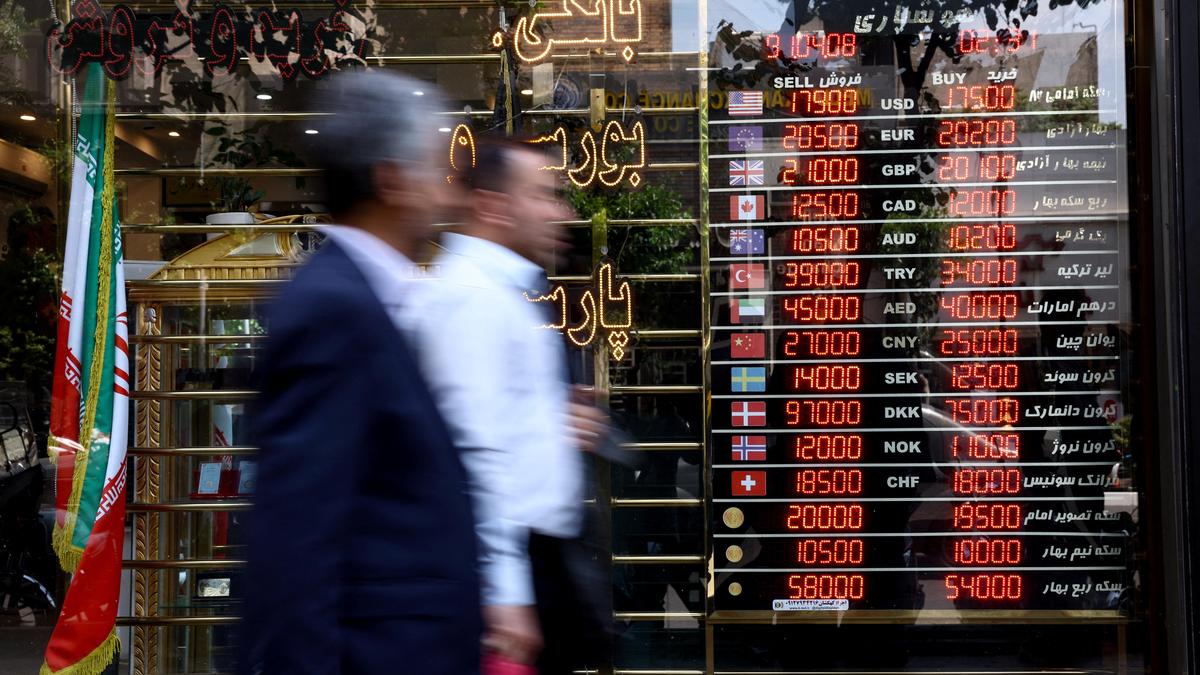
The Central Bank of Iran’s May 2026 consumer price index reading of 77.2% year-on-year inflation marks the highest recorded price volatility in the state since the Anglo-Soviet invasion of 1942. This parallel to World War II is not merely historical poetry; it is a structural macroeconomic diagnosis. In 1942, foreign occupation confiscated physical logistics networks, systematically severing the agricultural supply chain and inducing an artificial scarcity shock. In 2026, the mechanics are digital, naval, and financial, driven by a physical U.S. naval blockade of energy corridors, an extensive regional war, and an acute domestic monetary collapse.
To understand the trajectory of Iran's current fiscal crisis, observers must look past surface-level political unrest and analyze the rigid, mathematical feedback loops defining the modern Iranian economy. The system is trapped in a multi-variable cost function where currency depreciation, militarized supply shocks, and monetized fiscal deficits continuously compound one another.
The Tri-Product Cost Function of Contemporary Iranian Inflation
Standard consumer price indexes obscure the real mechanics of a wartime economy under sanctions. The localized price level ($P_t$) is a direct output of three distinct, non-linear structural vectors.
                  ┌────────────────────────────────────────┐
                  │   Iranian Inflation Cost Function      │
                  └───────────────────┬────────────────────┘
                                      │
         ┌────────────────────────────┼────────────────────────────┐
         ▼                            ▼                            ▼
┌──────────────────┐        ┌──────────────────┐        ┌──────────────────┐
│  Vector 1:       │        │  Vector 2:       │        │  Vector 3:       │
│  The Currency    │        │  Logistical      │        │  Monetized       │
│  Depreciation    │        │  Supply Chokes   │        │  Fiscal Deficits │
│  Pass-Through    │        │  (The Blockade)  │        │  (The Printing   │
│  (Rial Freefall) │        │                  │        │   Press)         │
└──────────────────┘        └──────────────────┘        └──────────────────┘
Vector 1: The Currency Depreciation Pass-Through Coefficient
In an economy heavily reliant on imported intermediary inputs, components, and raw materials, the spot exchange rate operates as the primary pricing transmission vehicle. The open-market valuation of the Iranian rial has moved from approximately 32,000 rials per U.S. dollar in 2015 to a collapsed floor exceeding 1.7 million rials per dollar in mid-2026.
When a domestic fiat currency loses more than 98% of its external purchasing power, the pass-through coefficient to consumer goods approaches 1.0. This means foreign exchange depreciation converts directly into domestic price increases almost instantly. Importers cannot hedge against this currency degradation; instead, they alter retail pricing structures daily to prevent the complete erosion of their working capital.
Vector 2: Logistical Supply Chokes and the Naval Blockade
The implementation of the U.S. naval blockade in April 2026 directly targeted Iranian crude oil maritime shipping lanes, suffocating the country’s primary engine for foreign currency accumulation. When hard export revenues drop toward zero, the state's capacity to subsidize or secure foreign trade vanishes.
This introduces a severe supply-side constraint. Physical goods cannot enter domestic ports, and local production facilities cannot acquire specialized parts. The result is a classic aggregate supply shift inward. Total output declines while the underlying production cost for the remaining output spikes exponentially.
Vector 3: Monetized Fiscal Deficits
The domestic war effort requires vast capital outlays at the exact moment tax revenues and oil export proceeds are bottoming out. To close this expanding budgetary chasm, the state relies on central bank credit expansion.
The printing press has become the primary mechanism for funding public operations and paying state salaries. This continuous expansion of the broad money supply ($M_2$), completely decoupled from actual real GDP growth, functions as an implicit inflation tax. It floods the domestic market with excess liquid rials chasing a rapidly diminishing basket of physical consumer goods.
The Structural Divergence of the Food and Core Baskets
A critical analytical error made by external commentators is evaluating Iran’s economic health through a single, aggregated headline inflation metric. In a true hyperinflationary breakdown, the consumption basket fractures along lines of absolute necessity.
| Consumption Category (February 2026 Data) | Official Year-on-Year Price Index Increase | Estimated Free-Market / Black Market Premium |
|---|---|---|
| Headline Consumer Price Index | 77.2% | Variable |
| General Needs (Medicine, Local Transport) | 113.8% | 40% – 60% |
| Aggregate Food Basket | 110.0% | 80% – 120% |
| Meat Products | 117.0% | 150%+ |
| Bread and Cereals | 142.0% | 200%+ |
| Cooking Oil | 207.0% | 489% (Verified Spot Shortage) |
This data illustrates a stark asymmetry. While the headline index registers at 77.2%, vital food inputs like cooking oil, bread, and proteins are accelerating at two to three times that velocity. This divergence highlights the breakdown of government-mandated price ceilings.
The Breakdown of Official Price Ceilings
The state attempts to enforce artificial price caps on essential commodities, establishing subsidized rates for staples like cooking oil and wheat. However, basic microeconomic theory dictates that when a government fixes prices below the market-clearing equilibrium during a supply shortage, the physical supply vanishes from legal retail channels.
The 1.5-liter bottle of frying oil that officially registered a 207% increase via state statistical tracking actually realized a 489% spot price surge on the open market, moving from 70,000 tomans to 473,000 tomans. Real availability has shifted entirely to informal black markets. Households must pay the true market-clearing premium or face outright starvation. Consequently, standard official metrics significantly understate the actual inflation rate experienced by ordinary citizens.
The Social Vulnerability Index: The Real vs. Nominal Wage Gap
The core driver of social instability is not inflation in isolation, but rather the widening discrepancy between nominal wage adjustments and the real cost of living.
During the 2025–2026 fiscal cycle, the Iranian state authorized a maximum nominal public sector wage adjustment of approximately 45%. Concurrently, the year-on-year food basket expansion maintained a trajectory of 110%. This creates a real wage deficit of over 60%.
$$\text{Real Wage Purchasing Power Divergence} = \text{Nominal Wage Growth (45%)} - \text{Food Price Inflation (110%)} = -65%$$
The long-term household adjustments to this widening structural deficit follow a clear, predictable sequence of consumption degradation:
- The Discretionary Elastic Phase: Households entirely eliminate luxury goods, leisure activities, and non-essential travel.
- The Capital Preservation Phase: Families delay medical procedures, defer housing maintenance, and liquidate hard assets like jewelry or vehicles to cover immediate operating costs.
- The Inelastic Dietary Phase: Households systematically reduce protein, dairy, and complex nutrients from their diets, shifting consumption toward basic carbohydrates.
- The Credit Subsidization Threshold: Middle- and lower-income families utilize credit lines backed entirely by future state welfare subsidies simply to purchase basic calories.
The internal market has transitioned into a landscape of the working poor. Individuals retain formal employment but can no longer purchase a standard caloric basket using their primary wages.
The intense national protests observed at the beginning of 2026—which resulted in severe state crackdowns—were driven by these specific microeconomic dynamics. The state’s economic threshold for major civil unrest historically correlates with sustained annual inflation exceeding 25%. Maintaining a headline rate near 80% for an extended period tests the absolute mathematical limit of domestic social endurance.
Strategic Limits of the $24 Billion Asset Liquidation Strategy
To counter this currency collapse, the Iranian administration has prioritized negotiations for the release of roughly $24 billion in foreign currency assets currently frozen in overseas banking institutions due to international sanctions. However, analyzing this strategy through a balance-of-payments framework reveals severe structural limitations.
┌────────────────────────────────────────────────────────────────────────┐
│             $24 Billion Frozen Asset Influx (One-Time)                 │
└───────────────────────────────────┬────────────────────────────────────┘
                                    │
         ┌──────────────────────────┴──────────────────────────┐
         ▼                                                     ▼
┌──────────────────────────────────┐        ┌──────────────────────────────────┐
│     Short-Term Nominal FX        │        │      Long-Term Structural        │
│          Intervention            │        │           Bottlenecks            │
├──────────────────────────────────┤        ├──────────────────────────────────┤
│ • Temporary Rial stability       │        │ • Blockade prevents capital goods│
│ • Brief drop in FX expectations  │        │   imports                        │
│ • Temporary drop in import costs │        │ • Persistent domestic budget     │
│                                  │        │   deficit                        │
│                                  │        │ • Continuous money supply growth │
└──────────────────────────────────┘        └──────────────────────────────────┘
A cash injection of this size provides a central bank with capital to intervene directly in foreign exchange markets, temporarily satisfying outstanding private sector demand for hard currency. This can artificially support the rial exchange rate for a brief window, helping lower short-term inflationary expectations and dampening the import cost-push cycle.
Yet, this strategy fails to address the underlying structural bottlenecks. A one-time capital injection cannot fix a persistent structural deficit. With the naval blockade restricting raw commodity exports and digital infrastructure limitations undercutting internal business productivity, the underlying economic engine remains broken.
The real economy continues to burn through foreign reserves to cover basic imports without generating self-sustaining inflows. Once these unlocked reserves are spent, the currency depreciation pass-through will pick up right where it left off.
Tactical Execution Blueprint
Independent operators, corporate entities, and regional economic strategists managing exposures associated with the Iranian domestic market must bypass nominal state declarations and build an internal pricing model anchored in hard data.
1. Construct an Internal Parallel Exchange Rate Metric
Do not base long-term supply chain planning or inventory valuations on official central bank currency metrics. Organizations must build a localized pricing index utilizing the spot market value of highly liquid, un-indexed tangible assets. Tracking the open-market price of a 10-gram gold coin or the localized black-market spot rate for the U.S. dollar provides a clearer picture of real-time purchasing power than any government-issued index.
2. Factor in the Digital Infrastructure Discount
The multi-month domestic internet blackout reduces national business efficiency, costing the local economy an estimated $30 million to $40 million daily in direct friction. When modeling supply chain velocity or localized business costs, apply a minimum 25% efficiency penalty to all domestic transaction processing, administrative routing, and inventory distribution schedules.
3. Transition to Hard Inventory Positioning
In high-inflation environments, holding domestic liquid currency yields a guaranteed negative real return. Capital preservation requires shifting excess liquidity into physical corporate assets, raw production inputs, or durable commodities as quickly as possible. Inventory functions as a far more reliable store of value than any domestic bank deposit.
4. Implement Dynamic Replacement-Cost Pricing Models
Traditional historical-cost accounting methods will bankrupt a business during a hyperinflationary cycle. If a firm sells a product based on what it cost to manufacture or acquire in the past, the realized revenue will often be insufficient to buy the raw materials needed to replace that item tomorrow.
All outward pricing structures must be pegged directly to real-time replacement costs, adjusted daily to reflect the open-market spot exchange rate.
The macroeconomic trajectory for Iran points toward an accelerating monetary crisis. If the regional conflict re-escalates and the naval blockade remains intact, the open-market dollar exchange rate will likely continue its upward march. This would push point-to-point headline consumer inflation past the 100% threshold by late 2026, shifting the nation from a severe inflationary crisis into a textbook structural hyperinflationary collapse. All corporate strategy and risk management profiles must be engineered around this baseline risk scenario.