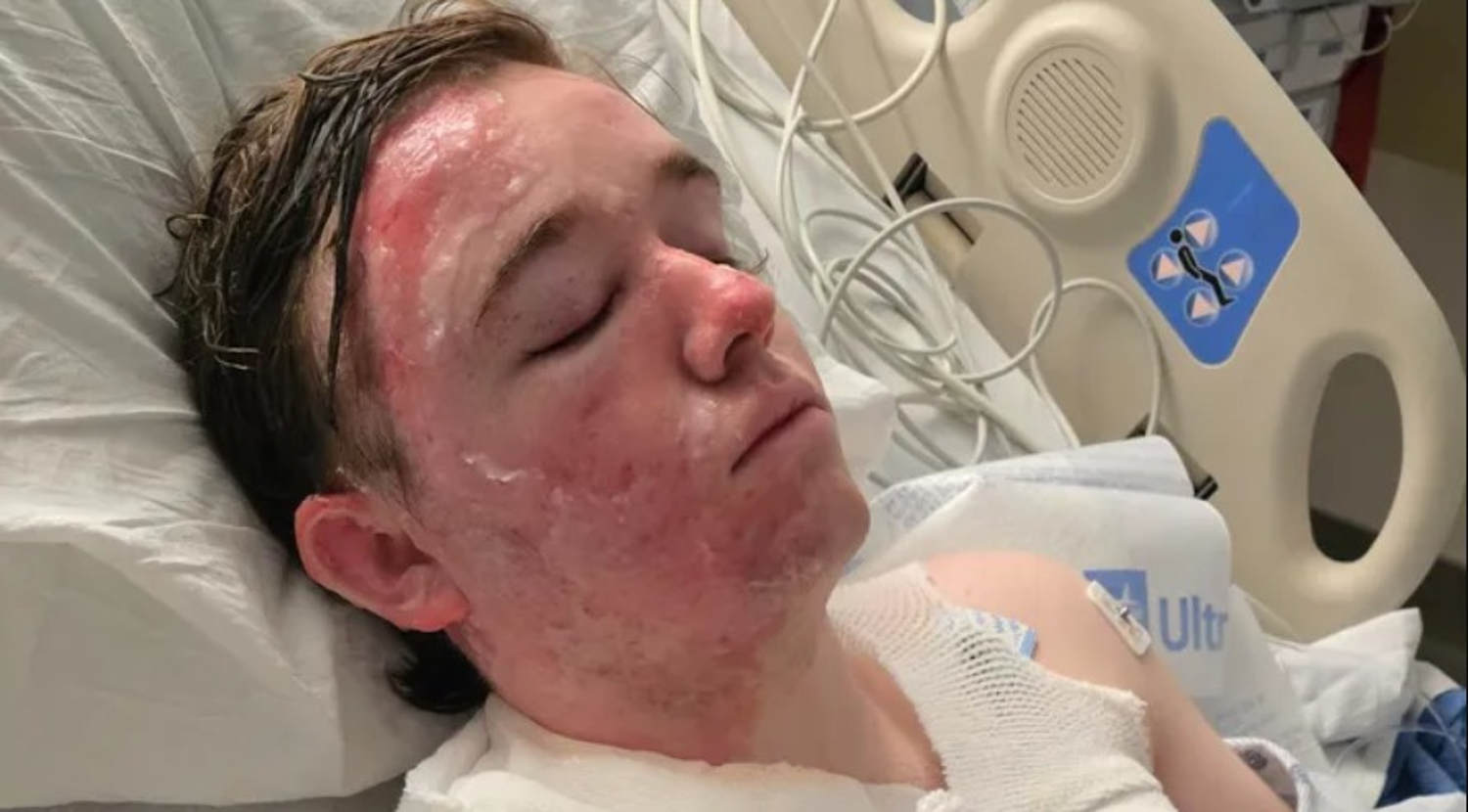
Commercial quick-service restaurant (QSR) environments operate under tight thermodynamic parameters and strict logistical constraints, making them highly vulnerable to sudden, severe disruptions when safety protocols fail. The critical event on May 30, 2026, at a McDonald’s franchise in Yuba City, California—where a 20-year-old shift manager suffered second-degree burns across 22% of his body after a coworker weaponized industrial cooking oil—exposes a profound vulnerability in workplace safety. Standard media accounts treat these events as isolated workplace disputes. A rigorous structural audit, however, reveals them as catastrophic failures in industrial design, chemical containment, and human resource risk management.
Optimizing high-throughput kitchens requires understanding the physical variables of commercial deep fryers, the physiological toll of thermal transfer via lipids, and the structural vulnerabilities of franchise management systems.
The Thermodynamics of Lipid-Based Thermal Trauma
To evaluate the mechanical failure of the Yuba City incident, one must first isolate the physical properties of the medium utilized in the assault. Commercial open fryers utilized in fast-food production operate at a steady-state thermal range between 163°C and 177°C (325°F to 350°F).
The severity of a burn injury is governed by the heat transfer equation:
$$Q = mc\Delta T$$
Where:
- $Q$ represents the total thermal energy transferred.
- $m$ represents the mass of the agent.
- $c$ represents the specific heat capacity.
- $\Delta T$ represents the temperature differential between the agent and human tissue.
While boiling water possesses a higher specific heat capacity than cooking oil, vegetable-based cooking oils present a significantly elevated hazard profile due to two distinct variables:
1. The Operational Thermal Differential
Water caps its atmospheric liquid state at 100°C. Commercial shortening and frying oils operate at nearly double this threshold. The $\Delta T$ between commercial frying oil (175°C) and human core temperature (37°C) is 138°C, whereas the differential for boiling water is merely 63°C.
2. Viscosity and Viscoelastic Adherence
Unlike water, which exhibits low viscosity and high surface tension leading to rapid runoff from vertical surfaces, commercial cooking oils possess a high viscosity index and hydrophobic properties. Upon contact with epidermal tissue or standard uniform fabrics (polyester-cotton blends), the hot lipid rapidly saturates the clothing material, creating a localized thermal reservoir. The oil adheres to the skin, trapping heat against the dermis and continuing to transfer energy long after the initial impact.
This structural adherence explains why the victim, Jacob Smith, sustained deep second-degree burns covering more than one-fifth of his anatomical surface area. The energy profile of oil at 175°C alters the structural proteins of the skin instantly, causing coagulation necrosis of the epidermis and extending into the reticular layer of the dermis. This depth requires specialized intensive care unit (ICU) intervention to manage fluid shifts, metabolic derangement, and systemic infection risks.
The Operational Risk Matrix: Proximity and Containment
The physical layout of modern QSR kitchens maximizes speed-of-service metrics, such as total drive-thru transaction time. This design optimization requires clustering high-temperature equipment within immediate physical proximity of high-traffic human corridors.
[Production Area: Fryers (175°C)] ---> Close Proximity Corridor ---> [Administrative Hub: Manager's Office]
The Yuba City assault took place as the shift manager was transitioning between operational oversight and administrative duties within the restaurant's office area. The floor plans of standard QSR layouts present a critical vulnerability in their layout optimization:
- Zero Barrier Containment: Standard open fryers feature no physical guarding to prevent an operator from manually dipping a secondary vessel into the oil vat or removing hot lipids from the designated cooking well.
- Proximity of High-Heat to Administrative Hubs: Cash-counting offices, inventory terminals, and break spaces sit mere feet from the primary cooking line, eliminating any natural buffer zone against physical hazards.
- The Reaction Time Deficit: At close range, an unprovoked fluid trajectory travels at speeds that exceed human neurological reaction times. The victim was ambushed from a blind angle while counting currency, meaning his defensive reflexes could not mitigate the trajectory of the fluid.
The perpetrator, 23-year-old Jalani Bluett, faced charges of assault with a deadly weapon, mayhem, and felony assault resulting in great bodily injury. This choice of criminal charges establishes a legal precedent: standard kitchen inventory, when decoupled from its functional framework, matches the legal definition of an improvised weapon.
Human Capital Risks and Franchise Vulnerabilities
The multi-tiered operational structure of major fast-food corporations introduces a systemic disconnect in risk management. McDonald's operates largely on a franchise model, where individual corporate entities own and run specific locations while relying on global corporate guidelines for general safety.
+-------------------------------------------------------+
|                 Corporate Parent                      |
|  (Establishes broad brand guidelines & safety norms)  |
+-------------------------------------------------------+
                           |
                           v
+-------------------------------------------------------+
|                Independent Franchisee                 |
|  (Manages day-to-day operations, hiring, & security)  |
+-------------------------------------------------------+
                           |
                           v
+-------------------------------------------------------+
|                  Store Level Staff                    |
|  (Executes operational tasks in close-proximity hubs) |
+-------------------------------------------------------+
This structural configuration creates a clear operational bottleneck across three distinct areas:
Background Screenings and Mental Health Protocols
Following the assault, law enforcement noted that the suspect had been listed as a missing person at risk due to specific medical diagnoses and vulnerabilities. The reliance on low-wage, high-turnover labor forces routinely compresses the screening timelines for incoming personnel. When franchise groups overlook comprehensive behavioral assessments or lack clear protocols to identify and manage interpersonal strain on the floor, they increase their exposure to unpredictable workplace violence.
The Power Asymmetry of Shift Managers
In this incident, a 23-year-old crew member targeted a 20-year-old shift manager. The fast-food industry frequently places young workers in positions of operational authority over peers or older subordinates without providing them with the advanced de-escalation training or conflict-resolution skills required to manage high-stress kitchen environments.
The Economic Burn Out of Tort Liability
Franchise operations generally carry commercial general liability (CGL) insurance policies. However, intentional criminal acts committed by one employee against another frequently fall outside standard workers' compensation provisions or create complex litigation challenges regarding employer negligence. The emergence of a public GoFundMe campaign that quickly raised over $56,000 underscores a major systemic issue: the immediate financial safety nets for catastrophic workplace injuries in the franchise sector are often inadequate, shifting the burden of long-term medical recovery directly onto the community.
Hardening the QSR Subsystem
Mitigating the risk of hot-fluid weaponization requires a shift away from relying solely on behavioral compliance, moving instead toward structural engineering solutions. Relying on employee training to prevent violent actions offers no protection against an unprovoked insider threat.
The first limitation of current commercial fryers is the open-top configuration of the oil vats. Implementing a retrofitted, counter-weighted mechanical lid assembly that locks during non-use cycles or requires two-handed activation for filtration and oil disposal would significantly lower the risk of unauthorized oil extraction.
The second limitation lies in how kitchen zones are separated. Administrative and high-security nodes, such as cash management offices, must be isolated behind physical access-control barriers. Bullet-resistant glass or heavy-duty doors with restricted keypad entry would prevent unauthorized personnel from entering administrative spaces with hazardous items.
Finally, high-turnover service environments must update their behavioral risk metrics. Franchise owners need to implement clear reporting channels that flag interpersonal friction or erratic behavior before an employee steps onto the production floor. When industrial kitchens operate at peak velocity, a failure to manage human friction can instantly turn high-temperature processing equipment into a severe operational hazard.