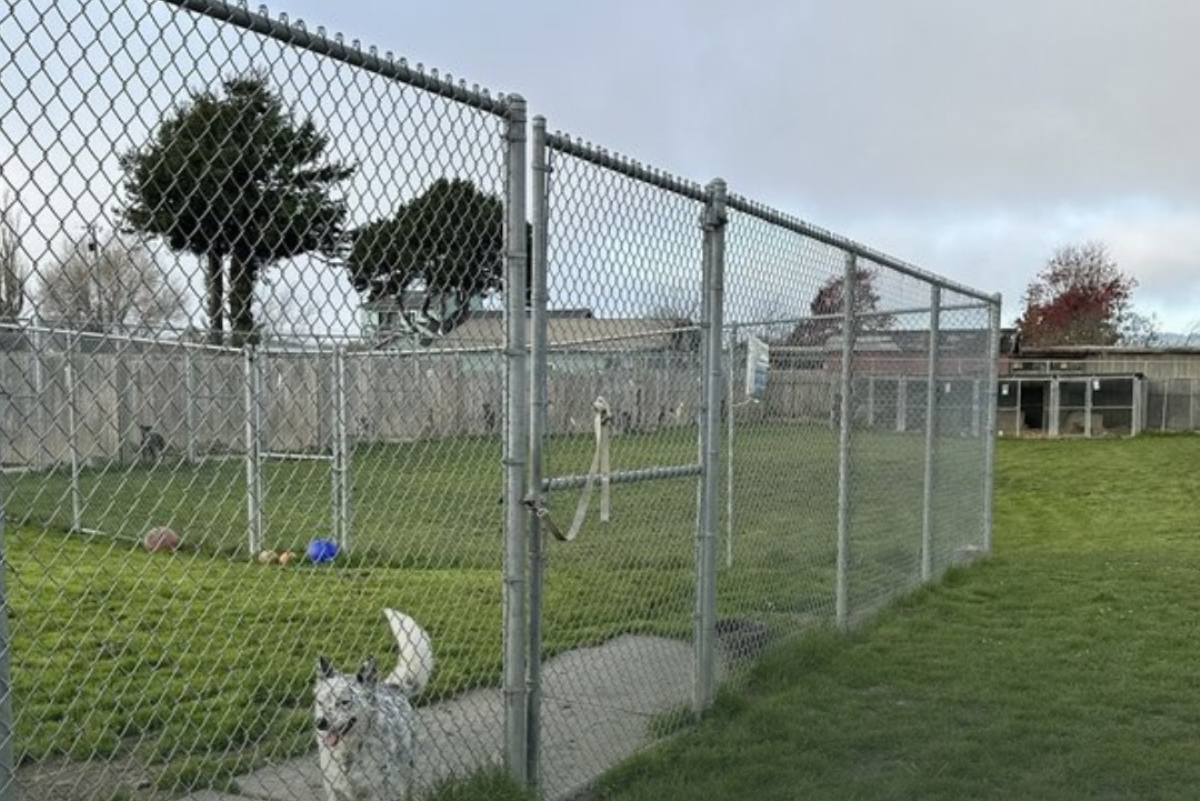
The sudden disappearance of hundreds of animals from a regional shelter environment exposes deep systemic vulnerabilities in operational oversight, supply chain tracking, and physical security protocols. When a facility loses track of a significant volume of live assets simultaneously, the breakdown cannot be attributed to isolated clerical errors or simple infrastructure breaches. Instead, it points to a catastrophic failure across three distinct operational layers: inventory management architecture, physical access controls, and chain-of-custody verification. Understanding how these systems fail under pressure requires a clinical examination of the underlying operational mechanics rather than emotional speculation.
The Tri-Axiom Failure of Inventory Tracking
Large-scale animal care facilities operate under high-throughput conditions where incoming and outgoing units must be logged in real time. A mass discrepancy reveals a structural collapse in what can be defined as the Tri-Axiom of Asset Tracking.
- Data Entry Asynchrony: In typical high-volume shelters, intake records and disposition data are often processed on distinct schedules. If data entry lags behind physical movement by 48 to 72 hours, an operational blind spot emerges. This lag allows for large-scale discrepancies to go undetected by digital management systems until an physical audit occurs.
- Reconciliation Failure Rates: Regular physical counts must match digital ledgers. When reconciliation protocols are performed monthly or quarterly rather than daily, the compounding error rate escalates geometrically. A facility managing thousands of units annually cannot rely on delayed audits without risking unmonitored inventory shifts.
- Systemic Access Ubiquity: Digital ledgers require strict permission hierarchies. If low-level personnel possess the authorization to alter disposition status—such as marking an animal as transferred, adopted, or deceased without multi-tier approval—the integrity of the entire data layer is compromised.
The bottleneck here is not the software itself, but the lack of cryptographic or dual-signature validation for inventory changes. Without mandatory secondary authorization, a single compromised or negligent actor can obscure the movement of hundreds of units by exploiting systemic permissions.
Physical Security Infiltration Mechanisms
A disappearance of this scale demands significant transport logistics and prolonged physical access, raising critical questions regarding perimeter security and internal controls. The failure vector typically divides into two categories: external breach or internal exploitation.
[Perimeter Breach] ------> [Delayed Detection] ------> [Logistical Extraction]
                                    ^
[Internal Access] ------------------|
The time required to load, transport, and secure over 700 animals requires hours of uninterrupted operation and substantial vehicular support. For this to occur unnoticed, the physical security infrastructure must fail across multiple redundant layers.
Surveillance Black Zones
Many legacy municipal and non-profit facilities maintain outdated analog closed-circuit television (CCTV) systems. These networks frequently suffer from strategic blind spots, particularly near rear loading docks, waste management zones, or secondary holding pens. Furthermore, reliance on local digital video recorders (DVRs) rather than cloud-based, tamper-evident storage creates a vulnerability where historical footage can be manually deleted or overwritten by anyone with physical access to the server room.
Key Control Dilution
Physical access management often degrades over time through a process known as key control dilution. When master keys or electronic access badges are duplicated, shared among temporary staff, or not revoked upon employee termination, the perimeter security of high-security holding zones effectively drops to zero. An audit of lock logs frequently reveals that dozens of unauthorized individuals possessed the physical means to enter restricted zones during non-operational hours.
Chain of Custody Breakdown and Transfer Exploitation
Outside of direct theft, the most probable mechanism for large-scale asset displacement within shelter networks is the exploitation of partner transfer protocols. Shelters routinely move animals to secondary rescue organizations, foster networks, or sanctuary facilities to manage capacity constraints.
This transfer mechanism relies on a chain-of-custody model that is highly vulnerable to systemic exploitation if independent verification is omitted.
- The Originating Log: The primary facility records a bulk transfer of units to an approved external partner, clearing the assets from their active internal ledger.
- The Transport Blind Spot: Units are moved via third-party transport networks. During transit, the physical custody of the assets exists in a regulatory vacuum, lacking GPS tracking or verified intermediate manifests.
- The Destination Discrepancy: The receiving facility either fails to log the arrival of the specific units or claims the transfer was never authorized. Because cross-platform database integration between distinct non-profit entities is non-existent, the discrepancy remains hidden until a manual cross-reference occurs.
This structural vulnerability allows for grey-market diversion under the guise of legitimate administrative routing. The second limitation of this model is the total absence of biometric verification (such as mandatory microchip scanning at both the exact point of departure and the exact point of arrival), which allows dummy profiles to be swapped for high-value assets.
Resource Allocation Asymmetry and Regulatory Gaps
The root cause of these operational vulnerabilities frequently traces back to severe resource allocation asymmetry. Animal care facilities prioritize direct care, medical intervention, and adoption sourcing over administrative compliance and infrastructure hardening.
| Operational Focus | Resource Allocation | Systemic Consequence |
|---|---|---|
| Direct Care / Medicine | High (70-80%) | Adequate short-term welfare, high daily throughput. |
| Physical Security | Low (5-10%) | Vulnerable perimeters, unmonitored access points. |
| Data Integrity / Auditing | Low (5-10%) | High error rates, vulnerable ledger states, delayed detection. |
This allocation strategy creates an environment that is highly efficient at processing incoming volume but entirely unequipped to defend against insider threats or targeted external exploitation. Furthermore, state and local regulatory frameworks often mandate strict intake policies while providing virtually no standardized guidelines for inventory verification or real-time loss reporting.
Deployment of Corrective Architecture
To prevent systematic asset depletion and ensure absolute ledger integrity, facilities must transition away from trust-based administrative models toward zero-trust operational frameworks.
Implementing automated, dual-factor authentication for every inventory change removes the single-point-of-failure liability inherent in current shelter management software. Every intake, transfer, or disposition action must require a physical microchip scan paired with a unique digital employee signature, creating an unalterable audit trail. Physical perimeters must be upgraded to utilize cloud-synchronized, motion-activated surveillance that alerts off-site security personnel the moment unauthorized access occurs outside standard operating hours. Finally, formalizing mandatory daily physical counts ensures that the maximum detection lag for any asset discrepancy is capped at twenty-four hours, entirely neutralizing the timeline required to execute large-scale, unnoticed inventory extractions.