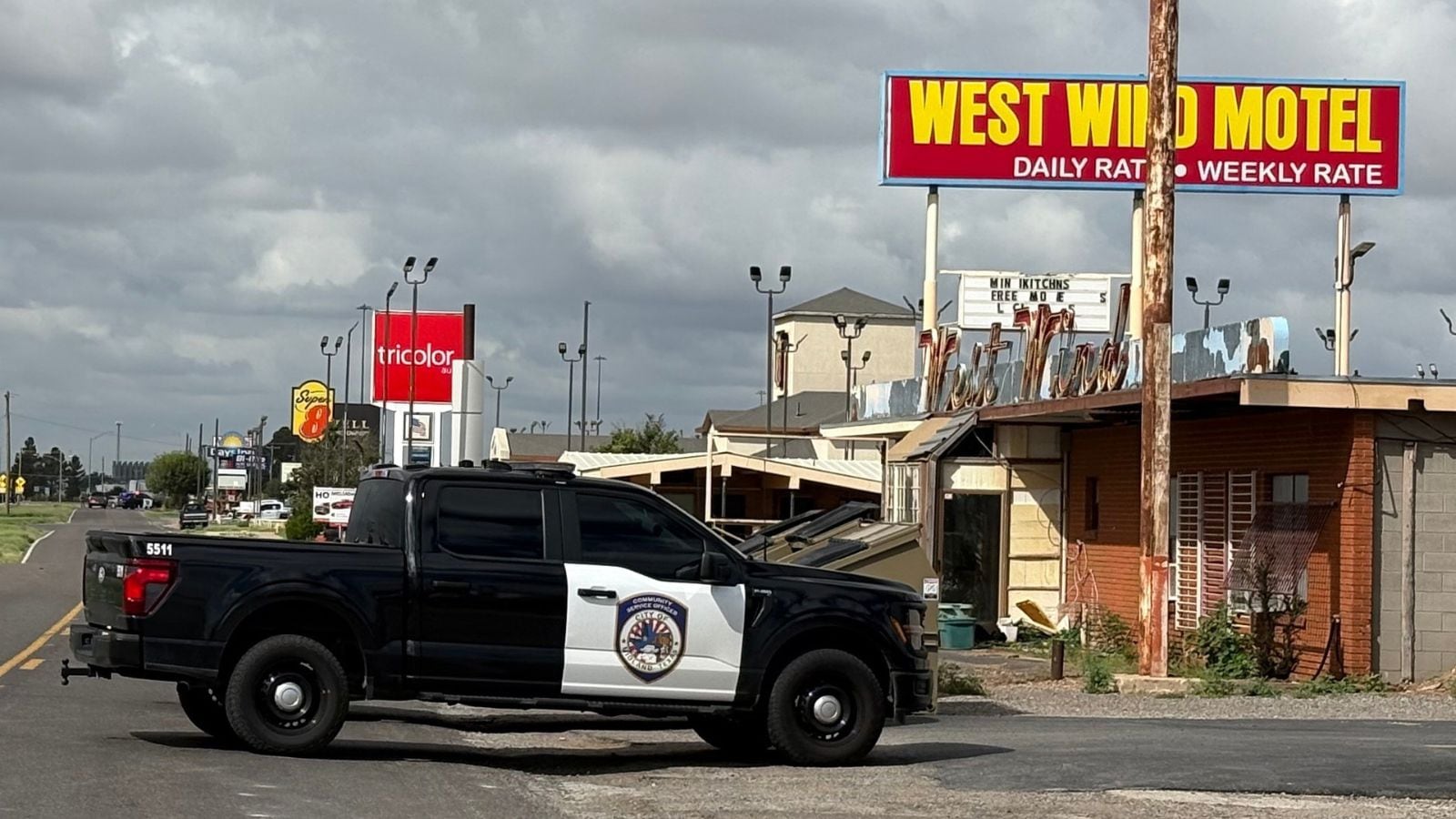
The transformation of a non-compliant traffic stop into a multi-victim active shooter event demonstrates a predictable operational failure chain where tactical gaps allow an armed suspect to transition from a localized threat into a mass-casualty actor. On June 12, 2026, a mass shooting in Midland, Texas, resulting in one civilian fatality and ten injuries, exposed the precise inflection points where municipal law enforcement systems intersect with highly volatile, mobile threats. Analyzing this event requires a strict deconstruction of three operational pillars: the breakdown of suspect containment during initial evasion, the mechanics of spatial denial under active fire, and the deployment of technological mitigation frameworks to resolve standoffs without further tactical losses.
Understanding how a known, high-risk suspect eluded apprehension for over 48 hours requires mapping the structural breakdown that occurs when transition protocols from a localized chase to a multi-jurisdictional manhunt fail. If you enjoyed this piece, you should read: this related article.
The Inter-Incident Vector: Containment and Tracking Degradation
The genesis of the Midland active shooter event began 36 hours prior to the mass casualty incident, during an attempted routine vehicle stop at 11:23 p.m. on Wednesday, June 10, 2026. The escalation sequence followed a distinct operational trajectory:
[Traffic Stop Non-Compliance] ➔ [Vehicle Evasion] ➔ [Kinetic Escalation (Rifle Fire)] ➔ [Dismounted Dispersion] ➔ [Tracking Failure]
The suspect, identified as 45-year-old Victor Mata Villarreal, utilized a high-velocity rifle to alter the tactical balance of the initial stop, firing multiple rounds at a Midland Police Department officer. The transition from vehicle evasion to dismounted dispersion creates an immediate intelligence vacuum. When a suspect abandons a vehicle within an urban or semi-rural grid, the efficacy of traditional tracking relies on immediate perimeter saturation. For another perspective on this event, see the recent coverage from USA Today.
The primary systemic bottleneck in tracking a suspect wanted for the attempted capital murder of a peace officer is the rapid expansion of the search radius. In a dismounted escape, a suspect walking at an average pace of three miles per hour establishes a potential containment zone of approximately seven square miles within one hour. As time elapses, tracking degradation occurs exponentially, shifting the operational burden from active tactical containment to passive community intelligence networks.
This tracking failure allowed the suspect to remain operational within a half-mile radius of the initial kinetic engagement, demonstrating that localized urban grids offer substantial concealment opportunities that traditional patrol saturation struggles to penetrate without real-time biometric or signal intelligence.
Active Shooter Dynamics: Target Satiation and Spatial Denial
On Friday morning, June 12, 2026, the suspect re-emerged on the 4600 block of West Wall Street—a highly commercialized sector characterized by auto businesses, budget motels, and high vehicle density. The spatial layout of this environment inherently increases target availability while limiting immediate cover for civilians.
The tactical engagement model of an active shooter relies on maximizing target density before law enforcement arrives. In this instance, the suspect opened fire on bystanders and responding units at approximately 8:00 a.m., inflicting injuries on ten individuals and killing one civilian, identified as Ed Scott, a municipal solid waste employee.
When the first patrol units arrived, they encountered immediate suppression fire, pinning officers behind unarmored patrol vehicles. This tactical scenario represents a critical vulnerability in standard law enforcement response:
- Ballistic Deficiencies: Standard police cruisers utilize doors and body panels that fail to stop high-velocity rifle rounds, forcing officers to seek engine-block cover or remain immobile.
- Target Satiation Dynamics: When law enforcement is pinned, the suspect maintains tactical freedom of movement, sustaining the ability to engage secondary targets.
- Operational Pivot: Midland Police Chief Greg Snow enacted a policy of spatial denial, deploying an armored rescue vehicle to extract the pinned officers and moving aggressively to clear the sector of civilians.
The mechanism of spatial denial disrupts the suspect’s kinetic loop. By physically extracting potential targets from the environment, law enforcement alters the cost function of the shooter, forcing a transition from an offensive posture to a defensive, static posture.
The Standoff Phase: Structural Breaching and Teleoperated Resolution
Faced with a collapsing target pool and an overwhelming surge of incoming tactical units—estimated by witnesses to exceed 50 vehicles from multiple jurisdictions, including the Texas Rangers—the suspect retreated into a fixed defensive position within an abandoned veterinary clinic.
Barricaded suspects inside commercial structures alter the rules of engagement. Forcing a physical entry into an unfamiliar interior structure occupied by an entrenched, heavily armed shooter carries an unsustainably high casualty probability for tactical teams. Law enforcement instead executed a classic containment-and-surveillance matrix, relying on technological proxies to eliminate personnel risk.
The resolution of the standoff utilized a dual-platform unmanned system approach:
1. Aerial Reconnaissance: Unmanned Aerial Vehicles (drones) mapped structural entry points and monitored windows for active movement.
2. Ground-Based Robotics: Remote-operated tracked vehicles breached the interior perimeter to conduct step-by-step room clearance.
At approximately 12:30 p.m., drone and robotic footage confirmed the suspect was deceased inside the structure from undisclosed causes, terminating the active threat window without forcing a high-risk close-quarters battle (CQB) engagement.
Surge Containment and Surge Capacity Metrics
The systemic shock of a mass casualty event places instantaneous stress on regional medical infrastructure. The distribution and triage of the eleven total casualties at Midland Memorial Hospital provide a clear data set on mass-casualty surge capacity limits.
| Patient Disposition | Volume | Systemic Impact / Operational Requirements |
|---|---|---|
| Immediate Discharge | 5 | Required rapid triage, minor trauma treatment, and psychological evaluation before release within 5 hours. |
| Surgical Intervention | 4 | Demanded concurrent operation room availability and immediate mobilization of trauma surgery teams. |
| Post-Operative Recovery | 3 | Transitioned to intensive care or specialized post-trauma units, occupying intermediate-term beds. |
| Sustained Intraoperative | 1 | High-severity trauma requiring prolonged, complex surgical stabilization. |
| Mortuary Outcomes | 1 | Shifted to forensic tracking and legal investigation pipelines. |
The critical limitation exposed during the initial phase of the medical surge was situational uncertainty. The hospital implemented a 90-minute strict lockdown based on reports that the shooter’s position and total headcount were not fully verified by field command. This precautionary measure protects the facility from a mobile threat but restricts entry and exit vectors, testing the facility’s internal resource independence.
To prevent the escalation of a mobile, violent actor into an entrenched active shooter, municipal law enforcement strategies must evolve past linear tracking models. When an individual engages law enforcement with high-velocity weapons and escapes dismounted, standard operational procedure must instantly trigger automated community-wide digital alerts, geofenced license plate reader sweeps, and immediate deployment of aerial thermal imaging assets across the entire five-mile dispersion radius. Relying on passive public sightings creates a dangerous operational lag, giving the threat actor the initiative required to select a target-rich environment and dictate the terms of the next engagement.