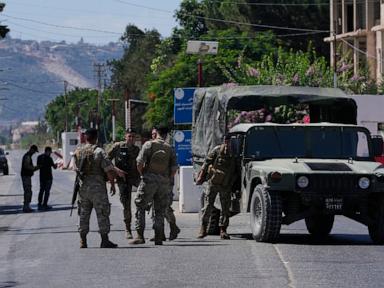
The collapse of state authority in Lebanon is mirrored directly by the financial and operational degradation of the Lebanese Armed Forces. When the national currency lost over ninety percent of its value following the 2019 sovereign default, the economic foundation underpinning national security evaporated overnight. A private first class in the military, once earning the equivalent of eight hundred dollars monthly, saw purchasing power plummet to less than fifty dollars. This fiscal shock triggered a structural crisis across the entire military apparatus, shifting the institution from a functioning sovereign deterrent into a localized survival network dependent on external life support.
The Fiscal Erosion of Personnel
The primary vulnerability of any military organization is the sustainability of its human capital. When operational compensation fails to cover basic subsistence costs, attrition accelerates through desertion, resignation, and quiet absenteeism. You might also find this similar article useful: Why Everything You Know About Pernicious States Is Lazy Academic Comfort Food.
The Lebanese Armed Forces absorbed this shock through three distinct phases:
- The Subsistence Deficit: As hyperinflation rendered standard salaries worthless, soldiers could no longer afford basic caloric intake, housing, or transportation to their barracks. The cost function of military service inverted; active duty began generating personal debt rather than financial stability.
- The Secondary Income Adaptation: Personnel increasingly sought secondary employment during off-duty hours, fundamentally compromising unit cohesion, training schedules, and operational readiness. A soldier working night shifts in construction or security cannot maintain tactical readiness or institutional loyalty.
- The Attrition Cascade: Experienced non-commissioned officers and specialized technicians departed for higher-paying positions in the private sector or the Gulf states. Replacing specialized technical expertise in radar maintenance, armored vehicle repair, and signal intelligence requires years of institutional training that cannot be rapidly replicated.
This human capital drain creates an invisible deficit. While total headcount figures on paper might appear stable, the operational capacity of active units diminishes rapidly as skilled personnel vanish. As discussed in latest articles by BBC News, the results are worth noting.
The Three Vectors of Foreign Intervention
Faced with the risk of total institutional collapse and the resulting security vacuum on the Mediterranean coast, regional and international stakeholders intervened to stabilize the military architecture. France and Jordan emerged as primary architects of this external stabilization strategy, operating through distinct operational vectors.
The French Diplomatic and Logistical Conduit
Paris approaches the Lebanese crisis through a combination of diplomatic convening power and targeted military assistance. France organized multiple international donor conferences aimed at channeling humanitarian relief, food parcels, medical supplies, and fuel directly to military installations, bypassing corrupt central bureaucratic channels.
Beyond humanitarian triage, French assistance focuses on maintaining existing French-origin hardware within the Lebanese inventory, including armored personnel carriers, tactical vehicles, and communication systems. By providing spare parts and technical maintenance advisory teams, France prevents the rapid obsolescence of core tactical units stationed along critical borders.
The Jordanian Tactical and Logistical Bridge
Jordan brings a different strategic utility to the stabilization effort. Amman shares deep institutional ties with regional militaries and possesses advanced capabilities in border security and counter-smuggling logistics.
Jordanian assistance relies on direct material transfers, including surplus non-lethal equipment, transport vehicles, and specialized medical supplies. Because Jordan faces similar regional pressures, its military leadership understands the friction points of border management in unstable environments. The coordination between Amman, Paris, and Beirut establishes a triangular support mechanism designed to maintain baseline domestic stability without requiring direct combat intervention.
The Operational Bottlenecks of External Aid
External military assistance, while necessary, suffers from structural inefficiencies that limit its transformative impact. Understanding these bottlenecks explains why international aid halts the decline without reversing it.
The first bottleneck is the prohibition on offensive capability enhancement. Donor nations restrict their assistance to non-lethal aid, logistical support, border surveillance, and internal security maintenance. Western capitals fear advanced weaponry falling into the hands of hostile non-state actors or escalating regional tensions. Consequently, the Lebanese Armed Forces remain constrained to a defensive posture, incapable of projecting power or neutralizing heavily armed domestic adversaries.
The second bottleneck involves supply chain integrity and bureaucratic friction. Direct cash injections into state institutions risk being absorbed by systemic corruption or exchange-rate manipulations enforced by central monetary controls. To counter this, donors insist on in-kind donations and strict auditing procedures. However, in-kind logistics create severe maintenance dependency. When spare parts must be approved, shipped, and installed under foreign supervision, the operational tempo slows to a crawl.
The third bottleneck is strategic ambiguity regarding internal security versus border defense. International donors prioritize border security and counter-terrorism operations along the Syrian frontier. Conversely, the internal mandate requires managing civil unrest, enforcing curfews, and policing sectarian flashpoints. When military units are deployed inward for domestic policing, their primary warfighting competencies atrophy.
The Sovereign Security Dilemma
The fundamental contradiction facing the Lebanese military is its coexistence with non-state armed actors who possess superior military capabilities, independent financing, and external state sponsorship.
In classical political science, a state maintains a monopoly on the legitimate use of force. In Lebanon, this monopoly is fragmented. The state military operates within a heavily constrained geopolitical space where a powerful non-state actor exercises veto power over strategic national decisions.
This creates a dilemma for external donors. France and Jordan invest millions in training and equipping state forces to reinforce sovereignty, yet the state itself remains structurally subordinate to external regional axes and domestic militias. Pumping resources into a fractured institutional framework risks cementing a dual-power reality, where international taxpayers subsidize a conventional military that acts as a secondary security guarantor alongside a dominant paramilitary force.
To evaluate the efficacy of current intervention strategies, analysts must monitor specific operational metrics rather than diplomatic communiques:
- Retention Rates in Technical Branches: The percentage of trained pilots, engineers, and signal corps specialists remaining in active service.
- Operational Fuel Allocation: The volume of military transport and armored patrols executed monthly compared to pre-crisis baselines.
- Border Surveillance Uptime: The operational availability of radar and electronic surveillance towers installed along eastern and southern boundaries.
If these metrics continue to stagnate despite high-level summits in Paris, Amman, and Beirut, foreign military aid functions merely as palliative care rather than institutional rehabilitation.
Strategic Forecast
International donors will maintain conditional, life-support assistance to prevent total institutional dissolution, driven by fear of refugee surges toward Europe and complete regional destabilization. This aid will remain strictly capped at maintenance levels, avoiding structural expansion or offensive capability upgrades.
The military will endure as a fragmented, low-readiness internal policing force constrained by chronic budget deficits and divided loyalties. The strategic trajectory points away from sovereign defense recovery and toward long-term managed dependency on external patrons.


