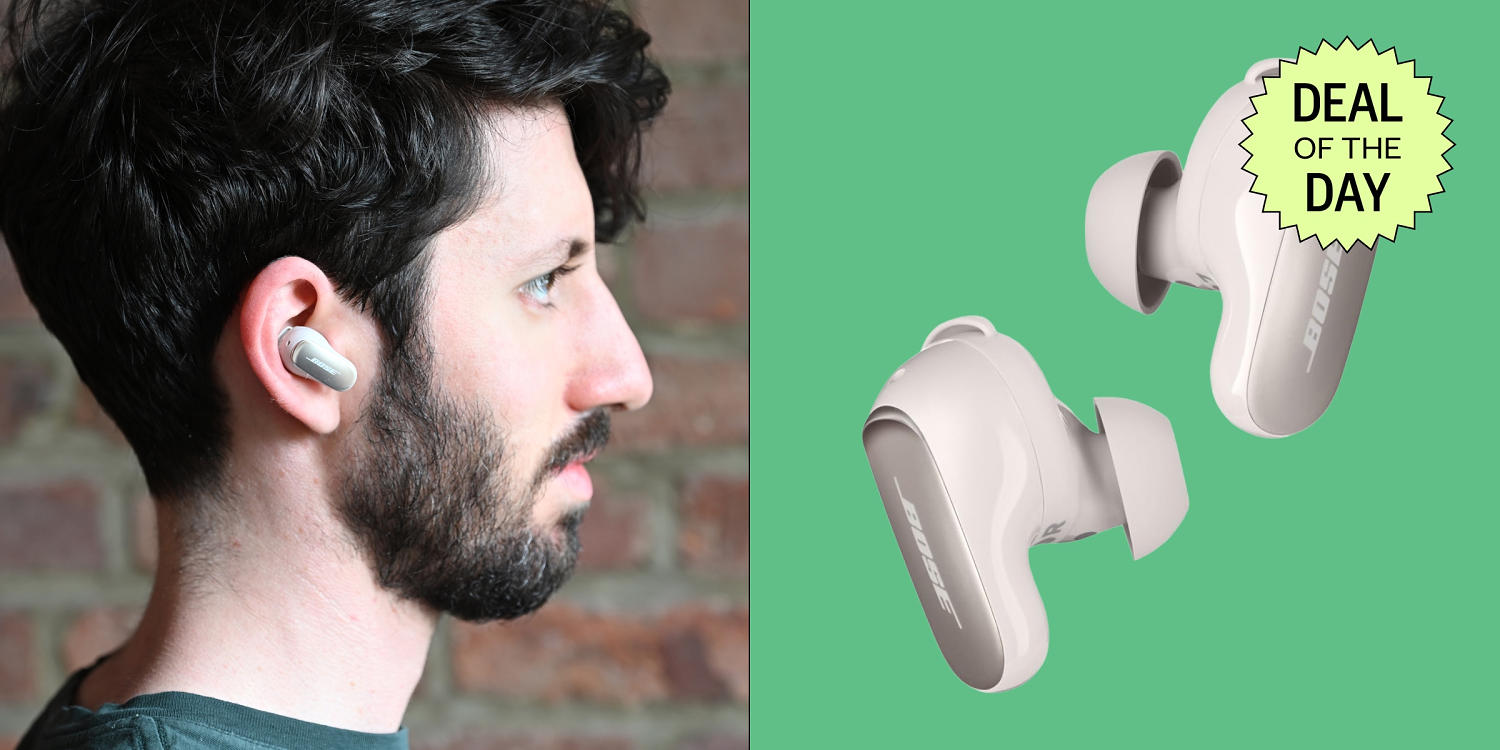
The consumer electronics market functions on a predictable depreciation curve, but premium active noise-canceling (ANC) hardware operates under a distinct set of economic rules. When a tier-one product like the Bose QuietComfort Ultra Earbuds experiences a sudden $130 price compression from its $299 manufacturer's suggested retail price (MSRP), it signals more than a simple retail promotion. It exposes the tension between inventory lifecycle management, unit economics, and competitive pricing pressures in the true wireless stereo (TWS) segment.
Evaluating this price drop requires bypassing marketing hyperbole to analyze the hardware mechanics, software bottlenecks, and financial trade-offs driving the premium audio ecosystem.
The Three Pillars of Audio Value
The utility of a $300 earbud rests on three engineering pillars: acoustic isolation, computational audio delivery, and ergonomic stability. The $130 discount alters the value proposition across each vector.
Acoustic Isolation (CustomTune Calibration)
       │
       ├──► Active Noise Cancellation (Phase Inversion)
       │
Computational Audio (Snapdragon Sound API)
       │
       ├──► Codec Throughput (AptX Adaptive / Lossless)
       │
Ergonomic Stability (Two-Piece Fit Kit Architecture)
       │
       └──► Mass Distribution & Retention Forces
1. Acoustic Isolation Metrics
The primary differentiator of the QuietComfort Ultra is its dynamic phase-inversion engine, which targets low-frequency ambient attenuation (e.g., aircraft cabin rumble or transit drone). Bose achieves this via its CustomTune calibration process. Every time the user inserts the earbuds, an internal microphone measures the acoustic response of the individual ear canal to an auditory chime. The onboard digital signal processor (DSP) then alters the ANC profile and frequency response curve to match that specific geometry.
At full MSRP, this specialized calibration justifies the premium. At a $169 price point, the cost-to-performance ratio shifts heavily in favor of the consumer, outperforming entry-level and mid-tier alternatives that rely on generic, static ANC profiles.
2. Computational Audio and Throughput Boundaries
The architectural upgrade over previous generations centers on the integration of Qualcomm Snapdragon Sound, enabling AptX Adaptive and AptX Lossless codecs. True high-resolution audio streaming requires substantial data throughput:
- Standard Bluetooth Codecs (SBC/AAC): ~250–320 kbps bit rate limit.
- AptX Adaptive: Dynamic scaling between 279 kbps and 860 kbps.
- AptX Lossless: Bit-for-bit mathematical transmission up to 1.1 Mbps over optimal RF conditions.
This bandwidth expansion reduces the quantization noise floor, resolving high-frequency transients and complex orchestral layers with greater fidelity. However, a systemic bottleneck exists: the host device must also support Qualcomm's Snapdragon Sound ecosystem. For users within closed operating systems (such as iOS devices limited to standard AAC), the hardware cannot leverage these high-throughput states. The pricing correction reflects this platform asymmetry, adjusting the cost to prevent alienating a massive cross-section of smartphone users who cannot access the full silicon capability.
3. Ergonomic Architecture
Unlike unibody earbud designs that rely exclusively on varying silicone tip diameters to achieve passive isolation, Bose utilizes a two-piece modular kit. This system splits the interface into an independent ear tip and a distinct stability band. The mechanics of this configuration distribute weight along the concha rather than focusing all retention forces inside the ear canal.
The primary structural limitation of this approach is spatial mass. The additional material required for separate stability bands increases the external volume of the chassis, creating a profile that protrudes farther from the ear than more compact competitors.
The Cost Function of Battery Degradation
A core operational vulnerability of any ultra-compact wireless device is the non-replaceable nature of its lithium-ion cells. The lifecycle economics of the QuietComfort Ultra are directly bound to its power consumption characteristics.
| Operational Mode | Rated Battery Life (Hours) | Power Draw Delta vs. Base State |
|---|---|---|
| Standard ANC Mode | 6.0 | Base Consumption |
| Immersive Audio (Spatial Processing) | 4.0 | +33.3% Power Draw |
The spatial processing engine requires real-time algorithmic manipulation of the soundstage via an integrated inertial measurement unit (IMU) for head tracking. This intensive computational load accelerates the battery's discharge cycle. Over a typical two-year operational window, regular spatial audio use shortens the time to the cell's 80% health threshold.
When analyzing a $130 price drop, understand that you are acquiring hardware with a fixed, unextendable lifespan. Lowering the initial acquisition cost softens the long-term amortization curve of the device, rendering the inevitable battery degradation less financially punitive.
Strategic Market Placement and Competitive Headwinds
Retail pricing maneuvers are rarely executed in isolation. A price drop of this magnitude indicates structural positioning moves within the premium technology sector.
The high-end TWS market is highly consolidated. The QuietComfort Ultra competes directly with Apple's ecosystem dominance and Sony's codec flexibility. By lowering the entry barrier to $169, the strategy shifts from protecting high gross margins to defending unit-volume market share.
This pricing adjustment also serves an internal inventory clearance function. Product lifecycles in consumer tech dictate that mid-generation hardware must shed pricing premiums to clear warehouse channels before next-generation platform releases. Savvy buyers can leverage these lifecycle shifts, acquiring high-tier ANC performance at mid-range prices, provided they understand the hardware limitations.
The optimal play is clear: if your primary device supports the Snapdragon Sound ecosystem and your target use-case prioritizes raw noise cancellation over minimal physical chassis dimensions, acquiring this hardware at a 43% discount yields an exceptional return on capital. If you operate strictly within an iOS ecosystem or require ultra-compact dimensions for sleep or high-impact sport, the systemic platform bottlenecks remain unresolved regardless of the price discount.