Political rhetoric cannot override refining chemistry, maritime insurance markets, or the physical realities of global middle-distillate supply chains. When Donald Trump publicly championed a renewed US-Russian framework surrounding gasoil—the vital middle distillate that underpins global freight, heavy industry, and European heating—the market initially priced in a geopolitical thaw that promised immediate relief for tight diesel cracks. That optimism has evaporated. The accord is stalling not because of a single diplomatic misstep, but because the agreement attempts to force a bilateral political solution onto a multilateral, heavily sanctioned, and physically constrained commodity network.
Understanding why this deal is faltering requires stripping away campaign-style pronouncements and examining the operational mechanics of the global gasoil market. The breakdown occurs across four distinct friction points: refining slate incompatibilities, secondary sanctions compliance, maritime logistics bottlenecks, and divergent strategic incentives between Washington and Moscow.
The Structural Mismatch of Global Middle Distillates
Gasoil, known in North America primarily as ultra-low-sulfur diesel (ULSD) or heating oil, is the workhorse of the industrial economy. Unlike crude oil, which is a raw input, gasoil is a finished or semi-finished refined product with strict chemical specifications regarding sulfur content, cetane number, and cold-filter plugging points.
The core premise of any US-Russian gasoil arrangement relies on the assumption that reintegrating Russian barrels into Western-aligned supply chains will depress global crack spreads—the price differential between crude oil and refined products. In practice, the physical market operates on rigid technical constraints that political decrees cannot instantly alter.
- Refining Slate Rigidity: US Gulf Coast (PADD 3) refineries are heavily optimized for processing heavy, sour crudes into high yields of middle distillates, making the United States a massive net exporter of diesel. The US does not suffer from a physical shortage of gasoil; it suffers from price exposure to global benchmarks like the ICE Low Sulphur Gasoil futures contract. Importing or facilitating Russian gasoil does not solve a domestic US supply deficit—it merely attempts to manipulate global pricing mechanisms.
- European Market Substitution: Prior to the 2022–2023 European Union embargoes and G7 price caps, Europe relied on Russian pipeline and seaborne gasoil for roughly 40% to 50% of its import needs. Since the embargo, Europe rewired its supply chains toward the US Gulf Coast, the Middle East (specifically new mega-refineries in Kuwait and Saudi Arabia), and India. Reintroducing Russian gasoil into this equilibrium threatens the market share of US refiners and Middle Eastern allies, creating immediate commercial resistance within the very industry Washington seeks to stabilize.
- Specification Divergence: Russian export-grade gasoil often requires blending or further hydrotreating to meet strict Western environmental standards. Without access to Western catalysts and refining additives—many of which remain restricted under export controls—the quality consistency of Russian middle distillates has degraded, increasing the technical friction for mainstream Western blenders.
The Compliance Trap of Secondary Sanctions
A bilateral handshake between executive branches does not erase years of layered statutory sanctions, nor does it compel private financial institutions to assume catastrophic legal risk. The US-Russian gasoil accord is hitting a wall erected by compliance departments in New York, London, and Zurich.
Even if the US executive branch issues specific waivers or general licenses to permit targeted gasoil transactions, global commodity trading houses and commercial banks operate under a regime of extreme risk aversion.
The Architecture of Financial Paralysis
- Statutory Lock-In: Many US sanctions against Russian energy entities are codified into law through acts of Congress, meaning a president cannot unilaterally dismantle them without triggering statutory review periods or legislative pushback. Traders know that a temporary executive waiver can be revoked overnight, leaving cargoes stranded on the water and letters of credit frozen.
- European and UK Alignment: The global gasoil market is priced in London (ICE) and heavily reliant on European maritime infrastructure. Because the European Union and the United Kingdom maintain independent sanctions regimes and the G7 price cap framework, a unilateral US pivot creates a fractured compliance environment. A cargo cleared by Washington remains toxic in Rotterdam or Antwerp.
- Banking De-Risking: Tier-one trade finance banks require absolute clarity on the provenance of every molecule. Since Russia has spent years obscuring the origin of its refined products through ship-to-ship (STS) transfers in the Mediterranean and off the coast of West Africa, auditing a barrel of Russian gasoil to prove it complies with specific accord parameters is operationally impossible for compliance teams. Banks refuse to issue letters of credit for assets with opaque chains of custody.
Maritime Logistics and the Shadow Fleet Bottleneck
Physical energy deals live and die by freight economics and insurance underwriting. The mechanics of moving gasoil from Russian Baltic and Black Sea ports—such as Primorsk, Vysotsk, and Novorossiysk—to global demand centers have undergone a permanent structural shift that works against a clean, transparent accord.
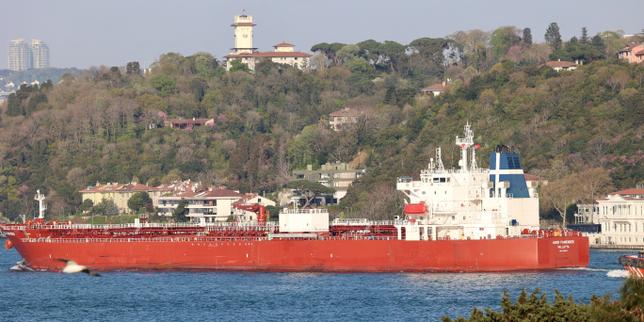
To bypass Western restrictions, Moscow assembled a massive "shadow fleet" of aging medium-range (MR) product tankers operating without Western Protection and Indemnity (P&I) insurance, often with transponders disabled and ownership hidden behind shell companies in Dubai, Hong Kong, or the Marshall Islands.
- The Insurance Divide: Mainstream gasoil buyers and port authorities require International Group of P&I Clubs coverage to protect against catastrophic oil spills. Shadow fleet vessels cannot obtain this coverage, disqualifying them from entering major Western ports. Conversely, mainstream tanker owners refuse to send their modern, insured vessels into Russian ports due to war-risk insurance premiums and reputational hazard.
- Freight Rate Distortions: The bifurcation of the global tanker fleet has created a two-tier freight market. Utilizing compliant vessels for Russian trade—even if legally permitted under a new accord—commands a massive risk premium that erodes the arbitrage spread. If the discount on Russian gasoil is absorbed by inflated war-risk insurance and compliance costs, the economic incentive for Western traders disappears entirely.
- Infrastructure Degradation: Ongoing kinetic threats to Russian refining and port infrastructure have introduced severe supply volatility. Sporadic disruptions at key primary distillation and hydrocracking units mean Moscow cannot guarantee the consistent, ratable export volumes required to underpin long-term supply contracts with major Western off-takers.
Divergent Strategic Incentives in Washington and Moscow
The deepest flaw in the accord lies in the conflicting macroeconomic objectives of the two principals. The deal assumes a shared interest in stabilizing global distillate markets, when in reality, the economic survival mechanisms of both nations pull the agreement in opposite directions.
Washington's Domestic Energy Dilemma
For the Trump administration, the political imperative is clear: suppress domestic fuel prices—specifically diesel, which acts as an inflationary tax on agriculture, manufacturing, and freight—while simultaneously protecting the profitability of the US domestic oil and gas sector.
These two goals are fundamentally incompatible in an open market. Flooding the global market with discounted Russian gasoil lowers international benchmark prices, which directly compresses the refining margins of US Gulf Coast operators. US independent refiners, a core industrial constituency, have zero appetite for a policy that subsidizes Russian state revenue at the expense of American crack spreads. Furthermore, Washington cannot afford to alienate Middle Eastern producers who invested billions in export-oriented refining capacity specifically to capture the European market vacated by Russia.
Moscow's Fiscal and Geopolitical Calculus
From the Kremlin's perspective, a formal accord with Washington offers diplomatic legitimacy, but its commercial terms threaten Russia's established sanctions-evasion ecosystem.
Over the past several years, Russia successfully rerouted its gasoil exports to buyers in Brazil, Turkey, North Africa, and the Middle East. While these sales occur at a discount, they bypass Western oversight entirely and settle in non-dollar currencies, insulating the Russian budget from Western financial leverage. Entering a structured US-monitored accord forces Moscow to accept transparency, volume caps, or pricing mechanisms that subordinate its energy revenue to Washington's political whims. For Moscow, the tactical value of touting a deal with the US president outweighs the actual economic utility of binding itself to Western compliance frameworks.
The Mechanism of Market Skepticism
Financial markets act as ruthless discounting machines. When political announcements contradict physical fundamentals, the paper market eventually snaps back to the reality of the physical barrel.
In the immediate aftermath of Trump's public endorsements of a US-Russian energy understanding, speculative length built up in gasoil futures, anticipating a sudden influx of supply that would crush the backwardation in the forward curve. Backwardation—a market structure where prompt prices trade higher than future prices, signaling tight immediate supply—is the ultimate truth-teller in commodity trading.
Because physical cargoes failed to materialize in Western hubs, prompt supply remained constrained. Commercial hedgers and physical traders recognized that the legal, financial, and logistical hurdles prevented any near-term clearing of Russian barrels through traditional channels. As a result, the market stripped out the "Trump discount," and the forward curve reasserted its structural tightness. The accord is failing because traders do not price press conferences; they price bill-of-lading deliveries at specific port terminals.
Strategic Execution in a Fractured Distillate Market
For corporate procurement officers, energy traders, and industrial consumers exposed to diesel and gasoil volatility, relying on a geopolitical breakthrough between Washington and Moscow to lower fuel costs is a flawed risk-management strategy. The structural barriers preventing the execution of this accord will persist regardless of diplomatic rhetoric.
- Hedge Against Structural Backwardation: Do not delay physical procurement or forward hedging in anticipation of a sudden flood of Russian middle distillates. Maintain rolling hedge ratios benchmarked against ICE Gasoil and NYMEX ULSD, accounting for persistent geopolitical risk premiums and tight global refining spare capacity.
- Audit Supply Chain Provenance: Strengthen counterparty due diligence. As diplomatic ambiguity encourages opportunistic blending of Russian-origin distillates in third-party hubs like Fujairah or Mersin, buyers must enforce strict origin-certification clauses to avoid inadvertent exposure to European or UK enforcement actions.
- Anchor Supply to Compliant Mega-Refiners: Prioritize long-term supply agreements with refiners in the US Gulf Coast and the Arabian Gulf. These facilities possess the hydrocracking complexity, clean balance sheets, and compliant maritime logistics required to guarantee ratable delivery without regulatory interruption.
- Monitor Crack Spreads Over Headlines: Use the 3-2-1 crack spread and regional distillate inventory data from the EIA and ARA (Amsterdam-Rotterdam-Antwerp) hubs as primary decision triggers. Until physical inventories in Western hubs show sustained builds driven by verifiable cargo arrivals, treat all announcements regarding a US-Russian energy accord as non-actionable noise.