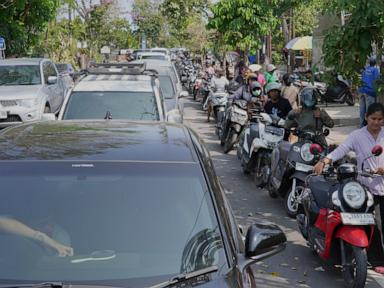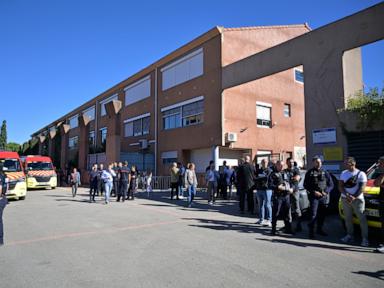
Civil unrest on an island nation celebrated for macroeconomic stability and high-income potential exposes structural vulnerabilities that run far deeper than an isolated tactical failure by law enforcement. When Prime Minister Navin Ramgoolam imposed an overnight curfew across multiple regions following the police shooting of a 27-year-old woman in Camp Levieux, international observers framed the crisis as an abrupt aberration. In operational terms, however, the eruption of protests, road blockages, and property destruction represents the lagging indicator of compounding socioeconomic stressors. This analysis deconstructs the institutional, economic, and logistical friction points that transformed an acute policing error into a systemic stability crisis.
The Friction Model of Public Unrest
Social stability in a compact, resource-constrained island economy functions on a low tolerance threshold for state-administered friction. The mechanics of the October 2026 crisis can be modeled through a three-variable pressure equation: persistent inflation, utility deprivation, and institutional trust degradation.
- Persistent Inflation and Cost-of-Living Pressures: Macroeconomic aggregates, such as a nation's transition to high-income status, often mask microeconomic distress. Import-dependent island economies absorb global supply chain shocks directly into consumer pricing for staple goods and energy. When purchasing power erodes faster than wage adjustments, baseline societal frustration accumulates.
- Acute Infrastructure Deficits: The protests coincided with acute resource scarcity, notably severe water shortages projected to persist ahead of seasonal rainfall patterns. When the state fails to deliver foundational public goods like potable water, citizens experience a daily friction that primes the populace for collective action.
- The Catalyst Event: A police shooting functions as the kinetic spark in an environment saturated with combustible economic anxiety. The tactical deployment of lethal force against an unarmed civilian in a densely populated suburb shattered the implicit contract between the citizenry and the security apparatus.
The State Response Function and Tactical Containment
Faced with the worst civil unrest in nearly three decades, the Mauritian government activated a structured containment protocol designed to suppress horizontal contagion and re-establish the monopoly on violence. The state's intervention strategy relied on three distinct levers:
- Temporal and Spatial Curfews: By restricting movement across vulnerable regions between 8:30 PM and 6:00 AM, authorities lowered the probability of nocturnal assembly, reducing the surface area for opportunistic looting and infrastructure targeting.
- Judicial and Penal Fast-Tracking: The deployment of stringent legal mechanisms—including considerations under anti-terrorism provisions for severe public disruption—signaled an intent to raise the expected cost of participation for demonstrators. Simultaneously, the immediate suspension and arrest of the implicated police officers, alongside auxiliary charges brought against personnel for failing to render aid, served as an institutional circuit-breaker to mitigate perceived state impunity.
- Economic Defense of Key Sectors: Tourism and commerce operators moved quickly to reassure international markets that core economic arteries—such as ports, airports, and schooling infrastructure—remained operational or returned rapidly to baseline functionality. This compartmentalization prevents domestic unrest from cascading into long-term foreign direct investment flight.
The Cost Function of Civil Disruption
The economic impact of the curfew and subsequent protests is captured in a distinct set of operational metrics. Understanding these variables clarifies why swift state intervention was economically mandatory:
- Velocity of Commerce: Nighttime curfews directly depress the service, hospitality, and retail sectors, shaving points off urban GDP output for every active 24-hour cycle of restriction.
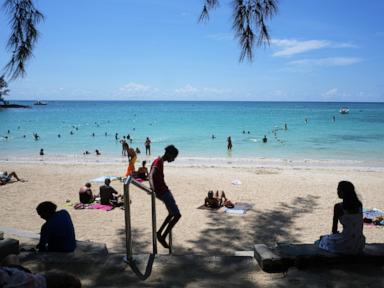
- Reputational Discounting: For a tourism-reliant economy, visual evidence of burning tires, blocked arteries, and military-style police deployments introduces a risk premium that suppresses forward bookings.
- Resource Diversion: Emergency mobilization of the Special Mobile Force and expanded police deployments reallocate public capital away from long-term infrastructure remediation—such as water grid modernization—toward short-term kinetic security.
Strategic Forecast and Systemic Resilience
The rapid lifting of the curfew and the clearing of roadway obstructions indicate that tactical containment succeeded in halting the immediate escalation loop. However, treating the symptoms of unrest via curfews and arrests does not alter the underlying structural equation.
To prevent future equilibria of high-intensity protest, the state must transition from reactive security management to proactive infrastructure reform. Specifically, macro-level stabilization requires decoupling basic utility delivery from seasonal climate vulnerabilities and establishing independent oversight mechanisms within the internal security apparatus to eliminate the systemic impunity that triggers public fury. Until structural reform matches tactical containment, the nation remains vulnerable to localized shocks cascading into systemic volatility.