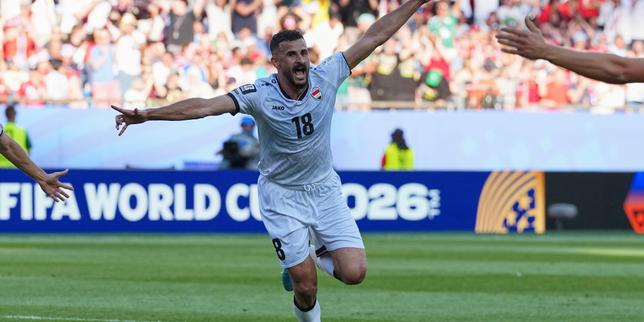
The air inside the tunnels of these massive North American stadiums smells like a mix of stale premium beer, industrial floor cleaner, and raw, uncut terror. It is June, the middle of the global tournament, and the group stage is doing what it always does. It is stripping away the pre-tournament marketing campaigns. It is melting the pristine veneer off the world’s most famous athletes.
If you stand close enough to the mixed zones where players drag their feet past the microphone-wielding press, you can see the toll of this expanded format. It is a 48-team monster now. More matches. More travel. More ways to fall flat on your face in front of an audience of billions.
For the spreadsheet analysts and the casual viewers checking their phone notifications over lunch, the group stage is a math problem. Top two from twelve groups move on, plus the eight best third-place stragglers. Thirty-two spots in total. Easy.
But for the men on the grass, it is not math. It is a series of ninety-minute survival horror films. Consider the psychological chasm between the tiny handful of nations that have already touched land and the panicked mass of humanity still thrashing in deep water.
The Immunity of the Chosen
Imagine waking up on a Monday morning with your calf muscles feeling like they are packed with wet cement, but your mind is completely at peace. That is the luxury currently enjoyed by three locker rooms on this continent.
Mexico was the first to breathe. They did it by turning the opening match against South Africa into a national holiday, winning 2-0, before grinding out a brutal 1-0 victory against a relentless South Korea. To watch El Tri right now is to understand the physical power of an entire country pushing behind a ball. The noise in the stands does not sound like singing; it sounds like an engine roaring at maximum RPM. They are through. The final group game against Czechia is no longer a high-wire act. It is a dress rehearsal.
A few hundred miles away, the United States men’s national team accomplished something they had never managed in the modern era of the sport. Six points from their first two games. Done.
To feel the weight of that accomplishment, you had to be inside the stadium in Seattle. Sixty-six thousand people screaming until their throats bled as Mauricio Pochettino’s side took a sledgehammer to Australia. The opening goal was a cruel, beautiful thing—Folarin Balogun tearing down the left flank like a man escaping a fire, whipping a ball so hard and low into the six-yard box that an Australian defender could do nothing but bundle it into his own net. Then Alex Freeman headed in a second before halftime, his eyes wild as he realized the ball had dropped perfectly off a deflection.
The Americans have spent decades playing the role of the plucky underdogs who have to scratch and claw for every inch of respect on this stage. Not this time. With Paraguay beating Turkey later that night, the USMNT secured the top spot in Group D with a game to spare. Their final match against the Turks is a dead rubber. For a program that has historically lived on the edge of cardiac arrest during the group stages, this silence is unfamiliar. It is terrifyingly beautiful.
Then there is Germany. They do what they always do when the world doubts their transition phases. They thrashed Curaçao, then found themselves down against an aggressive Ivory Coast side in Toronto. No panic. Just the slow, methodical turning of the tactical screws until Denis Undav came off the bench to score twice, including a stoppage-time winner that felt less like luck and more like inevitable German geometry.
Mexico, the United States, Germany. They have bought the most precious commodity in modern sports: time to heal.
The Limbo of the Giants
But step outside that tiny circle of safety, and the narrative turns dark very quickly. The human brain is not built to handle the level of volatility currently playing out in the middle of these groups.
Take Spain. On paper, they look fine. They beat Saudi Arabia and drew 2-2 in a wild, bruising encounter with Cape Verde, a tiny island nation that refuses to respect traditional football royalty. Kevin Pina and Hélio Varela scored for Cape Verde, writing their names into their country’s history books while the Spanish defenders looked at each other with pale faces. Spain is virtually through, yes. But their final group stage match against Uruguay is a heavyweight fight where a single wrong step could alter their entire path through the bracket.
And what of Lionel Messi?
The defending champions arrived with the golden badges on their chests and the weight of history on their shoulders. Their opening 3-0 demolition of Algeria featured a Messi hat-trick that felt like a vintage screening of a master artist. But today, they face an Austria team that handled Jordan with clinical ease. The Group J table says Argentina is in prime position, but the faces of the coaching staff in the hotel lobby tell a different story. One bad bounce, one red card, one moment of complacency against the Austrians, and the narrative changes from a triumphant defense to a desperate mathematical scramble.
The tournament does not care about your legacy. It does not care about your shoe contract.
The Departure Lounge
If you want to understand the true emotional core of this tournament, you do not look at the winners. You go to the teams that have already been broken.
Haiti, Tunisia, Turkey.
Three games played by each of them, zero points to show for it, and their bags are already packed. The final group matches for these teams will be the loneliest ninety minutes of their lives. There is nothing more miserable in professional sports than playing a game of football when the math has already executed you. The stadium lights look harsher. The grass feels heavier. Every mistake you made in the opening match plays on a continuous loop behind your eyes.
Consider the Turkish side, a group of players who arrived with massive expectations from a football-mad nation, now forced to play a dominant American team in Los Angeles knowing that no matter the score, they are going home. It is a public audition for their next club contracts, performed under the shadow of collective grief.
The Mathematics of the Damned
But the real cruelty of the 2026 format lies in the third-place standings table. It is a modern purgatory.
Because eight of the twelve third-place teams will survive, nations like Sweden, Scotland, and Paraguay are forced to sit in hotel rooms, staring at iPads, calculating goal differentials from groups they have nothing to do with. They are praying for a random referee in New Jersey to give a yellow card to a midfielder from a country they couldn’t find on a map three weeks ago.
Sweden has three points and a neutral goal difference after getting picked apart 5-1 by a ruthless Dutch side. Scotland has three points but scored only one goal. They are alive, but they are breathing through a straw.
Every goal scored in the upcoming matches between France and Iraq, or Norway and Senegal, ripples through the entire tournament infrastructure. A single late strike in a late-night match in Houston can instantly terminate the summer vacation plans of twenty-six men sitting in a hotel room in Vancouver.
This is what the competitor’s tables do not show you. They show you numbers like "1-0-1" and "+2." They do not show you the captain of a national team sitting on the edge of his bed at three in the morning, watching a live stream of a match in a different time zone, his fingers twitching every time the ball enters the penalty area.
The group stage is ending. The lines are being drawn. For those who have made it to the Round of 32, the real tournament begins on June 28. For everyone else, there is only the long, quiet flight back to where they started, wondering how a four-year cycle of sacrifice could evaporate in the space of a single hot June afternoon.