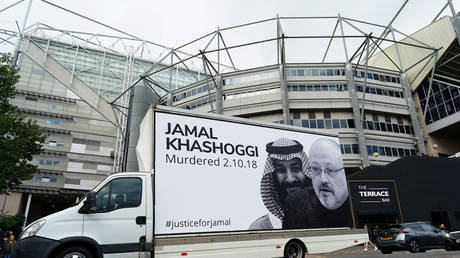
The global architecture of state immunity has fractured. The appointment of an investigating judge within the crimes against humanity unit of France's National Anti-Terrorism Prosecutor's Office (PNAT) to investigate the 2018 assassination of Jamal Khashoggi establishes a volatile legal precedent. By leveraging universal jurisdiction mechanisms, French courts have bypassed the bilateral immunity corridors that previously insulated Saudi Arabia’s de facto ruler, Crown Prince Mohammed bin Salman, from international litigation.
This development is not merely a symbolic victory for press freedom watchdogs; it is an operational shift in how middle powers can deploy domestic judicial machinery to challenge the sovereign immunity of foreign executives. To understand the strategic implications of the French inquiry, one must dismantle the structural components of the case: the mechanics of universal jurisdiction, the institutional conflict within the French judiciary, and the geopolitical bottleneck that dictates whether this probe can ever transition from a nominal investigation into an active prosecution.
The Tri-Pillar Framework of the French Legal Escalation
The admissibility of this case relies on a specific alignment of statutory thresholds, procedural positioning, and jurisdictional execution. The Paris Court of Appeal’s ruling on May 11, 2026, which overturned years of procedural resistance from the state prosecutor's office, rests on three operational pillars.
+-------------------------------------------------------------------------+
|                  TRI-PILLAR JURISDICTIONAL FRAMEWORK                     |
+-------------------------------------------------------------------------+
|  1. Statutory Reclassification  -->  From Murder to Crimes Against      |
|                                      Humanity (Torture / Disappearance) |
+-------------------------------------------------------------------------+
|  2. Universal Jurisdiction      -->  Extraterritorial application via   |
|      Trigger                        Territorial Presence (2022 Visit)   |
+-------------------------------------------------------------------------+
|  3. Civil Party Admissibility   -->  NGO Standing (RSF & TRIAL Intl.)  |
|                                      bypasses State Prosecutor veto     |
+-------------------------------------------------------------------------+
1. Statutory Reclassification
Under standard international law, a murder committed inside a foreign consulate falls under the domestic jurisdiction of the sending state (Saudi Arabia) or the host state (Turkey). For a third-party nation like France to assert jurisdiction, the offense must transcend localized crime. The legal strategy deployed by advocacy groups TRIAL International and Reporters Without Borders (RSF) successfully argued that the assassination could not be isolated as an individual homicide.
Instead, they classified the act under the broader rubric of crimes against humanity, specifically incorporating the underlying offenses of systemic torture and enforced disappearance. Because these violations carry erga omnes obligations—duties owed by states to the international community as a whole—French law permits its investigative units to intervene when traditional venues fail or systematically obstruct justice.
2. The Universal Jurisdiction Trigger
France's capability to investigate crimes committed abroad is tightly bound by the principle of universal jurisdiction, but it requires a physical nexus to catalyze action. This catalyst occurred in July 2022 during the Crown Prince’s official visit to Paris.
The physical presence of the target on French soil created the precise legal window required under the French Code of Criminal Procedure. The complaints were filed simultaneously with his arrival, structurally locking the French legal system into a verification process regarding its obligation to investigate individuals accused of severe international law violations while within its borders.
3. Civil Party Admissibility
The structural breakthrough of the May 11 appellate ruling lies in the validation of the plaintiffs as parties civiles (civil parties). In the French inquisitorial system, the state prosecutor (PNAT) originally opposed the initiation of the probe, citing procedural roadblocks and admissibility constraints designed to protect diplomatic relations.
By ruling the complaints of TRIAL International and RSF admissible, the Court of Appeal effectively neutralized the state’s political veto. Conversely, the court rejected the complaint filed by Democracy for the Arab World Now (DAWN), Khashoggi's employer, signaling a highly calculated boundary regarding which corporate or institutional entities possess standing to trigger extraterritorial investigations.
Institutional Friction: The Inquisitorial Mechanism
To gauge the trajectory of the probe, it is necessary to examine the friction between the political executive and the independent judiciary in France. Unlike adversarial systems where prosecutors hold absolute discretion over whether to bring charges, the French system utilizes an independent investigating judge (juge d'instruction).
Once an investigating judge is appointed to the crimes against humanity unit, the file transitions out of direct government control. The judge possesses sweeping statutory powers:
- They can issue international letters rogatory (commissions rogatoires internationales) to demand evidence from foreign intelligence agencies.
- They can summon high-ranking foreign officials for deposition.
- They can issue European Arrest Warrants or international red notices if a suspect refuses to cooperate.
The bottleneck is entirely operational. The state prosecutor’s office spent years fighting the admissibility of this case precisely because an active investigation introduces systemic unpredictability into French foreign policy. While the executive branch manages diplomatic realpolitik, the investigating judge operates under a mandate to uncover material truth, creating a structural decoupling where judicial actions can directly disrupt bilateral state strategies.
Geopolitical Comparative Analysis: Washington, Ankara, and Paris
The French inquiry does not exist in a vacuum; it is a direct consequence of judicial containment failures in other international jurisdictions. A comparative assessment of how different states managed the legal fallout reveals why France became the final viable venue for accountability.
| Jurisdiction | Primary Legal Strategy | Outcome / Status | Systemic Bottleneck |
|---|---|---|---|
| Turkey | Domestic Criminal Trial of 26 Saudi Suspects | Halted and transferred to Riyadh (2022) | Executive override for economic and diplomatic realignment. |
| United States | Civil Litigation (DAWN & Fiancée) | Dismissed by Federal Court | Executive branch granted sovereign immunity post-Prime Minister appointment. |
| France | Universal Jurisdiction via Independent Investigative Magistrate | Active Judicial Inquiry (2026) | Insulated from direct executive dismissal via civil party status. |
In 2022, Turkey systematically dismantled its own judicial proceedings. Faced with severe currency devaluation and the need for Gulf capital injection, the Turkish government halted its trial in absentia of 26 Saudi suspects, transferring the case files directly to Riyadh—effectively terminating any prospect of an independent verdict.
In the United States, civil litigation faced a different systemic roadblock: institutional immunity. Although U.S. intelligence agencies explicitly concluded that the Crown Prince approved the operation, the Biden administration formally recognized his immunity from prosecution following his appointment as Saudi Prime Minister. This executive determination forced a federal judge to dismiss the civil lawsuit brought by Khashoggi's fiancée, confirming that diplomatic status overrides civil torts within U.S. federal courts.
France's current position is structurally unique. The independent nature of the juge d'instruction means that while the French executive can refuse to cooperate operationally with the judge, it cannot summarily dismiss the case by executive decree. The legal framework of crimes against humanity explicitly limits the application of immunity for state officials when the acts in question constitute severe violations of international peremptory norms.
The Cost Function of Transnational Enforcement
The true test of the French investigation lies in its execution phase. A critical evaluation of the mechanisms available to the investigating judge reveals severe operational limitations.
$$E_c = f(P_s, C_d, I_g)$$
The enforcement capacity ($E_c$) of a domestic court exercising universal jurisdiction is a direct function of three variables: physical sovereignty over the suspect ($P_s$), diplomatic costs ($C_d$), and international intelligence cooperation ($I_g$).
In this specific matrix, physical sovereignty ($P_s$) is currently zero. French law permits investigations and trials in absentia, meaning the judge can build an indictment, review forensic data, and potentially issue a symbolic arrest warrant without the Crown Prince ever entering a French courtroom. However, a trial in absentia yields structural narrative value rather than physical accountability.
The second variable, diplomatic costs ($C_d$), introduces a severe bottleneck. Saudi Arabia is a critical economic partner for France, representing a major export market for defense equipment, aerospace technology, and luxury goods, alongside its systemic role in global energy markets. As the investigating judge advances the probe, the Saudi state can exert leverage by freezing commercial contracts or reassessing intelligence sharing on regional counter-terrorism initiatives. The French executive branch will likely employ passive resistance—delaying the execution of the judge's requests or citing national security exceptions to avoid rendering state intelligence files to the magistrate.
The third variable, international intelligence cooperation ($I_g$), requires cross-border consensus. To construct a legally bulletproof dossier regarding command responsibility, the French judge requires unredacted access to intercept data and surveillance logs held by Turkish and American intelligence agencies. Given that both Washington and Ankara have normalized relations with Riyadh, the probability of these states fulfilling international letters rogatory with actionable, high-level intelligence is low.
Strategic Outlook and Legal Forecast
The opening of this judicial inquiry signals a permanent shift in the risk matrix for high-ranking state officials traveling through European airspace. Even if the investigation never culminates in a physical trial or a conviction, it alters the operational parameters of international diplomacy.
The strategic play moving forward will develop along two distinct vectors:
First, the investigating judge will focus on the lower-and-mid-tier operational architects of the Istanbul consulate operation. By issuing targeted, non-public European Arrest Warrants for the members of the extraction squad, the French judiciary can effectively restrict the international mobility of dozens of Saudi security officials, creating an internal enforcement zone across the Schengen area.
Second, this probe establishes a replicable blueprint for non-governmental organizations. By demonstrating that the party civile mechanism can successfully bypass state prosecutor inertia in universal jurisdiction states, rights groups will likely scale this strategy. Future state visits by controversial foreign leaders to Western Europe will routinely face synchronized, pre-planned judicial filings designed to force independent magistrates to open files on crimes against humanity.
The immediate result is not the incarceration of a sovereign ruler, but the weaponization of domestic criminal procedures to strip away the predictability of state immunity. France has opened a legal channel that its own diplomats cannot easily close, guaranteeing that the Khashoggi file remains an active liability on the balance sheet of Franco-Saudi relations.


_Biopsy.png?branch=uat_release_3)
