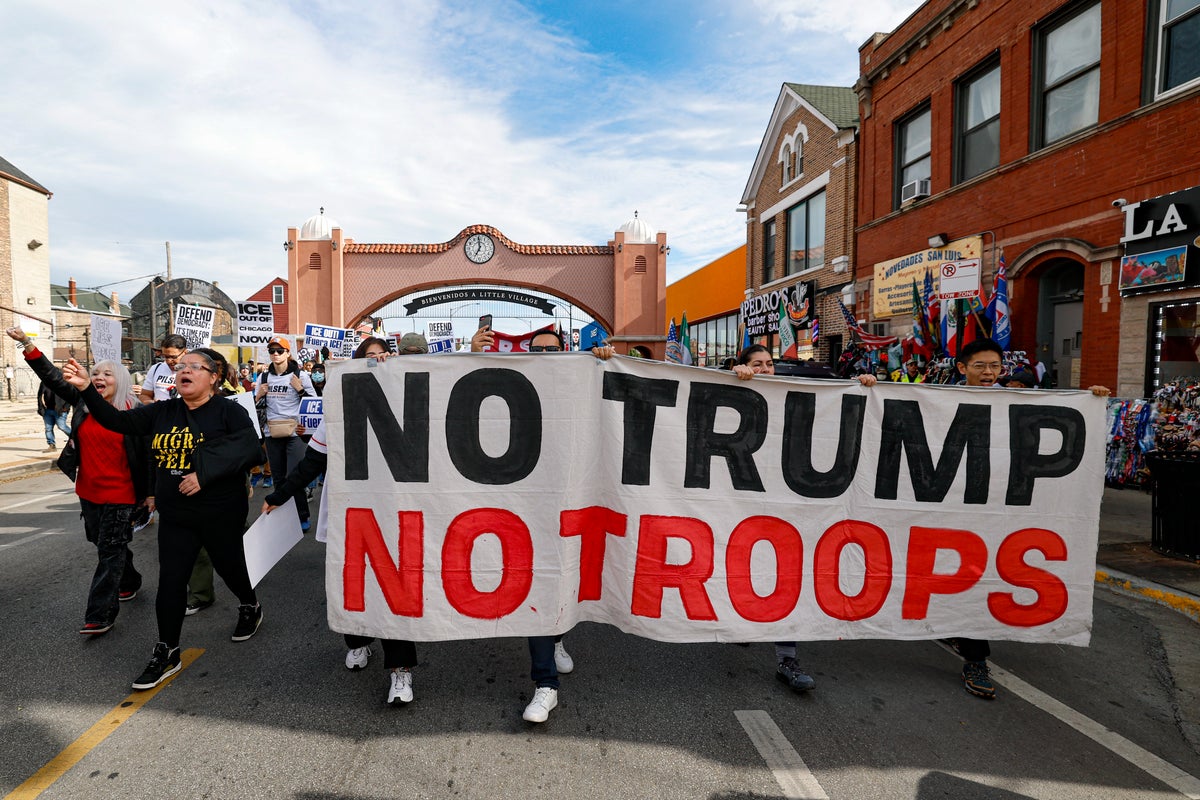
Public safety debates regularly default to rhetorical hyperbole, transforming localized tactical challenges into existential survival narratives. When political figures assert that major metropolitan centers face imminent collapse without external federal intervention, analytical rigor requires stripping away political friction to examine the underlying metrics, institutional friction points, and operational realities. Evaluating the structural claims made regarding Chicago requires a breakdown of statistical distribution, jurisdiction boundaries, and the cost-benefit dynamics of federal policing models.
The Discrepancy Between Absolute Counts and Per Capita Rates
Political rhetoric regarding urban crime frequently relies on absolute volume rather than normalized density metrics. Chicago consistently records high total numbers of homicides and shooting incidents compared to smaller municipalities, driven entirely by its population scale and dense urban geography. If you found value in this article, you might want to read: this related article.
Analyzing public safety requires evaluating rates per 100,000 residents rather than aggregate totals. While Chicago often registers high absolute numbers due to housing density and historical segregation patterns, its per capita violent crime rate places it outside the top tier of American municipalities. For instance, mid-sized and smaller cities across various states frequently record higher per capita homicide rates, yet they escape federal targeting because their aggregate numbers do not generate equivalent media visibility.
Relying on raw counts creates a distorted view of systemic failure. When a weekend yields dozens of shooting victims during seasonal spikes, the emotional and operational impact is severe, but framing this as an unprecedented municipal death spiral ignores multi-year trendlines. Empirical tracking maintained by criminological researchers demonstrates that post-pandemic violent crime metrics in Chicago have experienced significant downward adjustments, running counter to the narrative of unchecked, escalating chaos. For another perspective on this event, refer to the latest coverage from BBC News.
The Structural Mechanics of Federal Intervention
Demands for external intervention, specifically federalization or the deployment of military and National Guard assets, assume a specific operational premise: that local law enforcement agencies suffer from a lack of raw manpower or tactical capacity rather than complex socio-economic variables.
The mechanics of federal security deployment involve distinct operational trade-offs:
- Jurisdictional Friction: Local police departments operate under distinct state statutes, municipal oversight, and constitutional constraints. Introducing federal forces without local integration creates command-and-control bottlenecks.
- Intelligence Asymmetry: Effective crime reduction relies on hyper-local community intelligence, informant networks, and long-term detective work. Federal tactical units excel at rapid containment and high-visibility patrols, but they typically lack institutional knowledge of neighborhood-level micro-dynamics.
- Resource Displacement: Federal surges often create a balloon effect, displacing illicit markets and violent actors into adjacent neighborhoods or surrounding suburbs rather than systematically dismantling criminal networks.
Deploying external forces treats symptoms via saturation while leaving the structural drivers of violence—such as localized economic disinvestment, illegal firearm pipelines, and fractured community trust—completely unaddressed.
Institutional Resistance and the Cost of Political Polarization
The ongoing standoff between municipal leadership, state executives, and the federal government represents a classic exercise in institutional gridlock. Illinois Governor J.B. Pritzker and Chicago Mayor Brandon Johnson view federal intervention proposals not as technical assistance, but as political overreach designed to undermine local autonomy.
This friction carries measurable economic and operational costs. Fiscal disputes, such as the freezing or termination of federal violence-prevention grants and community investment funds, directly disrupt local intervention frameworks. These grants fund non-law enforcement violence interruption programs, trauma-informed care, and youth employment initiatives. Cutting these revenue streams while simultaneously demanding military-style saturation creates a counterproductive policy loop: resources are stripped from preventative infrastructure, which then heightens the tactical emergencies that politicians use to justify intervention.
Evaluating the Model of Past Deployments
Proponents of federal intervention frequently point to operations in Washington, D.C., as a blueprint for rapid crime suppression. However, direct comparisons between the federal district and a vast, decentralized Midwestern metropolis ignore structural differences in land area, jurisdictional authority, and population distribution.
Washington, D.C. operates under unique federal oversight frameworks that do not apply to sovereign states like Illinois. Attempting to replicate tactical surges in Chicago faces immediate legal barriers, including federal court injunctions and constitutional limits on domestic military deployment under the Posse Comitatus framework and related statutes. Judicial pushback reflects the deep legal hazards of overriding state-level policing authority for political signaling.
Urban crime reduction is an exercise in resource allocation, data-driven policing, and community-level economic stabilization. Sweeping declarations of municipal collapse obscure the granular work required to sustain downward crime trends. To achieve long-term stability, policymakers must abandon high-visibility political ultimatums in favor of sustained investment in forensic capabilities, targeted intervention strategies, and cooperative institutional governance that respects jurisdictional boundaries while maintaining public accountability.