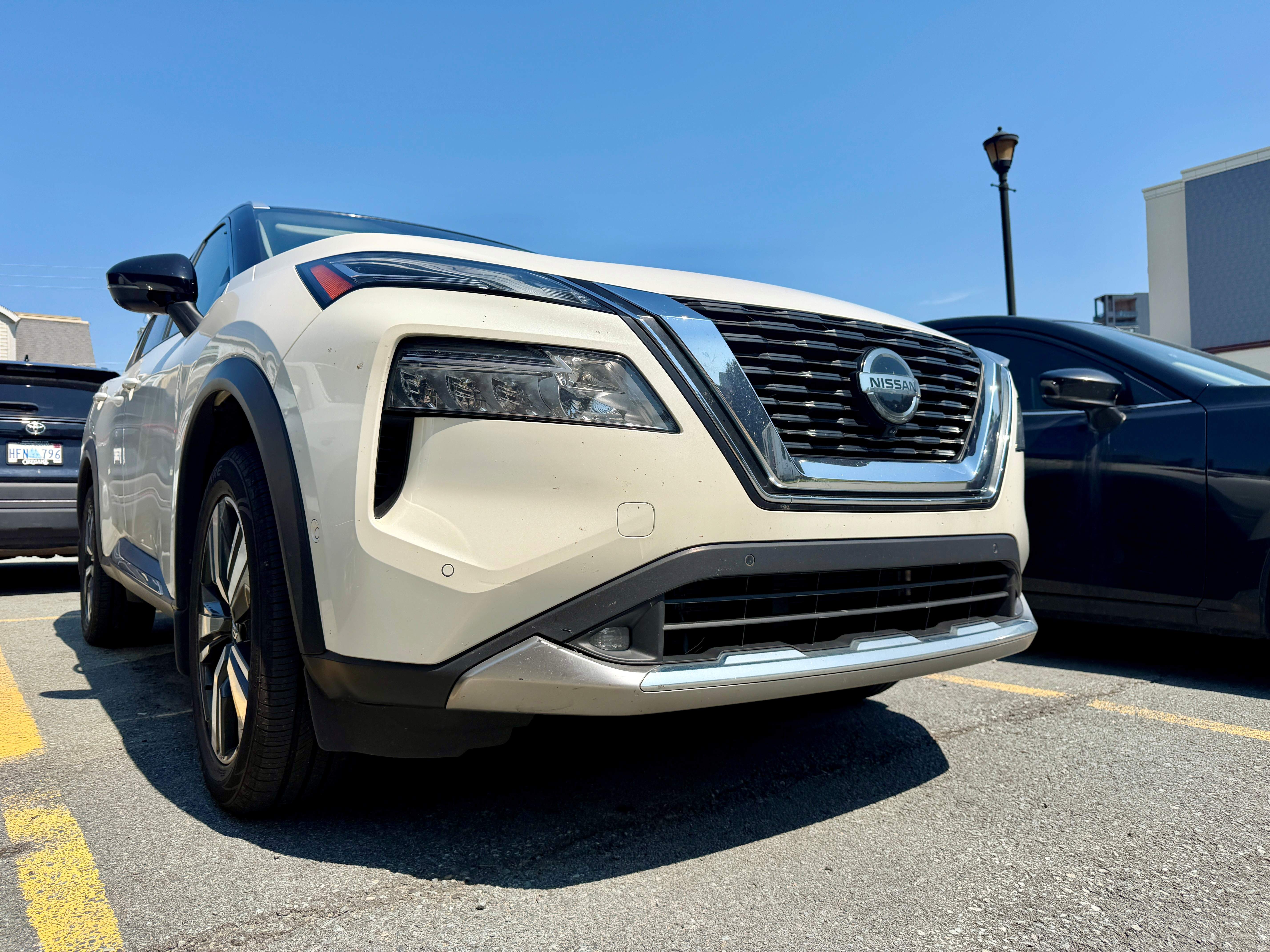
Urban transportation safety is experiencing a structural failure driven by a single measurable variable: the continuous upward creep of vehicle mass and front-end geometry. When a coalition of road safety advocates recently petitioned the Nova Scotia Chief Medical Examiner to initiate a formal death review targeting large pickup trucks and sport utility vehicles, they exposed a systemic governance gap. Standard motor vehicle safety evaluations historically prioritize occupant protection inside the cabin while external hazards imposed on pedestrians and cyclists remain largely unregulated. Addressing this vulnerability requires deconstructing the mechanical physics, economic incentives, and regulatory oversights that permit oversized personal transport fleets to dominate modern roadways.
The operational hazard of modern light trucks stems from two primary vectors: kinetic energy scaling and driver sightline degradation. Mass and velocity dictate the force applied during a collision. As fleet weights expanded by roughly twenty-four percent over recent decades, the baseline kinetic energy transferred during an urban impact increased proportionally. Simultaneously, front-end hood heights grew by approximately eleven percent, shifting the primary point of impact from a pedestrian's lower extremities to the torso and head.
This upward shift in impact geometry eliminates the energy-absorbing roll-over mechanics associated with traditional sedans. When a high-profile vehicle strikes a pedestrian, the victim is typically forced downward beneath the chassis rather than deflected over the bonnet. Empirical transport data indicates that the probability of mortality multiplies significantly when a collision involves a high-clearance truck relative to a conventional passenger car.
Beyond biomechanics, visual occlusion creates an operational failure mode known as front-blind zones. The high, square geometry of modern truck hoods generates a substantial visual exclusion zone immediately ahead of the driver. A standing child or an adult cyclist can easily remain entirely invisible within the perimeter directly in front of the grille. This geometry turns standard urban maneuvers, such as intersection crossings and curbside departures, into high-probability hazard events.
The proliferation of these platforms is an economic artifact rather than a functional necessity. Light trucks and multipurpose vehicles capture an overwhelming majority of new vehicle sales across national markets, sustained by structural marketing campaigns that emphasize aggressive aesthetics and perceived personal security. Manufacturers realized higher profit margins on larger chassis configurations, shifting capital allocation away from fuel-efficient, lower-profile passenger cars. Consequently, consumer choice is heavily channeled toward oversized options, socializing the physical risk onto non-motorized infrastructure users.
Mitigating this systemic risk demands intervention across multiple tiers of public administration, each addressing a distinct component of the failure loop. Federal jurisdictions hold the authority to mandate exterior design modifications. Regulating front-end bluntness and energy absorption profiles can directly reduce pedestrian trauma severity. Furthermore, federal oversight can compel manufacturers to incorporate mandatory advertising disclaimers regarding external safety hazards, mirroring legacy restrictions applied to high-risk consumer products.
Provincial authorities control the licensing and taxation mechanisms. Introducing specialized driver endorsement tiers for oversized personal vehicles ensures that operators acknowledge the distinct handling, braking distances, and visibility limitations inherent to heavy frames. Parallel to licensing reforms, provincial tax agencies can restructure vehicle registration fees into a sliding scale indexed directly to mass and exterior dimensions. Such a pricing mechanism internalizes the public safety cost currently dumped onto municipalities.
Municipal governments must manage the physical manifestation of vehicle bloat on local streets. Density constraints require parking infrastructure to accommodate rational spatial footprints. Implementing progressive parking fee structures scaled by gross vehicle weight or footprint dimensions introduces a continuous economic deterrent against operating oversized units in densely populated corridors. Concurrently, municipal procurement boards must revise internal fleet guidelines, barring the acquisition of oversized trucks for standard administrative or park maintenance tasks where utility requirements do not justify the external risk profile.
Restoring equilibrium to urban transit corridors requires abandoning the assumption that vehicle growth is an inevitable market preference. Treating oversized personal transport as an externalized safety hazard shifts the burden of proof from vulnerable road users back to vehicle manufacturers and operators. Systemic reform depends on dismantling the structural incentives that reward physical intimidation over public safety.