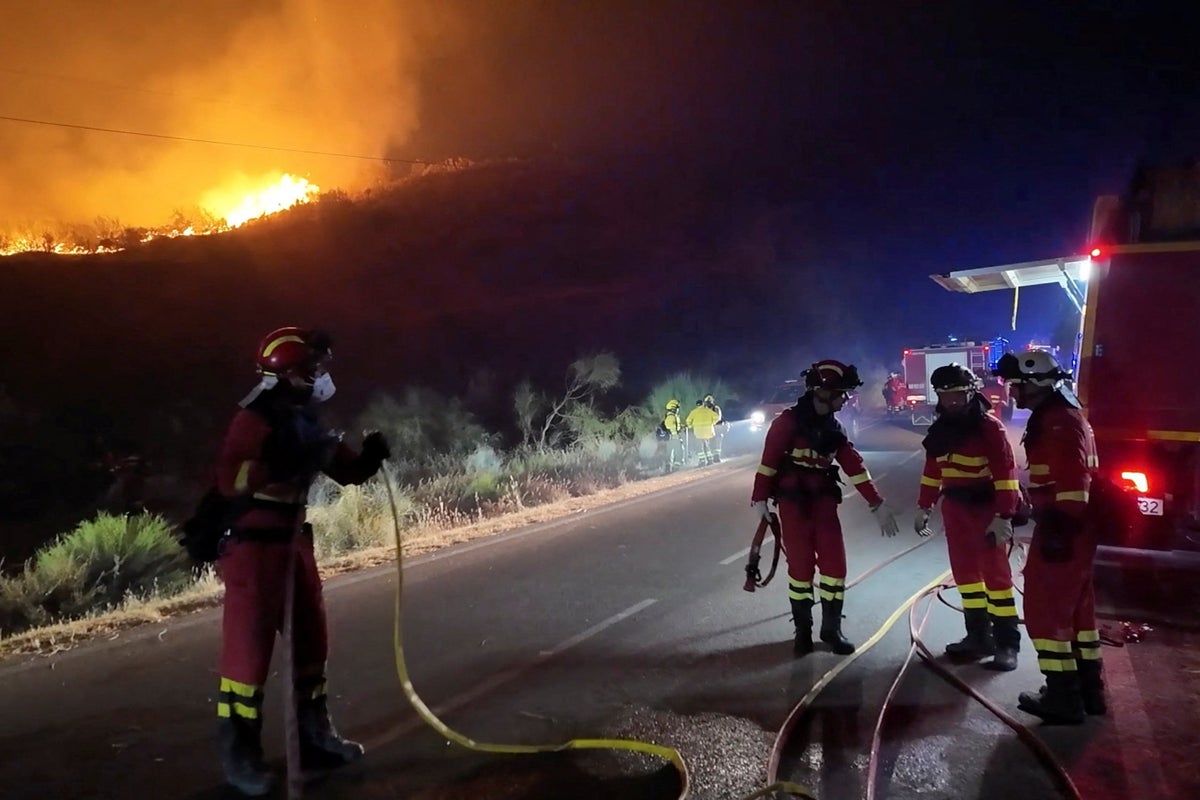
The intersection of accelerating climate anomalies and unregulated residential expansion in the Mediterranean has shifted the nature of wildfire emergencies from localized ecological events to systemic humanitarian crises. When wildfires breach popular tourist destinations and expatriate enclaves in Spain, the resulting chaos is not a random product of nature. It is the predictable consequence of structural vulnerabilities where demographic realities collide with failing municipal infrastructure. Understanding this crisis requires moving past sensationalized headlines to map the exact mechanisms of the Wildland-Urban Interface (WUI) failure, quantified evacuation bottlenecks, and communication asymmetric gaps that jeopardize human life.
The Triad of WUI Vulnerability in Southern Europe
The vulnerability of Mediterranean coastal regions to catastrophic wildfire events is governed by three intersecting vectors: fuel accumulation dynamics, topographic acceleration, and high-density residential encroachment into flammable ecosystems. This specific configuration defines the Wildland-Urban Interface, a zone where human structures mingle with wildland fuels.
Fuel Accumulation and Microclimate Alteration
Decades of rural depopulation in Spain have led to the abandonment of traditional agricultural land. This land neglect allows highly flammable pyrophytic vegetation, such as Pinus halepensis (Aleppo pine) and various pyrophilic scrub species, to regenerate unchecked. When extreme heatwaves drop relative humidity below 20% and drive temperatures above 40°C, this biomass undergoes rapid desiccation. The moisture content of fine dead fuels falls below the critical threshold of 6%, converting vast swathes of coastal hillsides into highly combustible fuel beds.
Topographic Driving Forces
The coastal geography of popular tourist zones like the Costa Blanca, the Costa del Sol, and parts of Catalonia features steep, broken topography. Canyons and ravines act as natural chimneys. When a fire is ignited at the base of a slope, convective heat preheats the upslope vegetation, causing exponential rates of spread. This updraft is frequently exacerbated by strong, dry land winds—such as the Poniente or Tramontana—which push fires toward the coastline, flattening the flame front and rendering traditional suppression tactics ineffective.
Structural Encroachment and the Cohesion Deficit
The real estate boom of the late 20th and early 21st centuries led to the proliferation of isolated residential developments (urbanizaciones) built directly within these high-risk flammable zones. These developments frequently lack structural defensible space, feature highly flammable ornamental vegetation like cypress hedges, and rely on building materials that fail under intense radiant heat or ember showers.
Demographic Risk Profiling: The Expat Vulnerability Index
When a wildfire compromises a residential zone, civilian survival depends on rapid situational awareness and physical mobility. In regions characterized by high concentrations of foreign retirees and transient tourists, the population exhibits a heightened vulnerability profile. This vulnerability can be quantified across three distinct structural deficiencies.
The Language Barrier and Information Asymmetry
During an escalating environmental emergency, local civil protection agencies issue orders through localized channels, including regional radio, municipal social media, and localized sirens. In many Spanish coastal municipalities, foreign nationals comprise over 30% to 50% of the permanent population. A lack of fluency in Spanish creates a dangerous lag in comprehension. When emergency alerts are broadcast exclusively in Spanish or Catalan, non-native residents face an information deficit, often realizing the proximity of a fire only when smoke becomes visible or evacuation routes are already compromised.
Physical Mobility and Age-Related Logistics
The demographic profile of Northern European expatriates residing in Mediterranean Spain skews heavily toward retirees. High concentrations of individuals aged 65 and older introduce significant mobility constraints into emergency logistics.
- Evacuation Velocity: Older populations require more time to prepare for and execute an evacuation. The time required to mobilize residents with restricted mobility reduces the available survival window during a fast-moving crown fire.
- Medical Dependency: A high percentage of these residents rely on life-sustaining medical equipment, oxygen concentrators, or specialized pharmaceuticals. The sudden loss of electrical infrastructure—a standard occurrence when wildfires burn through utility poles—immediately compromises these individuals before the fire front even arrives.
- Isolated Living Conditions: Many retirees live in isolated villas outside centralized urban nuclei, lacking immediate neighbor networks to check on their welfare when communication grids fail.
The Transient Tourist Variable
Unlike permanent expatriates, seasonal tourists possess zero baseline knowledge of local geography, secondary road networks, or regional emergency protocols. Hotels and vacation rentals frequently lack standardized wildfire evacuation blueprints. When a tourist hub faces an evacuation order, thousands of individuals simultaneously attempt to navigate unfamiliar terrain, significantly increasing the probability of panic-induced decision errors.
The Logistics of Failure: Evacuation Bottlenecks and Infrastructure Deadlocks
The structural failure of an evacuation during a coastal wildfire is primarily a mathematical problem of network capacity versus sudden volumetric demand. The infrastructure of most Mediterranean tourist spots was engineered for linear tourist transit, not rapid mass egress under emergency conditions.
[Wildfire Ignition]
       │
       ▼
[Rapid Fuel Consumption / High Wind]
       │
       ▼
[Simultaneous Mass Egress Initiated]
       │
       ▼
[Critical Bottleneck: Single-Access Arteries] ──► (Gridlock & Fuel Depletion)
       │
       ▼
[Loss of Alternative Routes via Smoke/Ember Blockage]
       │
       ▼
[Entrapment in Toxic Smoke Zone]
Single-Access Arteries and Topographic Traps
A significant percentage of coastal urbanizaciones are designed as cul-de-sacs or feature a single main access road connecting the development to a secondary highway. When a fire cuts off this primary artery, hundreds of vehicles are trapped within the residential zone. If the road remains open, the sudden influx of hundreds of vehicles onto narrow, winding mountain roads instantly exceeds the design capacity of the infrastructure, causing absolute gridlock.
The Dynamics of Vehicle Entrapment
When gridlock occurs within a WUI zone, vehicles become liability factors rather than instruments of escape.
- Radiant Heat Infiltration: Standard passenger vehicles offer minimal protection against high-intensity radiant heat. As temperatures outside exceed 200°C, plastic components melt, and windows shatter, exposing occupants to lethal thermal energy.
- Engine Asphyxiation: Wildfires consume vast quantities of oxygen while generating dense concentrations of particulate matter and carbon monoxide. Internal combustion engines stall due to oxygen starvation, leaving vehicles permanently immobilized in the path of the fire front.
- Toxic Smoke Accumulation: Vehicle ventilation systems draw in ambient air. Even with recirculation active, carbon monoxide levels inside a stalled vehicle can reach incapacitating levels within minutes in a dense smoke plume.
The Breakdown of Local Emergency Command Structures
Municipal emergency services in tourist-heavy regions are scaled for baseline winter populations, with seasonal supplements during peak summer months. However, a multi-front wildfire quickly overwhelms local Bomberos (firefighters) and Policía Local. The deployment of regional assets, such as the Unidad Militar de Emergencias (UME), requires formal bureaucratic escalation, creating a operational gap of several hours during which local forces must manage thousands of panicking citizens with insufficient personnel.
Systemic Solutions: Building Resilient Wildfire Response Frameworks
Mitigating the loss of life among expatriates and tourists during Mediterranean wildfire events requires abandoning reactive emergency management in favor of predictive, hard-engineered structural adaptations. Reliance on a rapid physical rescue is an unviable strategy when fire behavior outpaces mechanical intervention.
Unified Multilingual Alert Systems
Emergency communication frameworks must bypass traditional media and leverage cellular infrastructure through localized, multi-language Cell Broadcast technology. This system pushes geo-targeted, un-interceptable alerts to every mobile phone within a specific cell tower radius, bypassing language settings to deliver automated translations based on the device's origin country code.
Mandated Structural Defensible Space
Municipalities must strictly enforce Decree laws regarding fuel management around urban developments. This involves establishing a three-tiered zone system:
- Zone 1 (0-15 Meters): Complete removal of high-risk vegetation, replacing flammable ornamental trees with fire-resistant species like Quercus ilex (Holm oak), alongside a mandatory ban on PVC fencing and combustible patio structures.
- Zone 2 (15-50 Meters): Thinning of the forest canopy to ensure a minimum of 3 meters between tree crowns, preventing ground fires from transitioning into lethal crown fires.
- Zone 3 (50-100 Meters): Maintenance of strategic firebreaks around the entire perimeter of the urbanización, providing a secure zone for emergency crews to establish defensive lines.
Decentralized Safe Zones and Managed Retreat
Where infrastructure constraints prevent guaranteed evacuation clearance times, municipal planning must shift from a policy of mandatory flight to a hybrid model of sheltered sheltering-in-place. This requires the construction of community bunkers or hardened concrete pavilions within the center of developments. These structures must feature independent oxygen filtration systems, subterranean water reserves, and zero external fuel loads, serving as a secondary survival guarantee when evacuation roads become impassable.
The survival rate of vulnerable populations in high-risk tourist corridors depends entirely on executing these structural overhauls before ignition occurs. Continuing to permit unregulated development in volatile ecosystems while relying on fragmented, mono-lingual emergency communications guarantees that future wildfire events will transition from property losses to preventable mass-casualty realities.