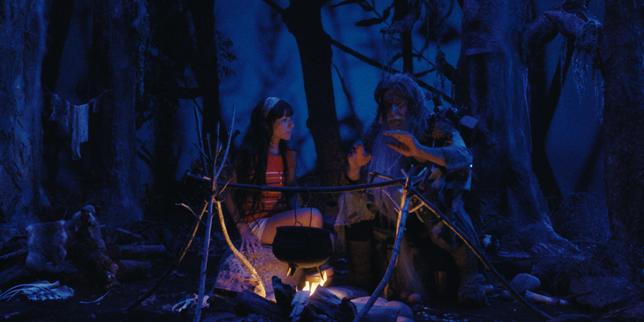
Hollywood spends hundreds of millions of dollars recreating ancient myths on studio lots while missing the raw human reality of the stories entirely. While global audiences chase high-budget cinema versions of Homer's epics, a quiet revolution is happening on actual stone stages in Greece. Disabled actors are stepping into the spotlight to show what the pain of war actually looks like.
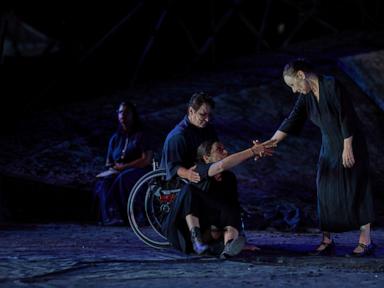
The ancient theater of Epidaurus recently hosted a production of Euripides' "The Trojan Women" featuring a cast of twenty-two disabled and non-disabled performers. This wasn't just another theatrical run. It marked the first fully accessible performance in that two-thousand-three-hundred-year-old venue's history.
Shifting Focus from Glory to Grief
Blockbuster adaptations love focusing on returning heroes, sweeping maritime battles, and the triumph of conquest. Homer gave us the blueprint for the glorious homecoming. But Euripides wrote about the wreckage left behind. His play centers on the ruined city of Troy, the women forced into exile, and the agonizing aftermath of a decade-long conflict.
By bringing disabled artists into these roles, the National Theater of Greece and the nonprofit organization Liminal reframed how we understand physical vulnerability and trauma. War breaks bodies. It alters lives permanently. Seeing performers who navigate physical barriers daily embody characters shattered by violence brings an unmatched layer of truth to the stage.
Eirini Kourouvani, a cast member who uses a wheelchair, performed at Epidaurus for the very first time during this run. Her experience highlights a historical failure in the arts. Major historic venues have locked out disabled performers and patrons for centuries. Standing on that ancient stone floor wasn't just about acting. It was about claiming space that was always rightfully theirs.
What Real Accessibility Looks Like
Too often, accessibility is treated as an afterthought—a ramp slapped onto a back exit or a single wheelchair spot in the worst corner of a room. This production aimed much higher.
The performance integrated a full suite of services that transformed the venue. Blind audience members received Braille programs, live audio description, and tactile models to understand the staging. Deaf spectators followed overhead titles seamlessly. Physical adaptations across the site ensured that getting into and around the steep amphitheater worked for everyone.
Paralympic gold medalist Greg Polychronidis attended the event and noted its significance. He called it a celebration of equality that must set a permanent standard for cultural spaces worldwide.
Argyro Chioti, the artistic director for the National Theater of Greece, acknowledged the heavy lifting involved. Making a 2,300-year-old stone monument accessible takes money, months of meticulous planning, and specialized organizational expertise. Yet, the takeaway is clear. This level of inclusion shouldn't be a rare headline-grabbing event. It needs to become the baseline for every major theater globally.
The Contrast with Global Pop Culture
The timing of this Greek production offers a sharp contrast to mainstream entertainment culture. While Hollywood marketing machines push massive fantasy adaptations that spark endless online debates over casting choices and commercial fatigue, artists in Peloponnese are stripping away the CGI gloss. They are reminding audiences why these texts survived millennia in the first place.
Ancient Greek drama survives because it speaks to universal human suffering. When you watch actors with disabilities project strength, grief, and survival on a stage built centuries ago, the distance between the ancient world and our current reality vanishes.
Theater institutions must stop treating accessibility as an expensive charity project or a compliance checkbox. Follow the blueprint laid out at Epidaurus. Demand inclusive casting, fund structural overhauls for historic venues, and support arts organizations that center marginalized voices from the ground up.