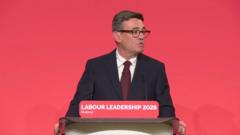
The British political class has found its new savior, and the consensus is as lazy as it is dangerous.
Andy Burnham has officially seized the Labour leadership without facing a single opponent. On Monday, he walks into Downing Street. The media is swooning over his "King of the North" brand, nodding along to his promises of "good growth in every post code" and a crusade to "take power back from Westminster."
It sounds beautiful. It is also an absolute fantasy.
I have watched Westminster politicians dump underfunded responsibilities onto local authorities for two decades, calling it "empowerment" while local councils quietly go bust. Burnham’s core premise—that transferring raw power from Whitehall to local leaders will magically cure the U.K.’s economic stagnation—is fundamentally flawed. Devolution without radical fiscal autonomy is not freedom. It is a trap.
The Manchester Miracle Is an Illusion
The foundational myth of the new Burnham premiership is that the "Manchesterism" model can be scaled nationally. Look closer at Greater Manchester's apparent success, and the structural cracks become obvious.
As mayor, Burnham successfully integrated the Bee Network tram and bus systems. It makes for great public relations. What the commentators miss is that Manchester’s transport alignment was funded by massive injections of central government cash and local borrowing capacity that simply do not exist in the rest of the country.
When you export this model to regions lacking Manchester’s corporate tax base or historical infrastructure advantages, the math collapses. Imagine a scenario where Cornwall or West Yorkshire attempts to replicate this heavy-handed regional state apparatus. Without massive structural subsidies, they are left with higher local tax burdens and soaring deficits, all to fund bloated regional bureaucracies that lack the scale to negotiate global investment.
True economic growth is driven by productivity, capital allocation, and deregulation. Burnham is offering structural reorganizations and committee meetings. You cannot devolve your way out of a national productivity crisis.
The Social Care Poisoned Chalice
In his acceptance speech, Burnham pledged to finally fix the social care crisis that has defeated every government for a generation. His proposed solution? Handing more control over life's essentials to local leaders.
This is terrifyingly naive. Social care is a fiscal black hole.
Local Government Spending Profile (Typical Shift Under Devolution)
+---------------------------+---------------------------+
| Traditional Services      | Devolution Burden         |
| (Parks, Roads, Libraries)  | (Social Care, Housing)    |
| [===================] 70% | [======] 30%              |
+---------------------------+---------------------------+
After Unfunded Social Care Mandates:
| [====] 15%                | [====================] 85%|
+---------------------------+---------------------------+
Localizing social care management without massive, centralized wealth redistribution means local councils become nothing more than glorified care home operators. Essential public services—road maintenance, libraries, business development—are cannibalized to fund statutory adult social care costs. We have already seen Section 114 notices issued by councils across England that couldn't balance their books under current pressures. Dumping the social care crisis onto regional leaders under the guise of "local democracy" will accelerate the bankruptcy of the U.K. regions.
The Unity Fallacy
Burnham insists he will lead a unified party that respects "all shades of opinion" and moves past factionalism. He explicitly stated that factional infighting is an indulgence.
This is a fundamental misunderstanding of political economy. You cannot run a government on "vibes" and ideological compromises. Labour is caught between two irreconcilable forces:
- A metropolitan left demanding massive green spending and wealth redistribution.
- A working-class base defecting to Reform UK over immigration and economic abandonment.
By attempting to please everyone with vague rhetoric about "hope," Burnham will please no one. Economic policy requires trade-offs. You are either pro-growth via market mechanisms or you are pro-redistribution. Pretending these factions can coexist in harmonious unity guarantees policy paralysis at a moment when the British economy requires immediate, decisive structural reform.
The incoming prime minister claims he has a plan. The uncomfortable reality is that his plan relies on the same failed assumption that has plagued British politics for forty years: that changing the zip code of the bureaucrats will somehow fix the bureaucracy. It won't. It will just spread the financial ruin more evenly across the map.