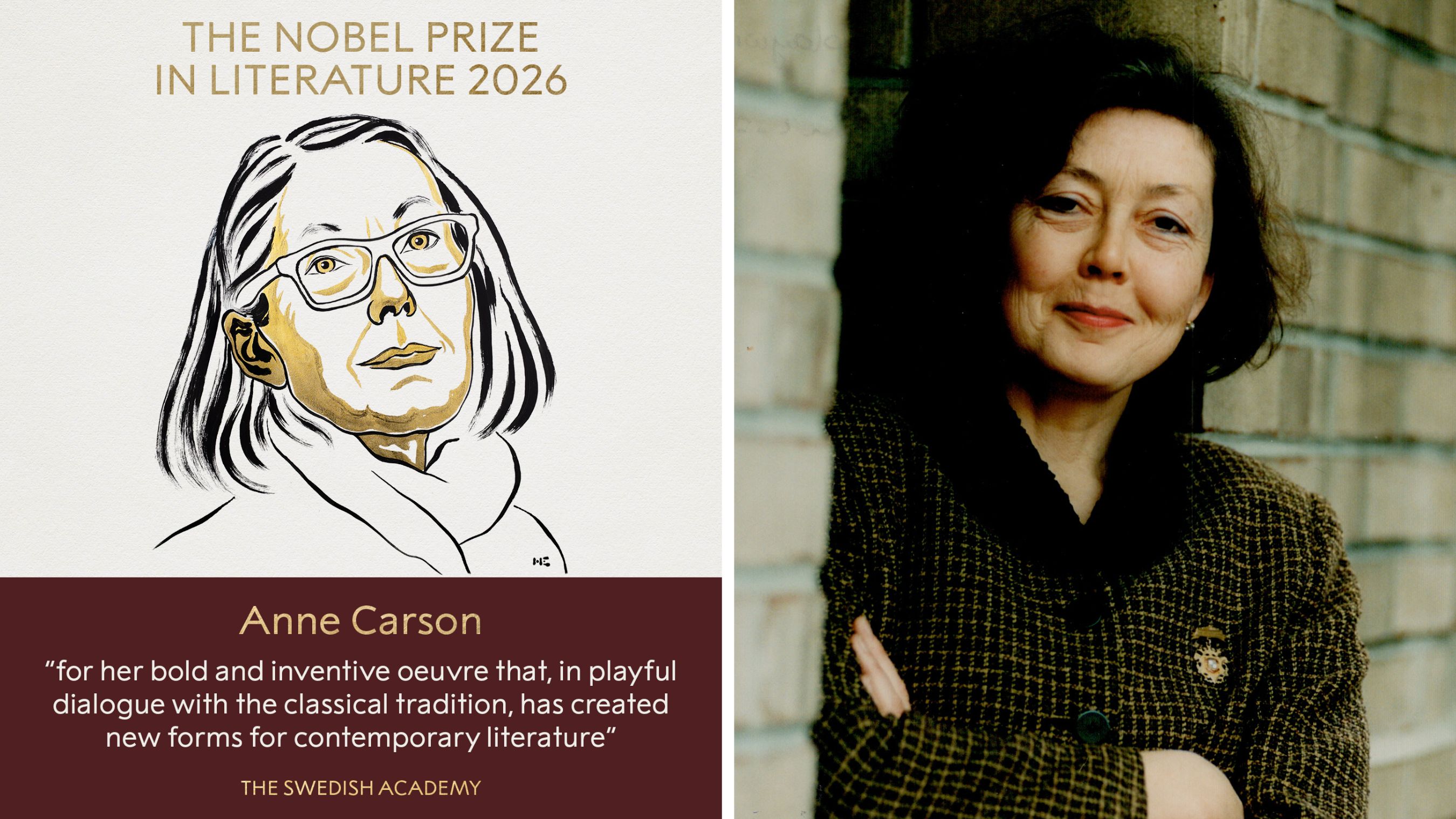
Every October, the literary industrial complex performs its annual rite of solemn self-congratulation. Analysts nod sagely. Cultural pundits dust off adjectives like transcendent and luminous. This year, the Swedish Academy crowned Anne Carson with the 2026 Nobel Prize in Literature, and the immediate chorus of approval was so deafening you could hear the sound of thousands of people pretending they read Autobiography of Red cover-to-cover on a Tuesday night.
Let us dispense with the polite fiction. For another view, consider: this related article.
Carson is not a popular writer. She is an academic’s domestic pet. She is a brilliant, intimidating classicist whose work is explicitly designed to keep the unwashed masses outside the velvet rope. By handing her the highest literary honor on earth, the Nobel committee did not celebrate the vitality of modern letters. They retreated into their comfort zone. They rewarded the genre that demands a master's degree in Greek mythology just to understand why a character is staring at a cliff.
We are told that Carson breaks forms. We are told she bridges the gap between antiquity and the contemporary avant-garde. This is marketing masquerading as criticism. What Carson actually does is weaponize obscurity to create an impenetrable barrier of prestige. When a writer structures a novel in verse around the fragments of Stesichoros, they are not inviting the reader into a shared human experience. They are setting an obstacle course and handing out gold medals to anyone who clears the first hurdle without spraining an ankle. Related reporting on the subject has been shared by The Hollywood Reporter.
The lazy consensus in contemporary literary criticism insists that difficulty equals depth. If a book hurts to read, if it requires three footnotes per page and an open encyclopedia, our cultural gatekeepers assume it must be doing heavy lifting for the human soul. This is a scam.
Think about the architecture of Carson's acclaim. Her breakthrough work took a forgotten ancient fragment about Geryon and the tenth labor of Herakles and transposed it into a modern, fragmented narrative about queer desire and photography. It is clever. It is sharp. But let us ask an uncomfortable question: how many people read it for pleasure rather than as an assignment? How many copies sit on shelves next to uncracked editions of Infinite Jest and Thomas Pynchon paperbacks bought solely to signal intellectual pedigree to houseguests?
Literary prizes used to mean something dangerous. They used to track the pulse of a culture shifting beneath its own weight. Now, they are retirement funds for poets who write exclusively for university towns.
To understand why the 2026 Nobel prize feels less like a triumph and more like a retreat, you have to look at the economics of modern poetry. Poetry has abandoned the public square. It has retreated entirely into the tenure-track incubator of the MFA workshop. In that ecosystem, accessibility is treated as a moral failing. If a poem can be understood on the first read by a smart high schooler, it is dismissed as greeting card verse. To survive, contemporary verse had to adopt the camouflage of high theory. It had to become homework.
Carson is the undisputed queen of this academic fiefdom. Her background is not in gritty street-level observation or the messy cadence of ordinary speech; it is in ancient Greek, comparative literature, and professorial appointments. When she writes about grief, love, or jealousy, she filters every raw nerve through a lens of classical allusion. You do not just feel heartbreak; you feel it through the specific lens of Sappho or Euripides.
That is not universal human resonance. That is name-dropping dead Greeks to validate your own heartbreak.
Defenders of the decision will point to the sheer sonic beauty of her lines. And yes, Carson can turn a phrase that cuts like broken glass. No one denies her technical mastery. But technical mastery in the service of deliberate alienation is just technical gymnastics. It is a gymnast doing a triple backflip in an empty gymnasium where no one can watch.
The Nobel committee loves this kind of writer because it flatters their own self-image. It allows a panel of aging European intellectuals to look at a text filled with Greek letters, white space, and fragmented syntax and say, Ah, yes, this is serious art, because I had to check three footnotes to get the joke. It is self-licking ice cream cone of literary elitism.
Consider the alternative. What if the prize had gone to someone who actually mapped the fractures of modern human consciousness without hiding behind a wall of classics? What if we rewarded writers who expand the reading public rather than those who shrink it down to a seminar room of fifteen people whispering about subtext?
The Swedish Academy had a chance to signal that literature belongs to the living world—to the chaotic, digital, fast-moving reality of the twenty-sixth century. Instead, they handed the megaphone back to the past. They gave it to someone whose entire aesthetic is built on the premise that the reader should feel slightly inadequate.
We need to stop confusing intimidation with insight. We need to stop pretending that liking difficult books makes you a deeper person. And above all, we need to stop rewarding poets who write as if they are trying to pass an oral exam administered by ghosts.
Anne Carson got her medal. The academy got their safe, unassailable choice. And the reading public got another reminder that the literary establishment cares far more about looking smart than being alive.