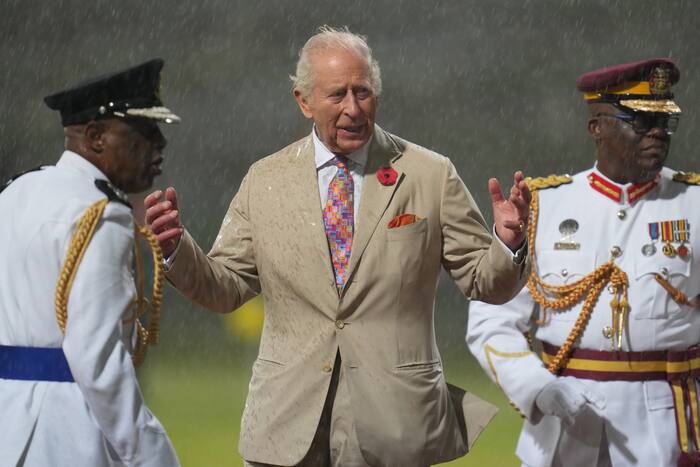
Most international summits feel like expensive photo ops where politicians read pre-approved speeches and fly home without changing a single thing. You've seen it a dozen times. Leaders shake hands, sign a vague communique, and let bureaucrats bury the real issues in footnotes.
That's why plenty of observers rolled their eyes when dozens of Commonwealth leaders descended on Antigua and Barbuda for their biennial summit. With global political turbulence hitting levels we haven't seen since the Cold War, critics immediately asked what a 56-nation club tied together by British colonial history could actually accomplish.
They're missing the point. Completely.
When traditional alliances like the UN Security Council are deadlocked by great-power rivalries, smaller and mid-sized nations have to look elsewhere for diplomatic traction. The Commonwealth Heads of Government Meeting (CHOGM) in St. John's isn't trying to solve every war on the planet. Instead, it's serving as a rare negotiating table where small island states, African economic powerhouses, and G7 nations like the United Kingdom and Canada sit as technical equals.
Why Antigua Was Chosen for This Moment
Location matters in diplomacy. Hosting this gathering in Antigua and Barbuda—one of the smallest nations in the Western Hemisphere—sends an unmistakable signal about who actually sets the agenda now.
For decades, Commonwealth meetings were dominated by London, Ottawa, and Canberra. That power dynamic has shifted dramatically. Caribbean leaders, led by Antigua and Barbuda's Prime Minister Gaston Browne, have spent years pushing the Commonwealth to stop treating small states like charity cases and start addressing structural economic vulnerabilities.
Think about the geography here. Antigua sits right on the front lines of climate change. Every hurricane season threatens to wipe out years of GDP growth in a single weekend. By bringing dozens of heads of government directly to St. John's, the host nation forced wealthy member states to look at coastal erosion, damaged infrastructure, and crushing debt loads up close rather than through a briefing paper in a European capital.
It's a smart move. Honestly, you can't ignore rising sea levels when your hotel is fifty yards from the shoreline.
The Real Friction Behind Closed Doors
If you only read official press releases, you'd think everyone in Antigua agreed on everything. They didn't. Behind closed doors, the summit exposed deep fractures on three specific fronts that the mainstream coverage barely touched.
First, there's the money problem. Developing nations across Africa, the Caribbean, and the Pacific are drowning in high-interest debt while trying to fund green energy transitions. They want rich Commonwealth members to back sweeping reforms to global financial institutions like the World Bank and the International Monetary Fund. Specifically, they're pushing for vulnerability indices that unlock cheap financing based on climate risk rather than outdated per-capita income metrics. Wealthier nations are hesitant because writing blank checks is tough sell back home during tight budget cycles.
Second, reparatory justice refused to stay off the menu. Despite quiet attempts by British officials to keep historical grievances out of the formal agenda, Caribbean and African delegations repeatedly brought up the legacy of the transatlantic slave trade. Prime Minister Keir Starmer faced persistent questions from regional leaders who argue that modern economic disparities can't be separated from colonial extraction. Nobody expected a sudden multi-billion-dollar payout in St. John's, but the refusal of smaller nations to drop the subject shows how much diplomatic leverage has decentralized.
Third, geopolitical hedging is everywhere. Many Commonwealth countries in Asia and Africa have zero interest in picking sides between Washington, Beijing, and Moscow. During the retreat sessions—where leaders meet without aides or cameras—several delegations pushed back against Western pressure to align strictly with G7 sanctions and foreign policy positions. They want trade, infrastructure investment, and security cooperation from whoever offers the best terms.
What People Get Wrong About the Commonwealth Today
A common misconception is that the Commonwealth is just a nostalgic club for former British colonies. That view is wildly out of date.
Look at the membership roster. Countries like Rwanda, Mozambique, Gabon, and Togo joined without having historical ties to the British Empire. Why? Because the network offers tangible perks: preferential trade connections, shared legal frameworks based on common law, and diplomatic backing in larger international forums.
Another myth is that King Charles III runs the show. As Head of the Commonwealth, the King plays a symbolic role, opening the summit and hosting receptions. He doesn't make policy. The real work happens among elected prime ministers and presidents, alongside the Commonwealth Secretary-General—a position itself up for fierce regional competition during the Antigua gathering as African nations sought to take the helm from Baroness Patricia Scotland.
Here's what actually makes the organization useful during global instability:
- Consensus-based diplomacy forces compromise. Because the Commonwealth operates by consensus rather than majority vote, a tiny Pacific island nation like Tuvalu has the same procedural weight in drafting the final communique as India, the world's most populous country.
- Shared legal and administrative DNA speeds up deals. Doing business or signing bilateral treaties between Commonwealth members is noticeably faster because roughly 80% of member states share common law traditions and English as a working language.
- The "Commonwealth advantage" in trade is measurable. Studies by the Commonwealth Secretariat have consistently shown that bilateral trade costs between member countries are roughly 21% lower on average than with non-members, largely due to institutional familiarity and diaspora networks.
The Climate Finance Deadlock
You can't talk about Antigua without talking about climate finance. It's the single issue where small states have the strongest moral argument and the hardest practical fight.
Antigua and Barbuda has been a vocal champion of the Bridgetown Initiative and the Loss and Damage fund agreed upon at recent UN climate conferences. Yet pledging money on stage and actually depositing it into a bank account are two very different things. Small island developing states (SIDS) spend massive portions of their national budgets just rebuilding after storms, leaving almost nothing for schools, healthcare, or renewable energy grids.
During the Antigua summit, Caribbean leaders argued that the Commonwealth should act as an incubator for innovative financing—things like debt-for-climate swaps, where a country's foreign debt is reduced in exchange for commitments to protect marine ecosystems or build resilient infrastructure. Belize and Barbados have already pulled off versions of these swaps with measurable success. Scaling that model across the 33 small states in the Commonwealth was one of the most practical proposals on the table.
Still, skepticism remains high. Leaders from vulnerable nations have heard promises of "$100 billion a year" in global climate funding for over a decade, only to watch much of that money arrive as high-interest loans rather than grants. If rich Commonwealth members don't back real structural changes at the multilateral development banks, the goodwill generated in St. John's will evaporate fast.
Security, Trade, and the AI Divide
While climate and debt grabbed the headlines, some of the sharpest debates in Antigua focused on emerging threats that hit small nations hardest.
Cybersecurity and artificial intelligence are creating a massive new gap between rich and poor countries. Larger members like the UK, Australia, and Singapore have advanced regulatory frameworks and sovereign AI strategies. Meanwhile, smaller nations lack the technical infrastructure to protect basic government databases from ransomware attacks, let alone compete in the global AI economy.
Several business forums running alongside the main leaders' summit highlighted how intra-Commonwealth trade could help bridge that gap. Total trade among Commonwealth nations has surged past $850 billion annually, with projections pushing it toward $1 trillion. Tapping into that growth requires cutting red tape on digital trade, harmonizing data protection standards, and helping small businesses in developing markets access venture capital in London, Toronto, and Singapore.
Maritime security was another quiet priority. Many Commonwealth members are massive ocean states—countries with relatively small land areas that control millions of square kilometers of exclusive economic zones. Illegal fishing, drug trafficking, and undersea cable vulnerabilities threaten their economies daily. Sharing satellite surveillance and naval intelligence among Commonwealth partners offers a practical way to police these waters without breaking national budgets.
How to Track Whether Antigua Actually Worked
Diplomatic summits are easy to spin. Every prime minister flies home claiming victory, while pundits declare the whole thing a waste of jet fuel. If you want to know whether the Antigua summit actually delivered results over the next twelve months, ignore the speeches and watch three concrete indicators.
First, look at the Multidimensional Vulnerability Index (MVI) adoption. Watch whether the UK, Canada, and Australia actively lobby the World Bank and IMF to use vulnerability metrics instead of raw GDP per capita when approving concessional loans for small island states. If lending rules don't change, the summit's economic pledges were just talk.
Second, track the Commonwealth Climate Finance Access Hub. This initiative places technical experts directly inside government ministries in developing countries to help them write grant applications and unlock green funding. Check if wealthy members expand its budget and staff headcount following the St. John's meetings.
Third, watch bilateral trade agreements and visa policies. Real commitment to the "Commonwealth family" shows up in lower tariffs, smoother digital customs rules, and fewer visa hurdles for students and entrepreneurs moving between member states.
Keep your eye on those three benchmarks over the coming year, and you'll know immediately whether the Antigua summit shifted global power dynamics or just produced another stack of unread policy papers.


