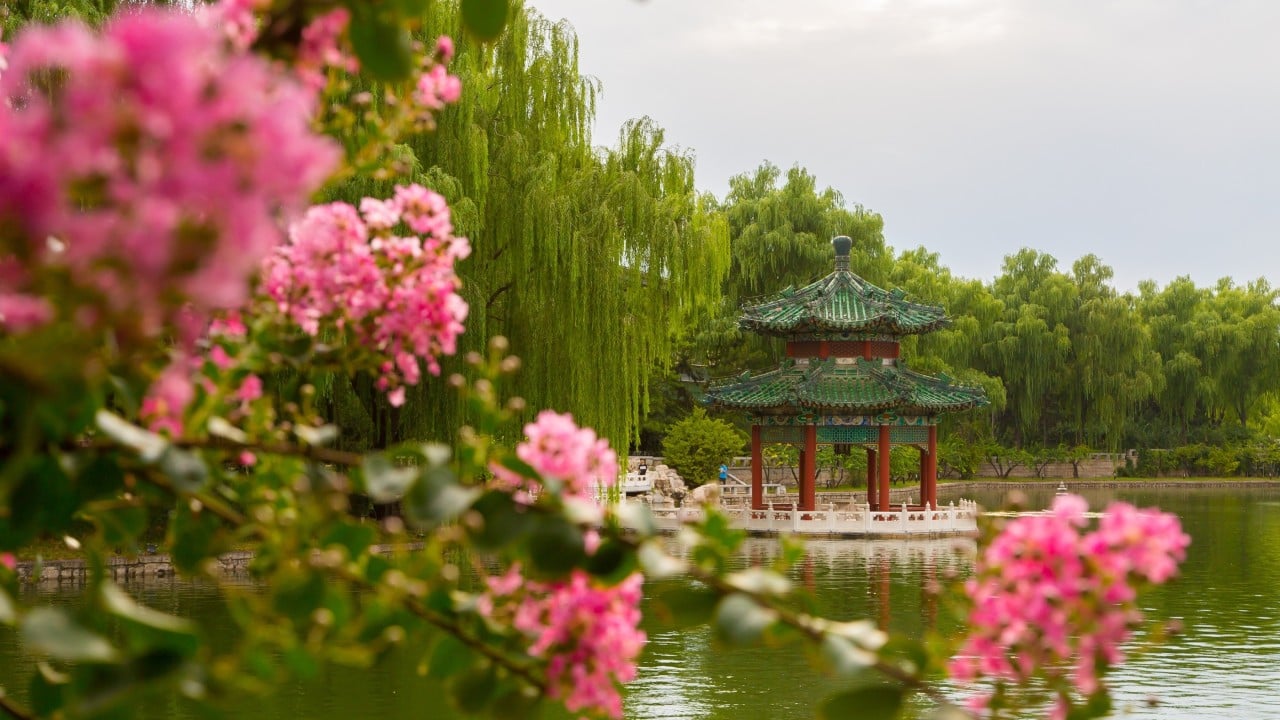
Walk past the ancient willow trees on the western edge of Beijing, and the roar of the modern megacity suddenly vanishes. Here lies a 420,000-square-meter sanctuary of manicured gardens, serene lakes, and quiet stone pathways. It looks like an ancient dynasty frozen in time. Emperor Zhangzong of the Jin Dynasty built a fishing pavilion on these grounds eight centuries ago, giving the estate its name: Diaoyutai.
But do not let the weeping willows fool you. The quiet is an illusion. If you found value in this article, you should read: this related article.
This is the Diaoyutai State Guesthouse. It is a fortress of global diplomacy, a theater of invisible power, and right now, the temporary home of Russian President Vladimir Putin on his twenty-fifth visit to China.
When a superpower hosts a foreign leader, nothing is accidental. Every room assignment, every menu choice, and every step across a velvet rug carries immense political weight. For decades, Diaoyutai has been the ultimate barometer of China’s relationships with the outside world. Where a leader sleeps in this compound tells you exactly where they stand in the eyes of Beijing. For another look on this story, check out the latest update from BBC News.
The Geography of Power
To understand the subtle language of Chinese statecraft, you have to understand the layout of Diaoyutai. The compound does not have a Building 1 or a Building 13, out of respect for international customs. Instead, its villas are numbered irregularly, scattering different levels of prestige across the imperial water gardens.
Among them all, Villa 18 is legendary.
It is the crown jewel of the estate. It features a private brick courtyard, classical Chinese architecture, and interiors filled with priceless antiques and hand-carved furniture. Villa 18 is saved exclusively for the most critical heads of state. It is where Richard Nixon slept during his historic 1972 trip, bridging a decades-long chasm between Washington and Beijing. It is where Boris Yeltsin, Bill Clinton, and Kim Jong-un have rested their heads.
Putin always stays in Villa 18.
Contrast this with how other world leaders are handled. Just days before Putin's arrival, President Donald Trump concluded a high-stakes visit to the capital. He did not sleep under the ancient tiled roofs of Diaoyutai. Instead, he stayed at a luxury commercial hotel down the street, close to the U.S. Embassy.
The contrast is stark. One leader is treated as an honored, intimate guest of the state, housed deep within the nation’s historic sanctuary. The other is treated as a transactional partner, kept at a polite, commercial distance.
The Whispers of Villa 5
The walls of these villas have witnessed the birth of the modern global order. Consider Villa 5, located near the center of the park.
In July 1971, U.S. National Security Advisor Henry Kissinger arrived here on a secret, middle-of-the-night mission. He was suffering from a feigned stomach ailment to throw off the press in Pakistan. He slipped into Villa 5 to meet Premier Zhou Enlai.
When Zhou walked through the door and shook Kissinger’s hand, it was the first time senior officials from the two nations had touched hands in nearly three decades. That single handshake in a Diaoyutai living room shifted the axis of the Cold War.
Decades later, in the twilight of his life, a centenarian Kissinger returned to that exact same villa. His hosts laid out longevity peaches on the dining table, a deeply symbolic Chinese gesture of respect for his age and history. It was his final trip before his passing.
Diaoyutai does not forget. It accumulates history, layer by layer, turning old rooms into sacred diplomatic ground.
Chopsticks and Hard Bargains
Diplomacy here is an art of deep observation. It requires mastering the unspoken.
Before his 1972 trip, Richard Nixon spent six months practicing how to use chopsticks at home in America. He knew that when he sat down in the grand banquet hall of Diaoyutai, the eyes of the Chinese leadership would be on his hands. He understood that clumsy fingers would signal a lack of cultural respect, while effortless grace would signal an American president genuinely ready to adapt.
Today, the stakes inside the dining halls have shifted from cultural etiquette to economic survival.
Putin’s arrival in Beijing comes at a time of immense vulnerability for Russia. The war in Ukraine has isolated Moscow from Western markets, turning Russia into the junior partner in its relationship with China. He traveled with an massive entourage of thirty officials, including five deputy prime ministers and eight cabinet ministers, all eager to lock down critical trade deals.
Behind the closed doors of the guesthouse, the conversation centers on the Power of Siberia 2 pipeline. This massive energy project is designed to redirect Russian gas from European markets straight into the heart of the Chinese economy.
Russia desperately needs this pipeline to secure its economic future. China knows this. Beijing holds all the leverage, and they are in no rush to sign. They are quietly demanding deep discounts on energy prices. Inside the elegant rooms of Diaoyutai, the hospitality is warm, but the financial math remains cold and unyielding.
The Human Element
Amid the grand strategy, the guesthouse occasionally witnesses moments of pure human connection.
During this visit, a brief reunion took place on the manicured lawns. Putin met a 38-year-old engineer named Pengpai. Twenty-six years ago, during Putin’s very first presidential visit to China, Pengpai was just a young boy who was photographed standing next to the Russian leader.
After that encounter, the boy grew up, studied in Russia, and returned home to work as an engineer. Meeting again in the same garden decades later provided a rare flash of personal history in an environment usually dominated by cold state interests.
Yet, even this emotional moment serves a broader narrative. It highlights the deep, multi-generational ties that Beijing and Moscow want to project to the rest of the world.
The Final Chord
As night falls over Beijing, the red lanterns of Diaoyutai reflect off the calm center lake. Inside Villa 18, the lights stay on.
Outside the gates, the world is fracturing into new alliances and deep rivalries. But inside this ancient royal garden, the architecture remains exactly as it was designed to be: a quiet, beautiful place where the fate of nations is decided over tea, and where a room assignment can shake the world.